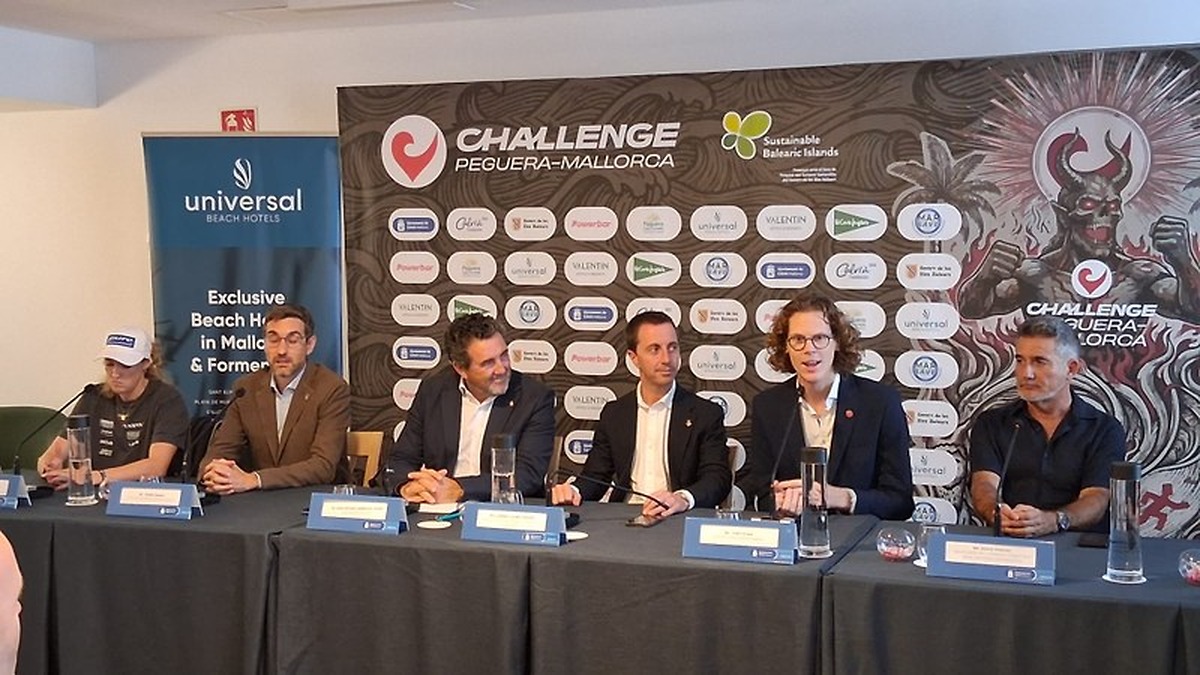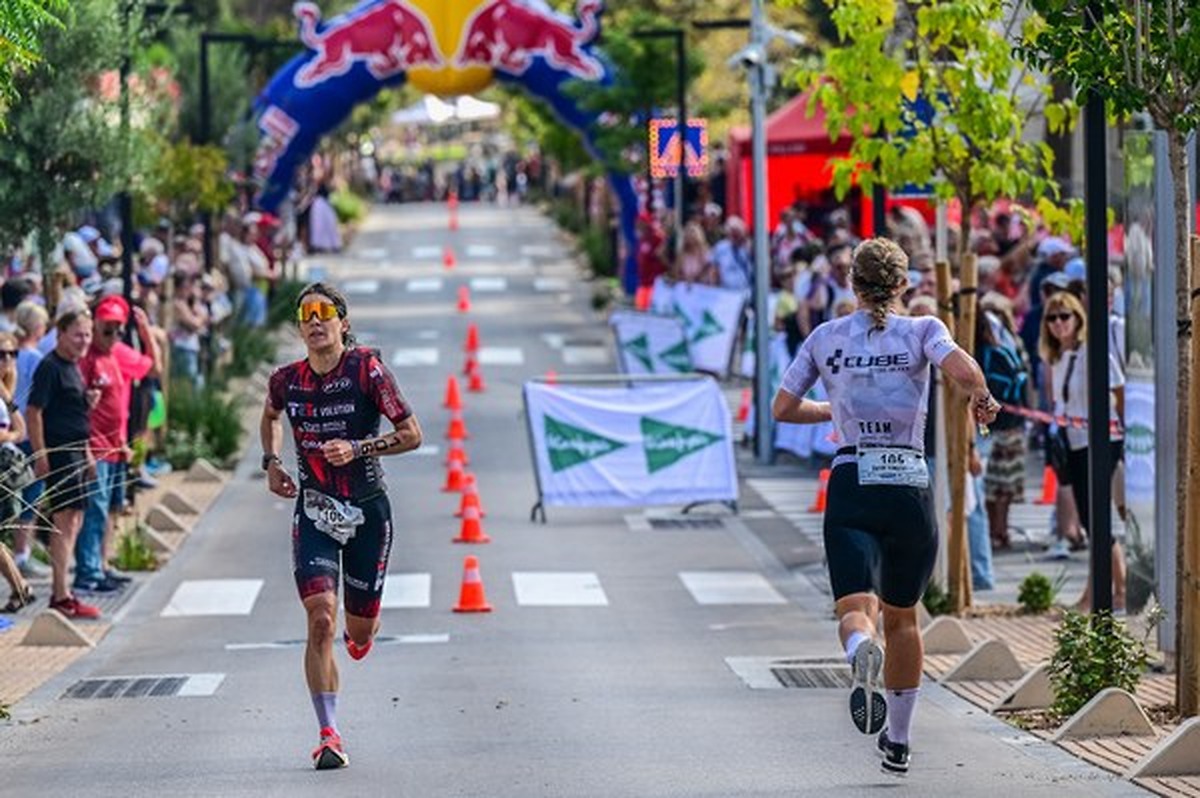
More than 2,000 athletes and thousands of visitors filled the streets of Peguera and Calvià during an unforgettable festive day. The Challenge Peguera Mallorca celebrated its 12th edition, solidifying its status as a key event in the international half-distance triathlon calendar and one of the most acclaimed competitions in Europe.
This year's event showcased an excellent level of competition with prominent figures from the triathlon world, high public participation, and a vibrant atmosphere that engaged the entire municipality of Calvià. The event was fully booked, attracting thousands of participants and supporters throughout the week of activities.
Elite race highlights
In the elite men's category, the race featured a spectacular battle with an epic conclusion in the final kilometre. The competition began at Torà beach, where Severin Schwarz and Leon Pauger led the swimming segment with a time of 23:33, followed by a strong group of pursuers a minute behind. On the cycling leg, Austrian Pauger delivered an impressive performance over the 90 kilometres, establishing a two-minute lead by the time he reached T2. However, his efforts took a toll during the running segment, where he lost the lead halfway through to Alexander Kull. Just when Kull seemed poised for victory, Slovenia's Matevz Nunar executed an unexpected and impressive attack in the final stretch, overtaking Kull in the last kilometre to finish with a time of 3:42:38, marking his first professional victory. Kull finished second at 3:42:59, while Jack Hutchens completed the podium at 3:43:12, narrowly beating Michiel Stockman by just one second in a thrilling sprint.
Matevz Nunar: 3:42:38
Alexander Kull: 3:42:59
Jack Hutchens: 3:43:12
Michiel Stockman: 3:43:13
Will Draper: 3:43:49
In the elite women's race, Swiss athlete Cathia Schär delivered a memorable performance to defend her title, achieving her second consecutive victory in Peguera with a time of 4:10:13. The race began with an intense duel in the water, where Caroline Pohle led the swimming segment with a time of 26:58, closely followed by Schär. Both athletes maintained a punishing pace during the cycling leg, creating a gap of over four minutes from their pursuers. Although Pohle entered T2 with a slight advantage, fatigue set in at the start of the half marathon. Schär caught up with her in the early kilometres and then surged ahead to dominate the race, crossing the finish line victorious.
Cathia Schär: 4:10:13
Caroline Pohle: 4:11:48
Laura Jansen: 4:13:17
Marta Bernardi: 4:19:52
Anne Reischmann: 4:20:56
International appeal and community spirit
One of the defining features of Challenge Peguera Mallorca is its international appeal, with over 85% of participants coming from outside the Balearic Islands each year. The mild autumn climate in Mallorca, the quality of accommodation and services in Peguera, and the scenic beauty of the courses make this event an ideal closing for the European half-distance triathlon season.
The atmosphere throughout the course was vibrant, with locals, tourists, and fans cheering on the triathletes along the promenade, cycling segments, and the finish line at Torà beach.
Organisational success
The organisational success of Challenge Peguera Mallorca is a direct result of a strong collaborative model between public institutions and the private sector. The event is organised by the Ajuntament de Calvià and the Calvià 365 Foundation, in collaboration with the Spanish Triathlon Federation (FETRI) and the Balearic Triathlon Federation (FETRIB). It also enjoys valuable institutional support from the Agency for Tourism Strategy of the Balearic Islands (AETIB) and the Council of Mallorca.
In the private sector, the commitment of the Peguera and Cala Fornells Hotel Association, chains such as Universal Beach Hotels and Valentin Hotels, the Challenge Family franchise, and collaborating brands like Powerbar, El Corte Inglés, Imprima CB, and MS Transportes has been crucial. The organisation extends special thanks to the residents of Calvià, particularly the involvement of over 650 volunteers, local clubs that participated in the organisation, and the extensive support provided by the Local Police, Civil Protection, and municipal services.