The interior minister of Spain, Fernando Grande-Marlaska, has concluded the first Conference of National Authorities of the Ibero-American Network for Disaster Risk Reduction and Civil Protection (RGIR), which has established a new permanent cooperation instrument aimed at enhancing disaster risk reduction, preparedness, and emergency response across the Ibero-American community.
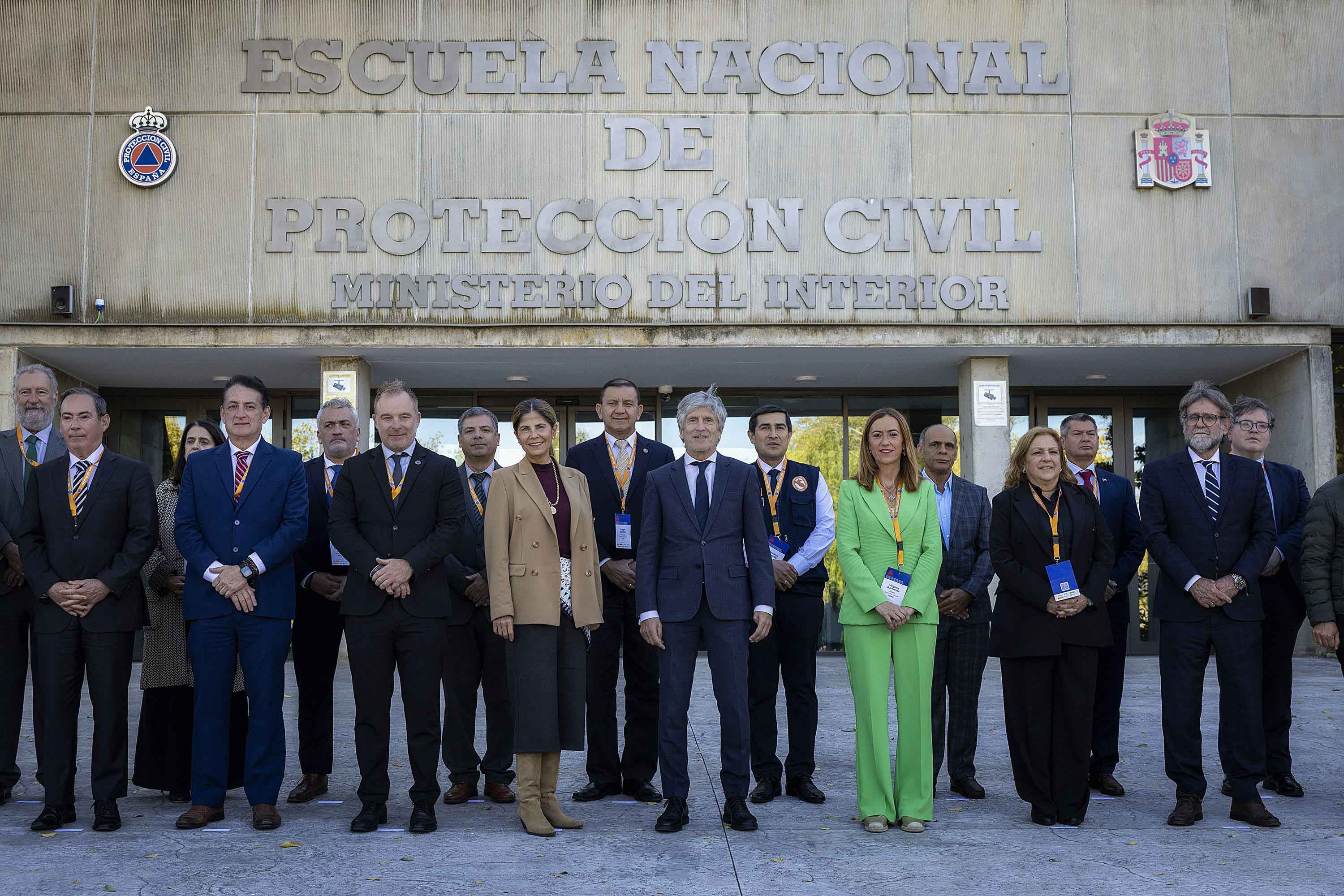
The meeting, held at the National School of Civil Protection in Rivas-Vaciamadrid, Madrid, saw representatives from 22 countries sign the final constitution of the RGIR, solidifying a collaborative initiative to bolster resilience and comprehensive disaster risk management for over 670 million citizens in the region.
The network aims to provide a stable platform for sharing capabilities, knowledge, and experiences to collectively address natural risks affecting the region. Its establishment follows a process led by the General Secretariat of Civil Protection and Emergencies of the Ministry of the Interior and the Ibero-American General Secretariat (SEGIB), with support from the Spanish Agency for International Development Cooperation (AECID), the Development Bank of Latin America and the Caribbean (CAF), and the Foundation for the Internationalisation of Public Administrations (FIAP).
This initiative is part of the official agenda for the upcoming XXX Ibero-American Summit of Heads of State and Government. Grande-Marlaska highlighted that for the first time in thirty summits, disasters will be a central topic on the agenda of Ibero-American leaders, stating, "We have elevated disaster risk reduction to the highest political level of our Ibero-American community."
He emphasised the importance of recognising that risks do not respect borders, and our capacity to confront them cannot be confined within the limits of our respective countries. This belief, he added, is the foundation of the network, which aims for Ibero-America to face shared risks united, not only by reacting to emergencies but by building more prepared, resilient, and secure societies together.
The network does not seek to replace existing mechanisms but to enhance, connect, and strengthen what is already functioning effectively.
Key agreements and objectives
During the meeting, delegations approved key instruments for the effective functioning of the network. Among the most significant agreements were the approval of its internal regulations, the adoption of strategic guidelines for 2027-2030, and the validation of the first Action Plan. These documents will define and guide the organisation's priorities over the next four years.
The Action Plan outlines the expected outcomes for each prioritised action by 2030 and establishes a timeline for implementation, including verifiable milestones, indicative deadlines, indicators, and compliance targets. It also takes into account the complementary nature of the network concerning existing disaster risk reduction initiatives and mechanisms in the region.
In this context, the network will promote a early warning system, a regional cooperation mechanism for response, technical and operational capacity-building programmes, and the promotion of prospective risk management and prevention.
Presidency transition
The meeting also formalised the transition of the pro tempore presidency of the network. After leading the establishment process and preparing the organisation's groundwork, the General Secretariat of Civil Protection and Emergencies of Spain has handed over the presidency to the Department of Civil Protection and Emergencies of Andorra, in accordance with the rotational model approved by member countries, effective from 1 January 2027.
During the handover, Virginia Barcones, the General Secretary of Civil Protection and Emergencies, remarked that "the definitive constitution of the network represents the culmination of a collective effort that has demonstrated the capacity of Ibero-American countries to build shared solutions to common challenges."
She added that "we have succeeded in providing the network with a solid structure, strategic planning, and the necessary instruments to turn cooperation into concrete results for our citizens. What we conclude today is the creation phase; what we begin today is the action phase."
Christian Pons, director of the Department of Civil Protection and Emergencies of Andorra, expressed that "we start this phase with the commitment to turn the agreements reached into clear objectives and concrete actions, establish effective collaboration and knowledge exchange mechanisms, and achieve visible results for our communities."
Member states also agreed to create a Technical Secretariat as a permanent support body for the network, which will be managed by SEGIB with specialised technical support from the General Secretariat of Civil Protection and Emergencies. Its responsibilities will include coordinating the organisation's activities, monitoring the agreements reached, and developing a common work agenda.
The Technical Secretariat will also serve as a link between successive rotating presidencies and ensure the execution of the adopted agreements and objectives. Additionally, participants approved the official visual identity of the organisation, including the logo that will represent the Ibero-American Network for Disaster Risk Reduction and Civil Protection.
A new era for ibero-american cooperation
With the approval of its main governance instruments, the establishment of a financial support mechanism, the definition of the Technical Secretariat, and the transition of the temporary presidency to a rotating model, the Ibero-American Network for Disaster Risk Reduction and Civil Protection officially begins its activities as a permanent regional cooperation platform. The establishment of the network marks a decisive step towards strengthening Ibero-American cooperation in disaster risk reduction and civil protection. With a consolidated governance structure, a common work agenda, and the commitment of its member states, the organisation embarks on a new phase aimed at generating shared solutions to the challenges facing the region.