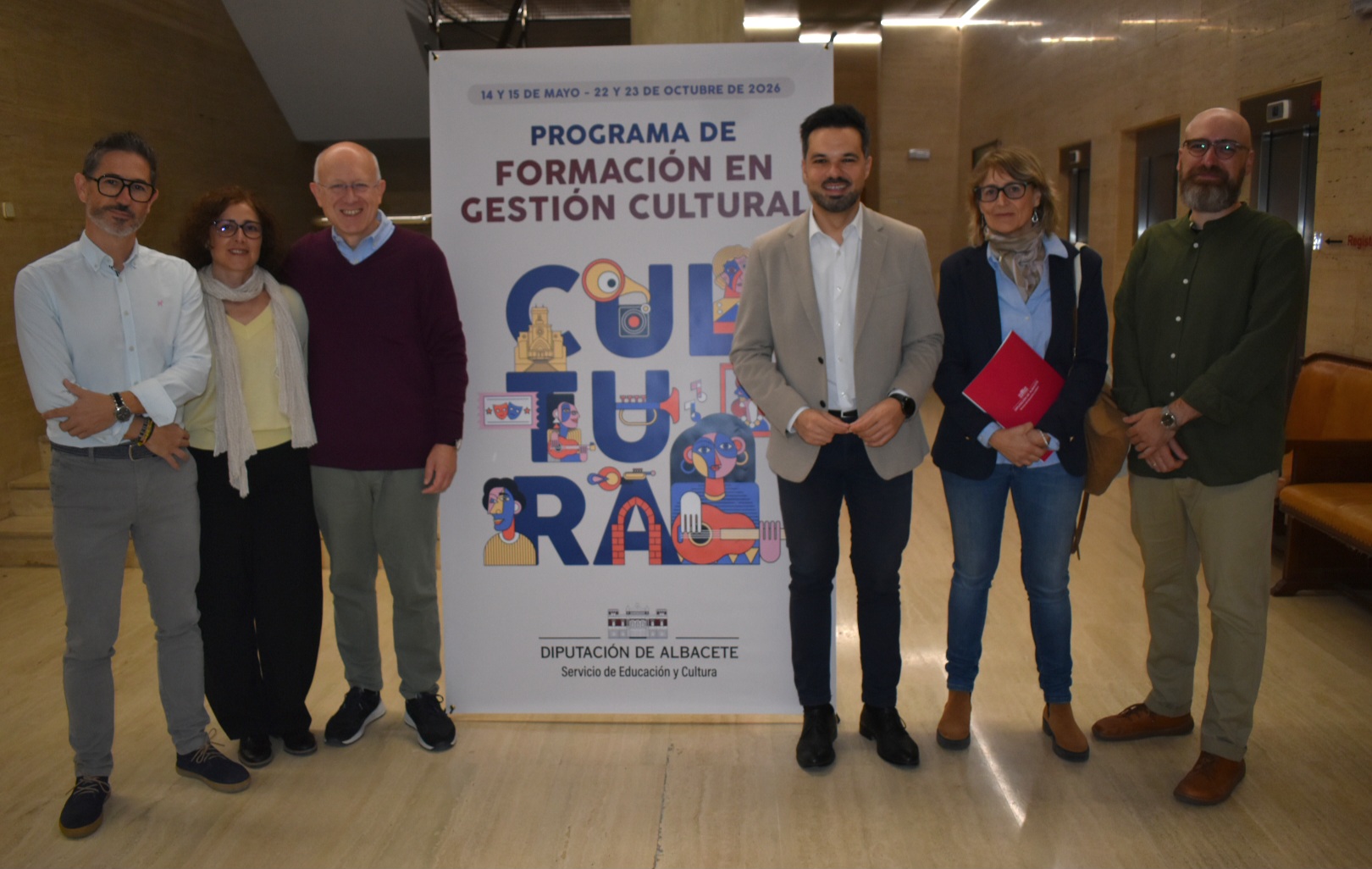
The Diputación de Albacete is hosting the second part of its Cultural Management Training Programme on Thursday and Friday, a pioneering initiative in Castilla-La Mancha launched in May. This programme aims to strengthen the capabilities of municipal professionals working in the cultural sector and to contribute to the development of more robust, sustainable cultural policies tailored to the realities of each locality.
During the opening of the event, Miguel Zamora, the provincial deputy for Education and Culture, highlighted the importance of this initiative, which he described as having received “great acceptance” during its first session in May. The programme features academic direction from Lluís Bonet, an internationally recognised expert in cultural policies and director of the Cultural Management Programme at the Universitat de Barcelona.
This second phase continues from the sessions held on 14 and 15 May and has brought together 30 participants in person, alongside online training and specialised webinars. The aim is to provide useful tools for those designing and developing cultural projects across various towns and cities in the province.
Zamora noted that the Diputación is committed to listening to municipalities and understanding the challenges faced by cultural professionals. He emphasised that often, it is the local councillors or mayors who are responsible for creating these cultural programmes. He stated that managing culture extends beyond merely organising events; it requires an understanding of the territory, identifying needs, generating opportunities, fostering participation, and connecting proposals with the community.
He also stressed that access to culture should not depend on geographical location or the financial capacity of each municipality. “Everyone has the right to high-quality programming, regardless of where they live,” he asserted, reinforcing the Diputación's role in supporting municipalities, particularly those with fewer resources, by providing tools, knowledge, and skills to develop their own cultural policies.
Zamora congratulated the team at the Education and Culture Service of the Diputación de Albacete for their dedication and commitment, while also thanking Lluís Bonet for his involvement in a project aimed at ensuring municipal cultural policies respond to changing social demands and new forms of participation.
Bonet acknowledged the efforts of the Diputación and the engagement of cultural managers in the province, stating that this collaboration is crucial for improvement and innovation in local cultural initiatives.
The programme's first part in May focused on cultural policy, while this session will delve into the design of cultural projects, with plans to discuss funding models early next year. Bonet clarified that the Diputación intends to continue this dialogue with the technicians who request specific programming for these sessions.
On Thursday, participants will hear from Manel González, co-director of the Summer School on Management of Creativity at the Universitat de Barcelona, who will discuss innovation in cultural project design and management. Àngel Mestres, director general of Trànsit Projectes, will also present on the key elements for designing and implementing local cultural projects. A practical workshop will explore how the Sustainable Development Goals (SDGs) of the 2030 Agenda can enhance project outcomes, alongside a session showcasing various cultural projects.
On Friday, Bonet will focus on evaluation indicators and dashboards, followed by presentations on evaluation experiences led by the Diputación de Albacete's head of Culture, Marisa Fajardo, and technicians Jorge Cubillana and Antonio Flores, as well as Ricardo Beléndez, director of Cultural Albacete. A new workshop will also address how to evaluate projects to ensure their sustainability.
This training programme includes contributions from professionals such as Tino Carreño and aims to highlight cultural initiatives developed across the region, promoting the exchange of experiences and shared learning.