The 43rd national zarzuela week continued with its second day featuring 'Gigantes y cabezudos', one of the most recognised works in the Spanish lyrical repertoire. The afternoon performance was sold out, and the evening session also saw a strong turnout.
Presented by Materlírica España, the production offered a carefully crafted version of the zarzuela, set against the backdrop of late 19th-century Zaragoza and the Cuban War. The score by maestro Fernández Caballero is a delight, featuring deeply resonant choral moments.
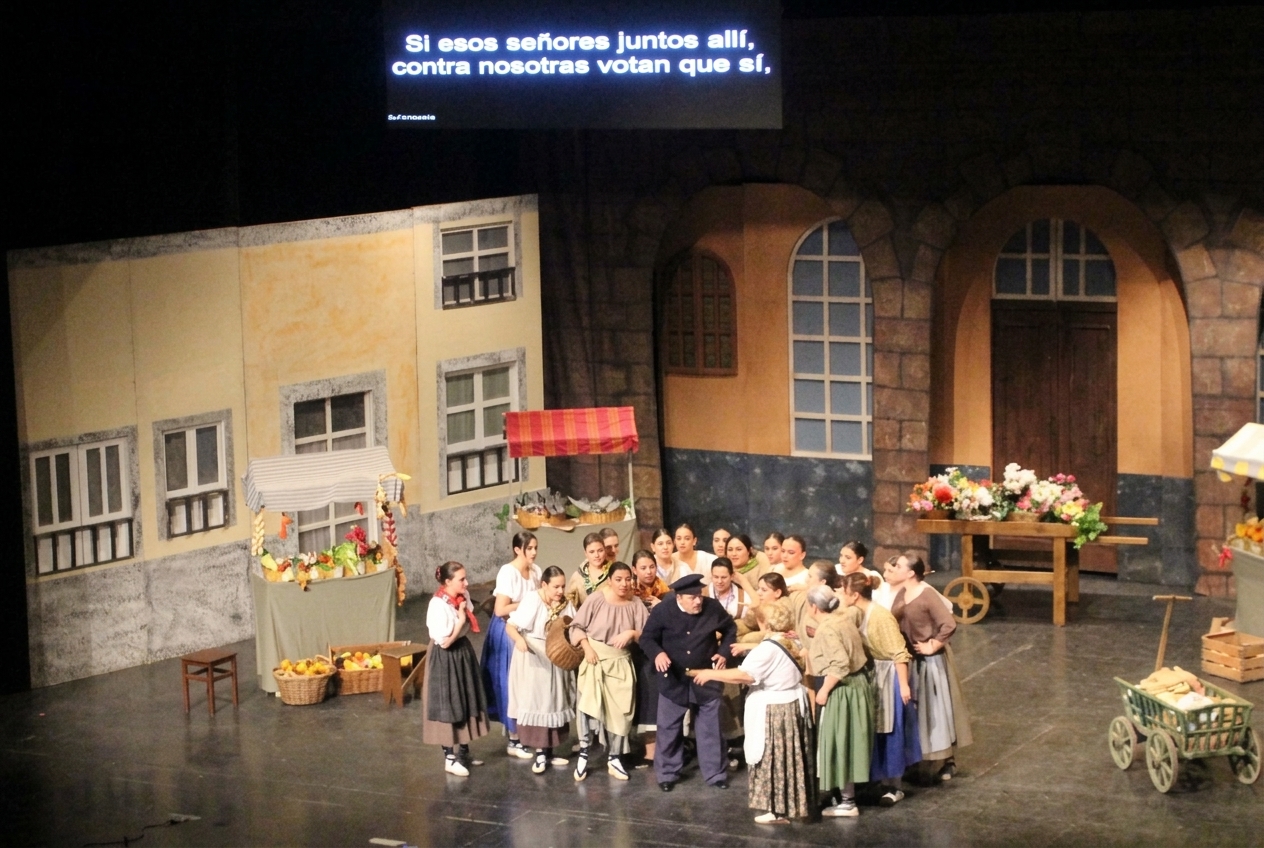
Under the musical direction of Pablo Gutiérrez and stage direction of María José Molina, the local component of the performance emerged as one of its main attractions. The chorus, along with several principal voices and actors, bore the distinct mark of La Solana, contributing to a distinguished production.
Petri Casado made her debut as 'Pilar' in the first session, taking on a demanding role for the local soprano. Her performance aimed to convey the anxiety, fear, and hope of a young woman awaiting news of her beloved Jesús, striving to balance vocal demands with the dramatic truth of her character.
Alongside her, José Manuel León found an appropriate register as 'Jesús', with his tenor voice standing out during one of the most recognisable passages of the work: the return of the repatriated, a scene laden with emotion that evokes the human consequences of the 1898 disaster.
The cast also included Carmela Cuevas as a determined 'Antonia', and Jesús Cordón, who brought notable comic flair to the role of 'Timoteo'. Other performers such as Rafa Casette as 'Sargento', Manuel Marcos as 'Tío Isidro', Laura Rodríguez as 'Juana', Petri Simón as 'Pepa', José González as 'Pascual', and Antonio García-Catalán as 'Vicente' contributed to a performance where local actors adapted their delivery to reflect the Aragonese dialect.
The female voices shone in the popular number 'Si las mujeres mandasen', one of the most celebrated pieces of the score. However, it was the 'Coro de Repatriados' that achieved even greater emotional depth, recreating the lament of those returning from war in a particularly intense passage that culminated in prolonged applause from the audience.
The resident orchestra of Materlírica accompanied the musical development of the performance, while the Ballet of Mary Carmen Sereno added colour and movement with a vibrant and well-executed jota. Both elements contributed to a staging that alternated between comedic moments and those of greater dramatic weight.
The performance also incorporated measures to facilitate accessibility for individuals with different communication needs. Raquel Jiménez and Víctor Escribano provided sign language interpretation, while subtitles above the stage allowed the audience to follow the arias and various musical passages, coordinated by Jesús García-Mascaraque.
With 'Gigantes y cabezudos', the national zarzuela week once again demonstrated the drawing power of lyrical theatre in La Solana and the value of collaboration between professional companies and local artists.