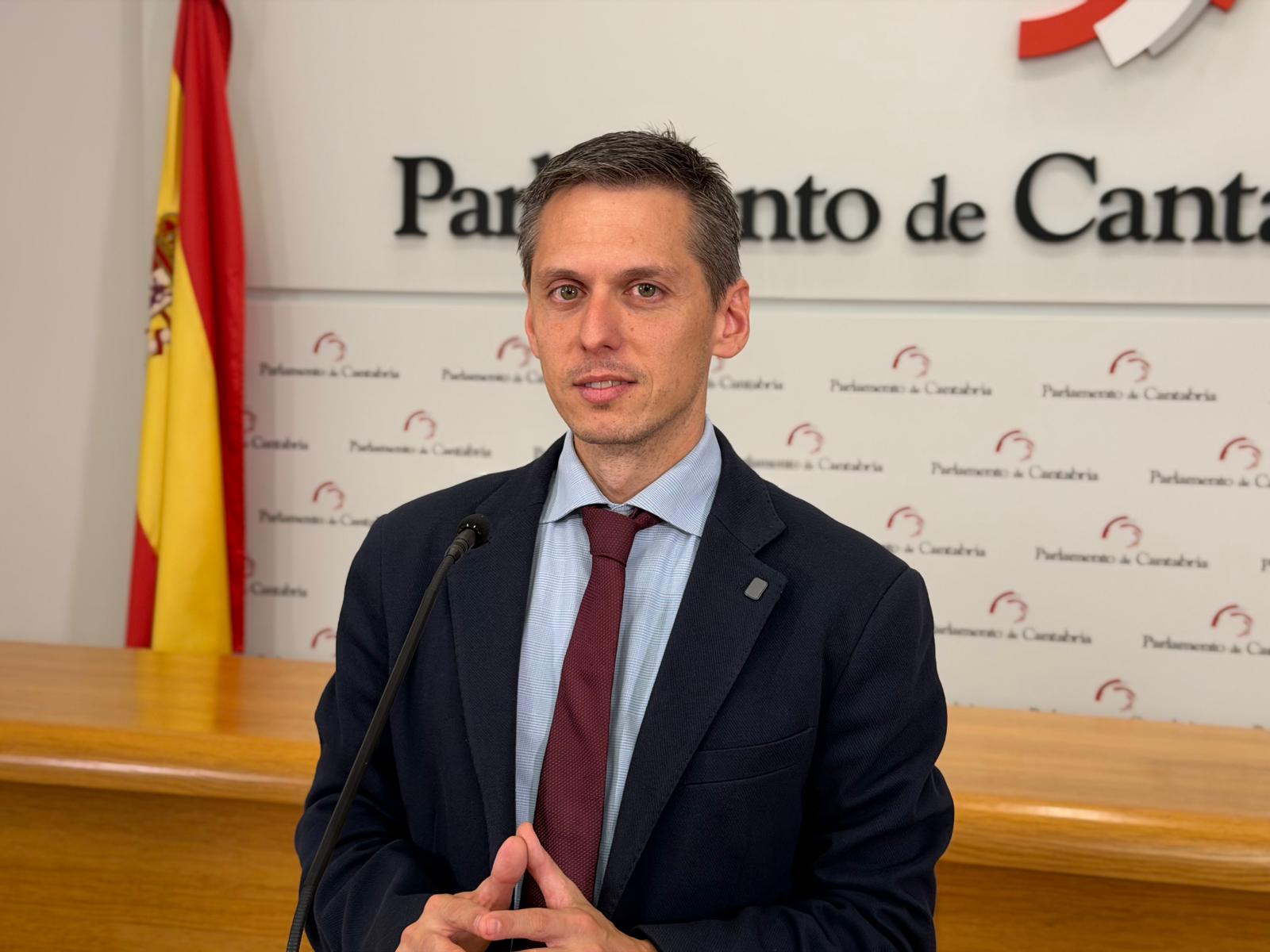
The Socialist Group in Cantabria is set to present two economic initiatives during the upcoming parliamentary session. These include a non-legislative proposal (PNL) aimed at increasing the budget for the Municipal Cooperation Fund and a motion calling for transparency and action from the regional government led by the People's Party (PP), following the announcement that Cantabria recorded the lowest growth among Spanish autonomous communities in 2025.
Mario Iglesias, the parliamentary spokesperson for the PSOE, held a press conference on Friday to outline the issues that the group will address in the plenary session scheduled for Monday. In addition to the economic initiatives, the group will also present amendments to the Teacher Authority Law and question the government regarding the status of dietitians and nutritionists, advocating for their inclusion in the Cantabrian Health Service (SCS).
Regarding the PNL, the Socialists are emphasising their commitment to municipal roots by proposing a 10% increase in the Municipal Cooperation Fund in the upcoming budget, which would amount to nearly 2 million euros more. They aim to continue this effort until 2031, targeting a 50% increase overall. Furthermore, the initiative seeks to ensure that the annual increase in line with the Consumer Price Index (CPI) for the Fund is guaranteed, even if the community's budget is not approved. Specifically, the PSOE suggests that if the budget is not passed in a given year, the corresponding increase should be accumulated and applied in the next approved budget.
Iglesias highlighted the significance of this initiative, stating that while the regional budget grows each year, the Municipal Cooperation Fund does not keep pace, despite municipalities taking on more services and demands from their residents amid rising costs.
In addition, the Socialists will propose a motion demanding explanations from the government after Cantabria was reported as lagging in autonomous growth by the National Statistics Institute. They are also calling for a comprehensive action plan for the industry, transport, and livestock sectors to complement measures taken by the Spanish government in response to rising fuel prices due to the ongoing crisis in the Middle East. The group is demanding reports on the actual execution of funds from the Recovery and Resilience Mechanism and quarterly appearances to detail the measures implemented to meet the regulatory requirements of the Independent Authority for Fiscal Responsibility (AIReF).
As Iglesias pointed out, these requests come in light of data indicating that the management of the PP under María José Sáenz de Buruaga has not been beneficial for Cantabria. He lamented, "We are the fastest-growing country in Europe. Year after year, Spain exceeds economic expectations, while Cantabria disappoints," attributing this to the PP's failure to attract or capitalise on opportunities, resulting in a lack of investment in a region where business creation has seen the largest decline in the country.
Next week, the PSOE's interpellation will focus on the situation of dietitians and nutritionists, advocating for their incorporation into the public health system, as there is currently no regional strategy in this area. Iglesias remarked, "What we eat is one of the factors that most influences our health," yet currently, nutritional care is only accessible to those who can afford it, leaving others to seek advice on social media or from unqualified individuals.
Finally, the Socialists will defend their amendments to the Teacher Authority and School Coexistence Law in the Chamber, arguing that it does not meet the current needs of educators and schools, and has once again been developed without consulting the sector it aims to serve.