The Centre d'Art La Panera has unveiled its new autumn exhibition cycle, which will be open to the public until 7 February 2027. This cycle showcases four projects: MERX by Fernando Renes, curated by Antoni Jové; Pasaje by Albert Potrony, curated by Frederic Montornés; Sí pero no by Guillermo Mora; and Sargits by Martina Manyà, curated by Helena Ayuso.
The exhibitions provide a critical perspective on the value systems that shape contemporary life, touching on economic exchanges, consumption, care, memory, artistic authorship, and material transformation. Pilar Bosch, the city’s Councillor for Culture, welcomed the artists and visitors, highlighting the centre's two-decade commitment to positioning Lleida within the dialogues surrounding contemporary art.
Bosch also announced that next year, the centre and the city will host a new Biennial of Leandre Cristòfol Art, which aims to incorporate new elements of contemporary art into La Panera's collection. Additionally, later this year, the crypt of the Seu Vella, a historic cathedral in Lleida, will feature a work by Fernando Renes, fostering a dialogue between heritage and contemporary art.
Exhibition highlights
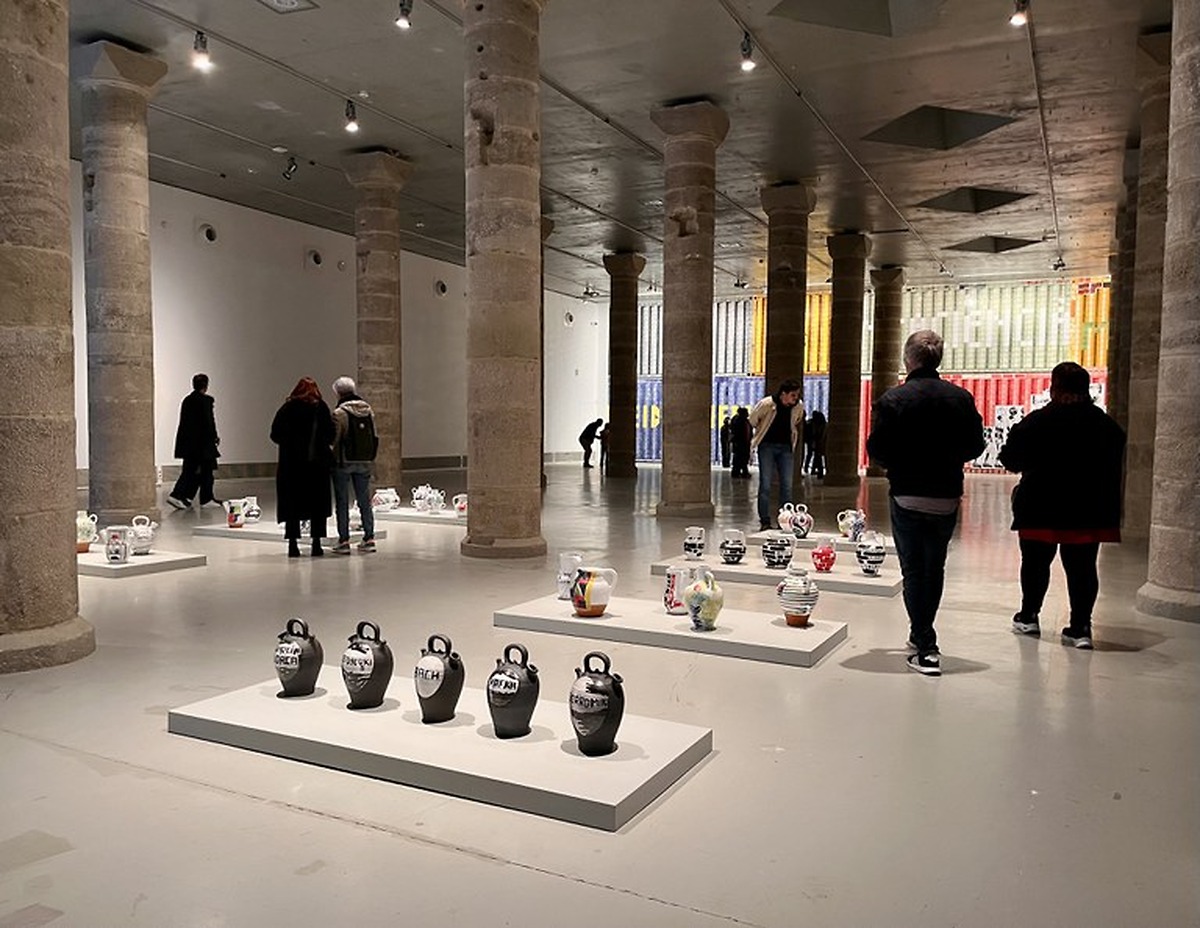
The artworks are displayed throughout various spaces within the centre. On the ground floor, Fernando Renes presents a reflection on objects, the market, and production and consumption methods. On the first floor, Albert Potrony focuses on care, death, and companionship. In the Documentation Centre, Guillermo Mora explores the boundaries of painting, while in the miniPanera, Martina Manyà investigates the reuse of materials and the connections between painting and textiles.
Despite their differing methodologies and languages, the four proposals share a common interest in processes of transformation and how we attribute value to objects, materials, and human relationships. The cycle invites visitors to consider often-overlooked aspects: the journey of objects, the time required for care and repair, the everyday gestures of artistic creation, and the shared experiences that build community.
Individual projects
In MERX, Fernando Renes addresses contemporary hyper-capitalism and individuals' positions within production, consumption, and exchange systems. The project, named after the Latin term for merchandise, establishes a direct link to La Panera's history as a former medieval market square. Through ceramics and drawing, Renes explores the material and symbolic dimensions of objects and the economic circuits surrounding them.
Pasaje represents nearly seven years of research by Albert Potrony on death, care, and mourning. The exhibition features the audiovisual work that shares its title and showcases results from the Mortales programme, developed with individuals from various ages, backgrounds, and social realities. Through testimonies, audiovisual pieces, and documentary materials, the exhibition presents death as a shared experience that can be approached through listening, community, and care.
In Sí pero no, Guillermo Mora challenges the conventions of painting using a seemingly simple method: attaching A4 sheets of paper directly to the wall. This project highlights traditionally invisible elements, such as staples and traces of the working process, prompting reflections on authorship, artistic production, and the material possibilities of contemporary painting.
Martina Manyà's Sargits transforms discarded works, fragments of paintings, and leftover materials into new garments using textile techniques like embroidery, weaving, and sewing. This proposal champions the value of manual labour, repair, and reuse, while contemplating time, care, and the ability of materials to acquire new meanings.
With this new exhibition cycle, La Panera reaffirms its commitment to artistic practices linked to critical reflection on ways of living, producing, consuming, and caring. The four exhibitions centre on issues relevant to everyday life, inviting the public to rethink their relationships with the objects, materials, and people that shape their environment.