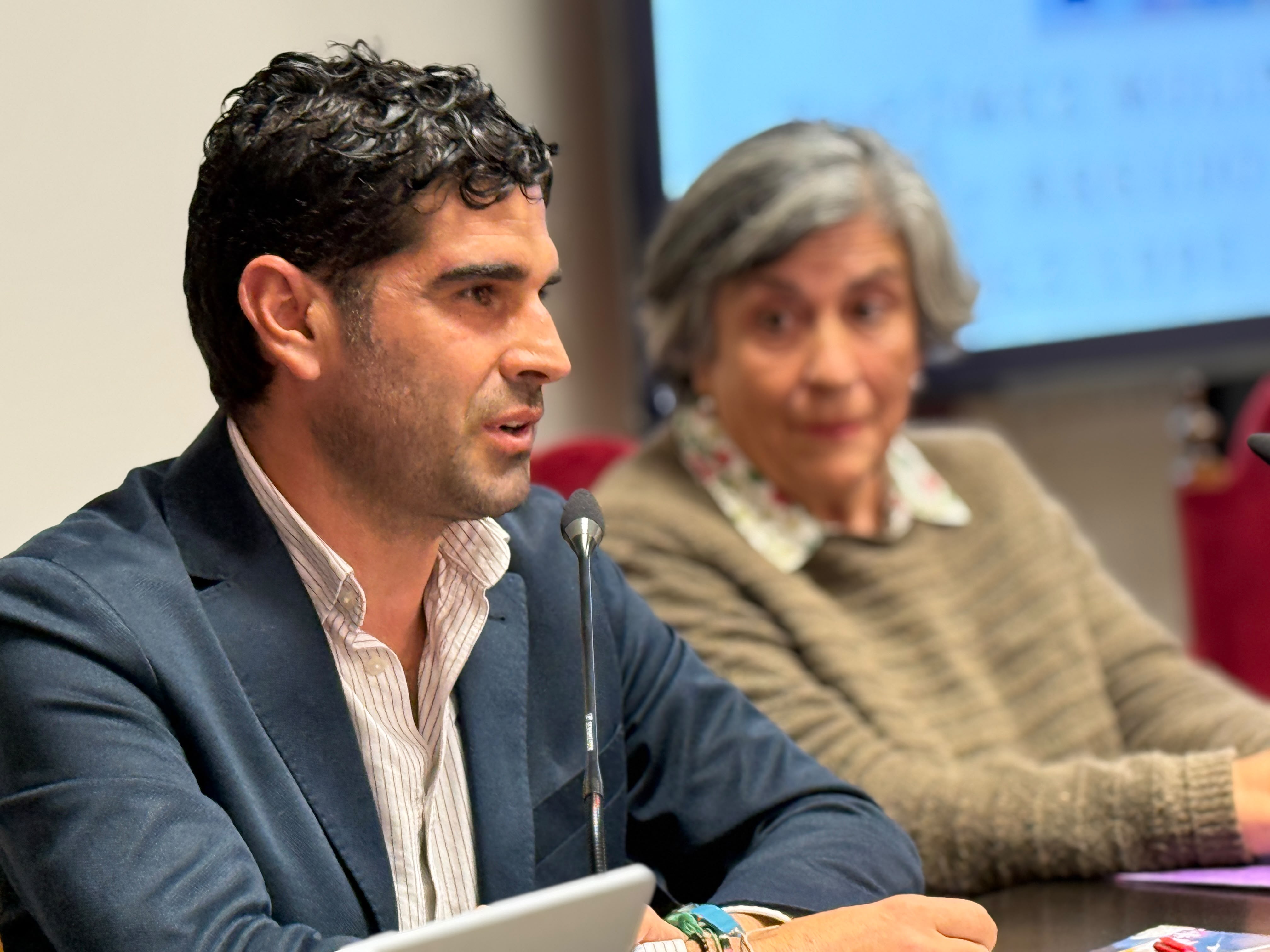
The Salón de Actos at Chalé Fontecha hosted the presentation of the book ‘In memory of Rubí Sanz Gamo’, published by the Instituto de Estudios Albacetenses ‘Don Juan Manuel’ (IEA). This collection includes memories, experiences, and reflections from over thirty individuals who shared personal and professional moments with Sanz.
José González, the deputy for Social Affairs, attended the event alongside Antonio Caulín, the director of the IEA, and various contributors to the collective work. During his speech, González expressed the Diputación de Albacete's recognition of Rubí Sanz, emphasising not only her remarkable career but also her understanding of culture, heritage, and public service. He stated, “We are talking about one of the cultural references of our land, one of the people who worked hardest to share our history, not just within Albacete but across the country.”
González also extended his gratitude to those who contributed to the tribute through their written words, highlighting the IEA's role in facilitating this initiative. He asserted that “this is an act of justice because the city and province have much to thank her for; and this should be the first step of many.”
He noted the significance of presenting the publication at Chalé Fontecha, especially as the IEA approaches its 50th anniversary, recalling that Rubí Sanz was one of its founding members. He underscored the connection between the restoration of this building and her philosophy: viewing culture as a common good that should be preserved, shared, and made accessible to all citizens.
A great public servant
In his address, González went beyond recounting Sanz's extensive career, which included leadership roles at the Museum of Albacete, the National Archaeological Museum, and the Culture Department of Castilla-La Mancha. Instead, he focused on her understanding of public service and commitment to it. “Positions change hands and institutions continue their work, but there is a sense of public service that cannot be replaced or improvised; you either have it or you don’t. And Rubí had it all her life. She was a great public servant,” he remarked.
González championed her belief that culture is a right, asserting, “She understood perfectly and taught us that knowledge, culture, and memory cannot be privileges reserved for a few; they are rights that make us freer, more aware, and also more equal.” He concluded his remarks by stating, “Rubí Sanz built the future by looking to the past,” urging public institutions and society to continue her legacy: “Rubí left us a great void, but she also left us a great responsibility.”
An indelible mark in the form of a book
The book opens with an introduction by Antonio Caulín, providing a biographical overview of Rubí Sanz Gamo. It features 35 narratives that explore various aspects of her life and legacy, addressing her contributions to archaeology, heritage studies, museum management, cultural management, and the personal relationships she cultivated throughout her life. The publication includes contributions from numerous authors, such as Lorenzo Abad Casal, Juan Manuel Abascal Palazón, and many others, reflecting the profound impact Sanz had on her community and beyond.