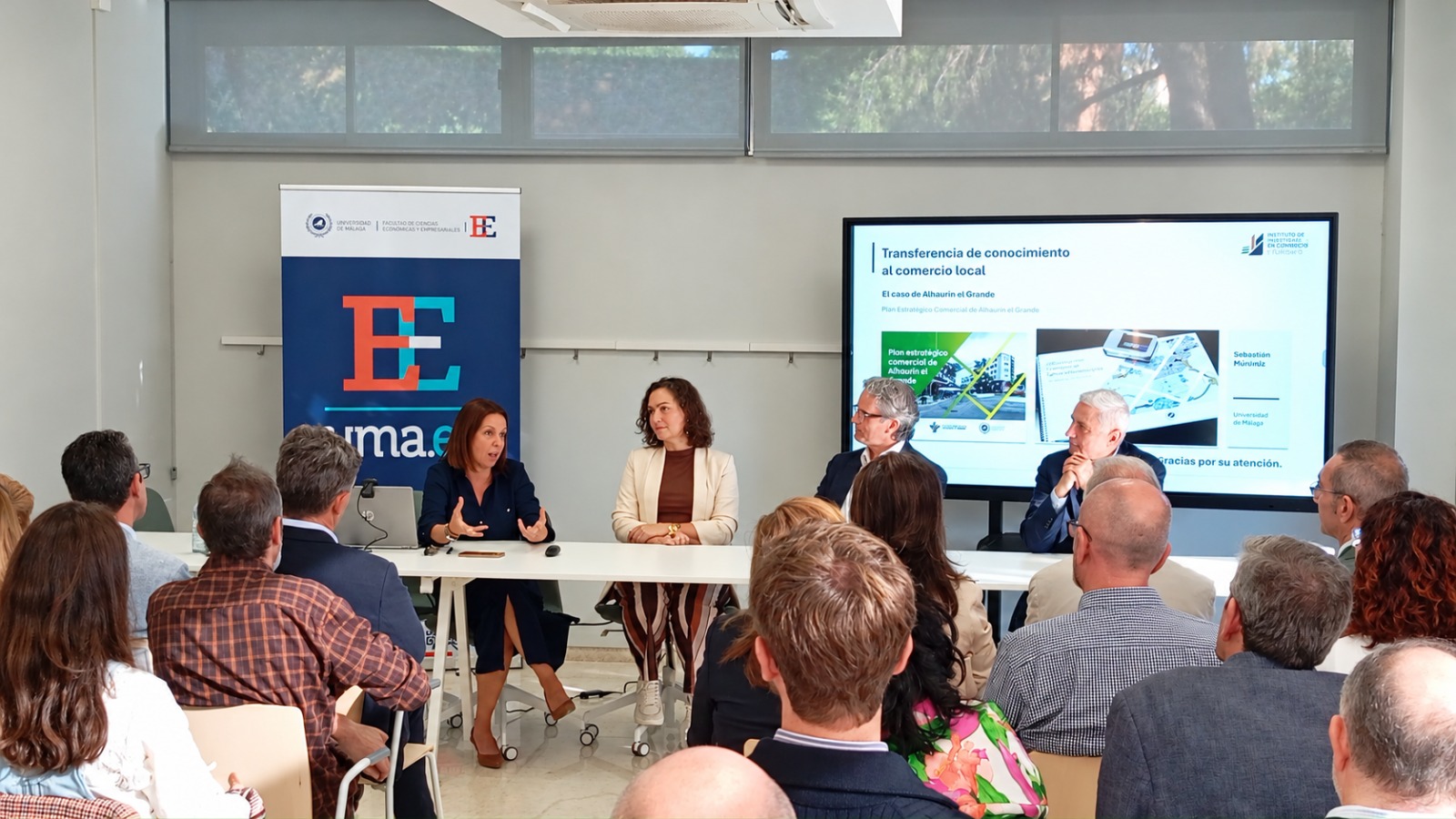
The Cámara de Comercio de Cantabria has presented a comprehensive diagnosis of the region's commercial sector during the inaugural session of the Consejo Cántabro de Comercio, held at the Espacio Bisalia in the Parque Científico y Tecnológico de Cantabria (PCTCAN). The session was presided over by Eduardo Arasti, the regional Minister of Industry, Employment, Innovation and Commerce.
Commissioned and funded by the Government of Cantabria, the report offers an in-depth analysis of the current state of commerce, its contribution to the regional economy, the changes experienced over the past decade, and the key challenges that will shape its future.
David Ramos, head of the Area of Business Creation and Retail Commerce at the Cámara, presented the main findings of the study to representatives from public administrations, business organisations, trade associations, consumer groups, and social agents involved in the new advisory body.
Economic importance of the commercial sector
The diagnosis confirms the strategic importance of commerce for Cantabria's economy, accounting for 20.42% of the regional Gross Domestic Product (GDP) and comprising 18.73% of the business fabric in the autonomous community. In employment terms, the retail sector employs 27,218 workers and 8,181 self-employed individuals, representing over 35,000 affiliates to the Social Security system and 15.54% of the total regional workforce.
The report also highlights the sector's capacity to generate economic activity in other areas, noting that for every €100 of commercial activity, an additional €110 is generated across the economy. Furthermore, every 100 direct jobs in commerce create an additional 68 indirect jobs.
Trends in retail establishments
One notable aspect of the study is the evolution of retail commerce over the last decade. Between 2015 and 2025, the number of commercial establishments in Cantabria has decreased by 10.2%, from 8,000 to 7,184. However, this decline has coincided with a 49.1% increase in the sector's turnover during the same period. Additionally, commercial activity in Cantabria has outpaced the national average in recent years, with a difference of up to 7.1 percentage points in 2025.
These figures reflect a transforming sector that maintains its economic relevance while adapting to changes in its business structure and consumer habits.
Consumer habits and local commerce
The diagnosis also examines the relationship between Cantabrians and local commerce. According to the study, 68.9% of residents regularly shop at local establishments, while only 2% claim to never do so. Key values associated with this model include proximity, trust, personalised attention, and support for the local economy.
Cantabria has an approximate density of 15 establishments per 1,000 inhabitants, similar to the national average, with significant activity in municipalities such as Santander, Camargo, Castro Urdiales, and Torrelavega. The report underscores the contribution of local commerce to municipal dynamism, the maintenance of services, and territorial cohesion.
Challenges ahead
Alongside the sector's strengths, the study identifies various challenges to its competitiveness and future sustainability. These include difficulties in ensuring generational change, adapting to new consumer habits, incorporating digital tools and technologies, and navigating regulatory challenges.
The ageing of business owners is a significant concern, with studies indicating that over 40% of the region's commerce is managed by individuals over 55 years old, and more than 60% of these self-employed individuals plan to exit their businesses in the coming years. Minister Arasti has emphasised the economic and social consequences of business closures due to a lack of continuity, stating, "Behind each closure due to a lack of succession, not only a business disappears, but also experience, knowledge, employment, economic activity, and often an essential service for the municipality where it is located."
In response, the Relevo Cantabria programme aims to connect merchants interested in passing on their businesses with entrepreneurs looking to continue viable business projects. Arasti also highlighted the need to incorporate artificial intelligence and digitalisation into small businesses, leverage commerce as a tourist resource, and simplify administrative processes to facilitate the activities of self-employed individuals and companies.
Establishment of the Consejo Cántabro de Comercio
The presentation of the diagnosis coincided with the establishment of the Consejo Cántabro de Comercio, a participatory, advisory, and consultative body chaired by Eduardo Arasti and comprising 32 members. This includes representatives from the municipalities of Santander and Torrelavega, the chambers of commerce of Cantabria and Torrelavega, CEOE-CEPYME Cantabria, COERCAN, ASODECO, the Union of Consumers of Cantabria, the Federation of Municipalities of Cantabria, the University of Cantabria, trade unions UGT and CC OO, and various regional government departments.
During the session, directed by Rosendo Ruiz, the General Director of Commerce and Consumption and Vice-President of the Council, the main lines of work planned by the General Directorate for the coming months were also presented. Arasti asserted that the creation of the Council responds to a shared need among sector representatives and highlighted its role as a permanent collaboration space to analyse the evolution of commerce, identify its needs, and formulate proposals to enhance its competitiveness and modernisation.