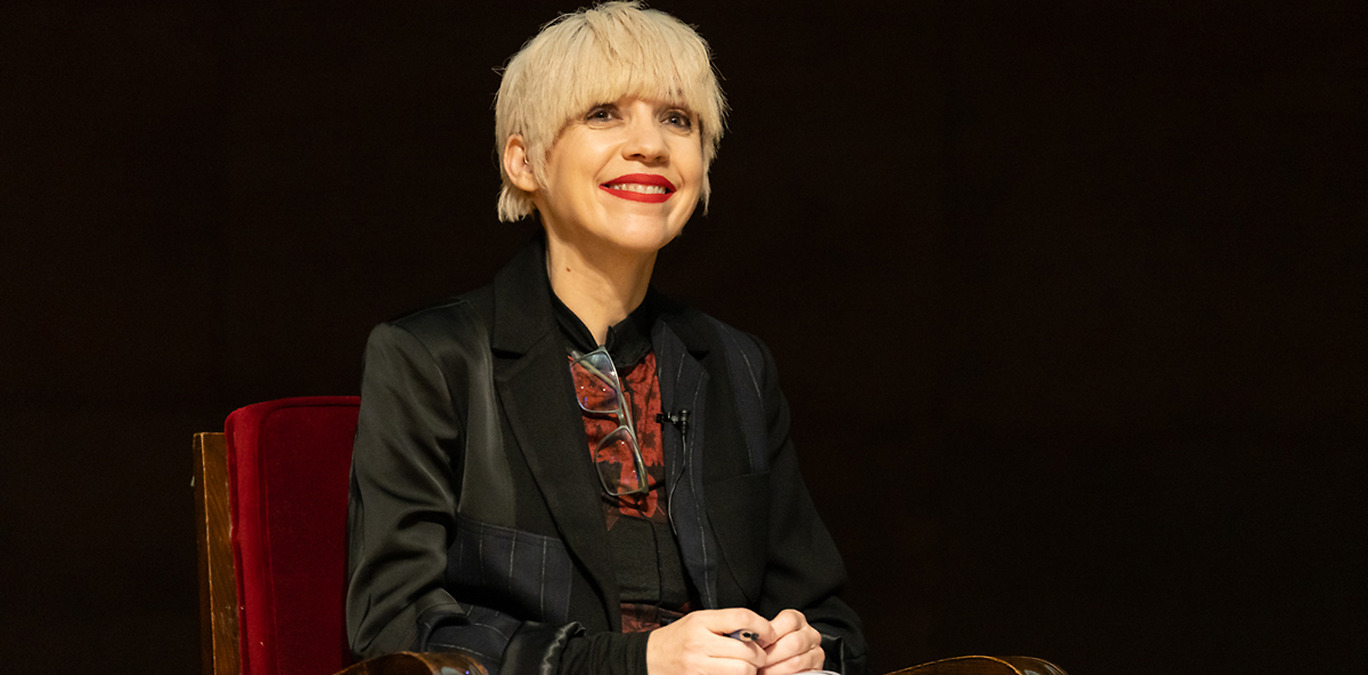
Remedios Zafra, awarded the National Essay Prize in 2025 for her work El informe, spoke passionately about the transformative power of the humanities during the recent celebration of Writers' Day at the Complutense University of Madrid. The event, organised in collaboration with the National Library of Spain, aimed to honour the contributions of women writers and combat historical discrimination against them.
The Faculty of Philology, under the leadership of Dean Eduardo Valls, transformed the venue into a 'celebration of female words'. This year's festivities included a conversation with Zafra, a roundtable on literary creation, a gathering of reading clubs, an exhibition on women translators, and a book tasting featuring recommended readings.
In her opening remarks, Cristina Oñoro, Vice-Dean of Culture, Transfer and Institutional Relations, noted that the Faculty of Philology is ideally suited for such celebrations, as it consistently recognises the contributions of women writers throughout the year.
Addressing a diverse audience that included members of the university community and high school students from Montserrat Fuhem, Zafra discussed her award-winning book, which explores themes related to 'the work we love, even if it is not currently fashionable'. During her talk, she defended the humanities' ability to foster community and effect change in the world.
Zafra expressed a realistic yet optimistic view of the world, emphasising the importance of enjoying the process of writing rather than solely focusing on the end result. She cautioned against the tendency to rely on artificial intelligence, stating that 'defaulting to AI makes us lose what makes us more human and brings us greater pleasure'.
Critiquing the fast-paced nature of technocapitalism, Zafra drew parallels between this system and patriarchy, describing both as oppressive structures that rely on the oppressed to maintain them. She highlighted that while patriarchy affects women, technocapitalism extends its reach to all individuals, encouraging self-exploitation.
Despite her critical analysis, Zafra remains hopeful, citing the ability of women and feminist movements to recognise and confront these oppressions, opting for solidarity over individualism. She praised grassroots movements, such as the encampments at Puerta del Sol and reading clubs, which she believes are pivotal in creating a cultural foundation in Spain, transforming solitary readers into community thinkers.
Among her recommendations, Zafra urged attendees to read poetry, as it allows exploration of the 'difficult to narrate', adopt feminist strategies in literature, and embrace imagination, which fosters empathy by helping readers understand perspectives different from their own.