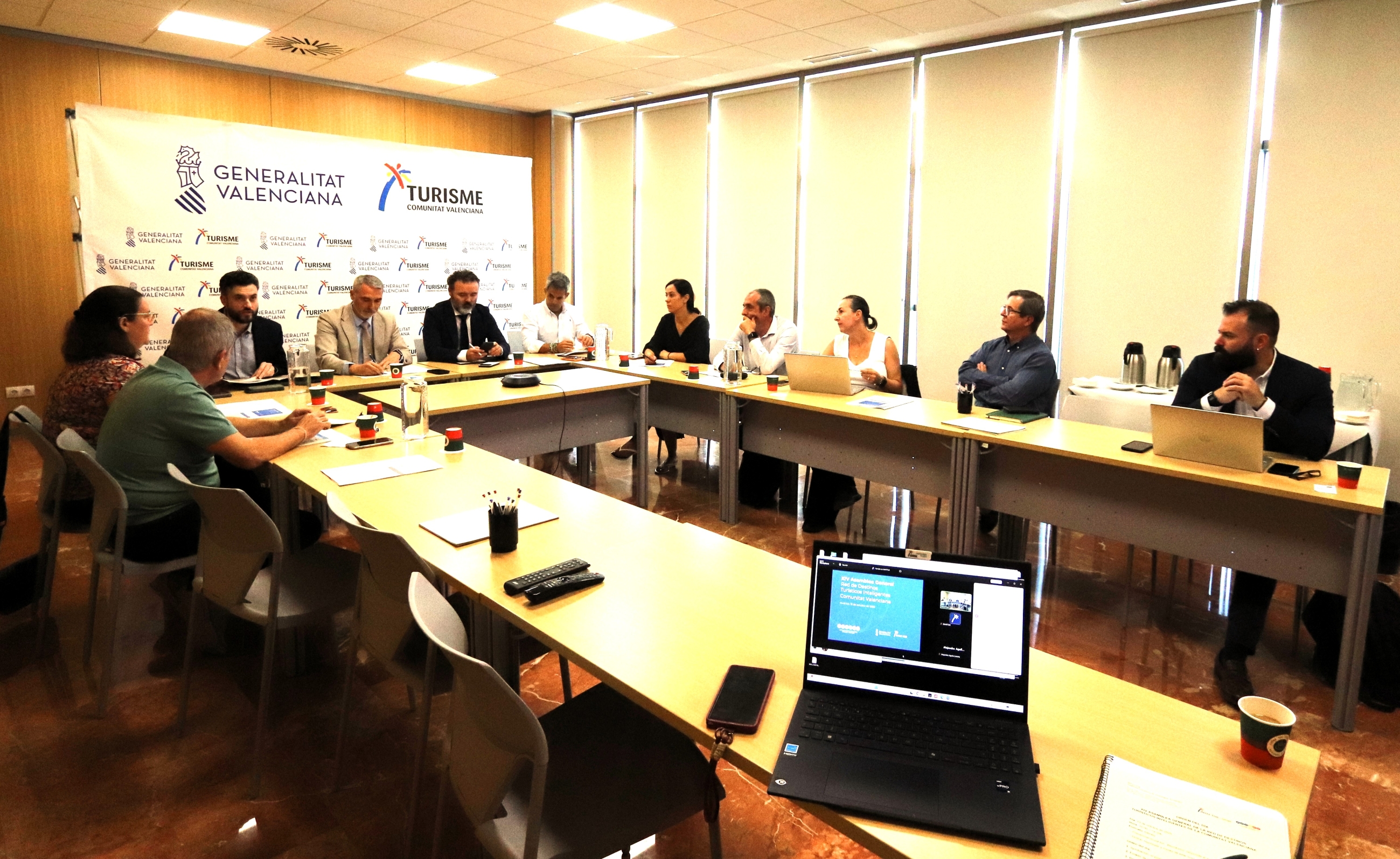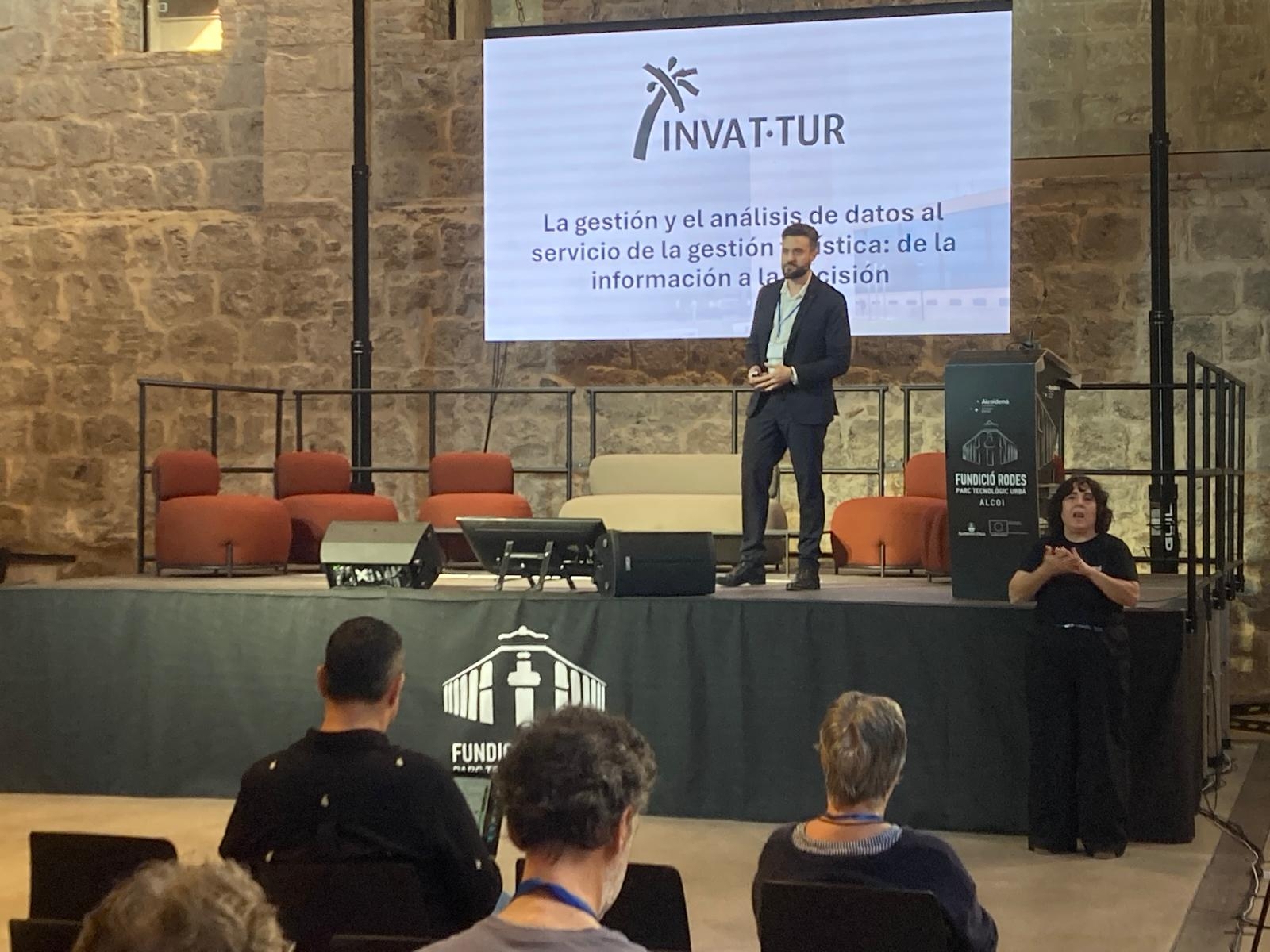
The Valencian Institute of Tourist Technologies (INVAT·TUR), part of Turisme Comunitat Valenciana, recently took part in the Smart Cities and Big Data Conference held on 15 October at the Urban Technological Park of Rodes in Alcoy. The event featured an inaugural presentation that centred on the significance of data and artificial intelligence (AI) in improving tourism management.
Jordi Bataller Mompó, director of Tourist Intelligence and Innovation at Turisme Comunitat Valenciana and director of INVAT·TUR, addressed the challenges and opportunities presented by new technologies for enhancing planning, anticipating changes in demand, and strengthening the competitiveness of businesses and destinations. The conference, aimed particularly at small and medium-sized enterprises (SMEs), attracted professionals, researchers, students, and public administration representatives, with 155 attendees in the morning sessions, 33 participants in an afternoon practical workshop, and 60 in a robotics hackathon using Arduino.
Transforming data into actionable insights
During his presentation, Bataller emphasised that the primary challenge of digital transformation lies not merely in acquiring more information or adopting new technological tools, but in converting data into useful knowledge that informs decisions leading to tangible outcomes. He highlighted the need to evolve from descriptive analytics to models that can identify causes, anticipate scenarios, and evaluate various courses of action. This evolution enables companies to enhance their processes and better understand their customers, while public administrations can optimise planning and resource management.
The presentation also underscored the importance of data governance, information quality, and collaboration among organisations as essential conditions for harnessing the potential of new technologies.
Artificial intelligence serving people
In relation to AI, Bataller pointed out its capabilities in analysing large volumes of information, identifying patterns, automating tasks, and supporting decision-making. However, he cautioned that merely incorporating these tools does not equate to innovation. The application of AI must be driven by specific needs, defined objectives, and reliable data, alongside appropriate supervision and control mechanisms to mitigate risks. He particularly stressed the necessity of maintaining clear human responsibility in decisions that could significantly impact individuals, public resources, or have substantial consequences.
This approach is especially pertinent for SMEs, which can access new technological capabilities without the need to develop complex infrastructures, provided they accurately identify their needs, select suitable tools, and possess the necessary skills to use them effectively.
Tourist intelligence as a tool for destinations
Bataller illustrated these reflections within the tourism sector by discussing visitor flow management during high-traffic events, a critical issue for destinations like Alcoy. By analysing combined information on mobility, occupancy, tourist spending, and event calendars, authorities can better anticipate visitor concentrations, plan services more effectively, and distribute flows across different areas of the city. These measures contribute to enhancing the tourist experience and fostering harmonious coexistence with local residents.
In this context, he highlighted the work undertaken by Turisme Comunitat Valenciana, through INVAT·TUR, to promote the Intelligent Tourist Destinations model in the Valencian Community (DTI-CV), which encourages the integration of knowledge, innovation, and data-driven management into destination planning. Tourist intelligence requires not only technology but also coordination among stakeholders, knowledge exchange, and the capacity to evaluate the outcomes of actions.
Bataller concluded his intervention with a central idea: data holds value when it aids in understanding reality; knowledge is beneficial when it enhances decisions; and decisions are effective when they yield measurable results. Through its participation in this conference, INVAT·TUR reaffirms its commitment to innovation in tourism and the transfer of knowledge regarding data and artificial intelligence, promoting solutions that enhance destination management, business competitiveness, and the sustainability of tourism activities.