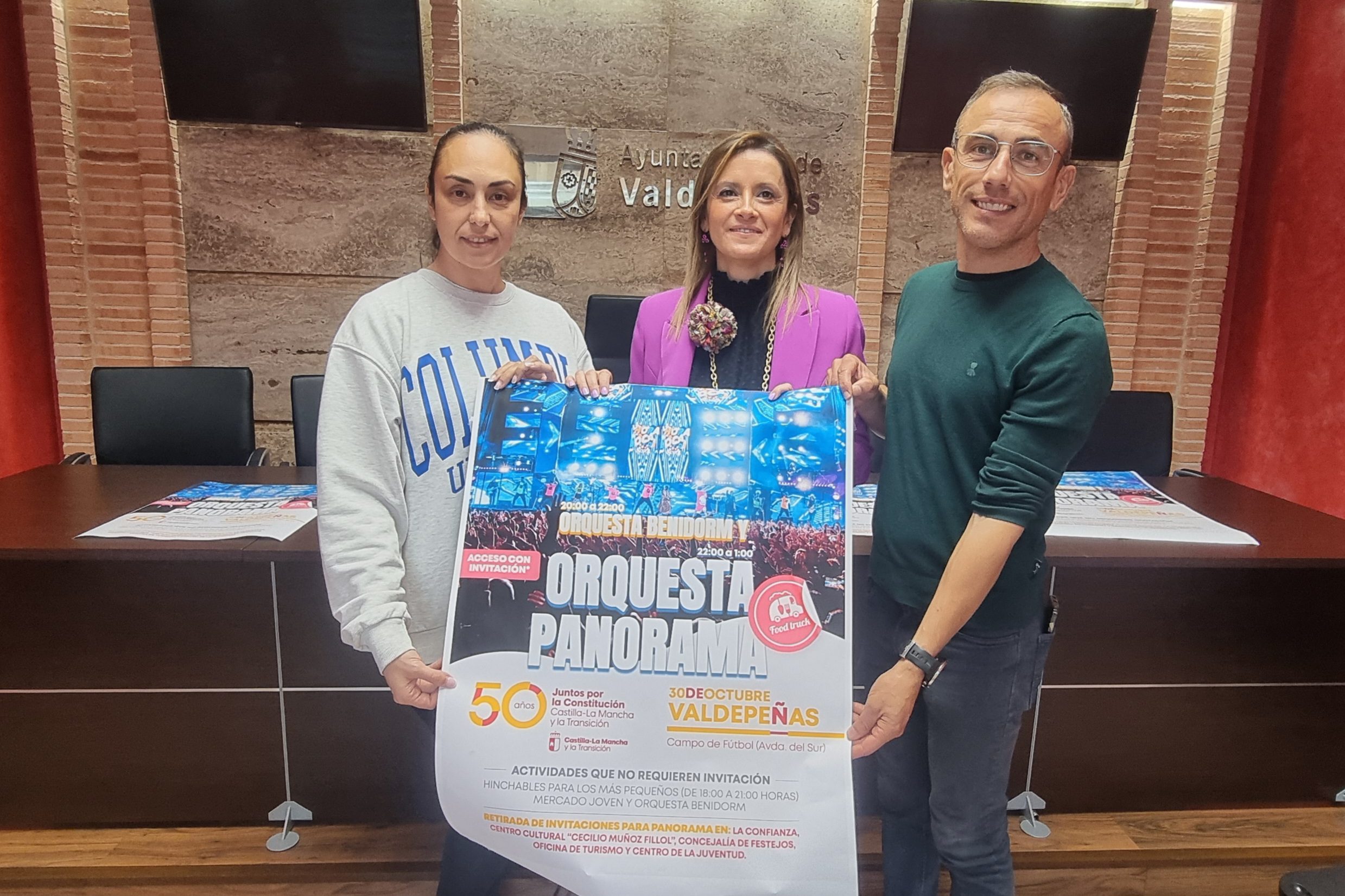
Valdepeñas is set to celebrate the 50th anniversary of Spain's transition to democracy with a variety of cultural and educational activities aimed at bringing together different generations. The festivities will include musical performances, notably by the Panorama orchestra, as well as exhibitions that showcase the recent history of Spain through newspaper front pages and historical images.
Vanessa Irla, the Deputy Mayor for Culture and Tourism, stated that these activities provide “different ways to approach a single historical process and remember how Spain transformed.” She emphasised that the combination of music, journalism, and an outdoor historical exhibition allows for a multifaceted exploration of this significant anniversary, touching on popular culture, the evolution of information, freedom of expression, and key events that shaped Spain's political and social landscape.
The activities will commence on 30 October at the Ciudad Deportiva Virgen de la Cabeza, featuring a musical cycle titled ‘The music that changed a country’. From 18:00 to 21:00, there will be free access to children's inflatables, a youth market, and food trucks. The Benidorm orchestra will perform from 20:00 to 22:00, followed by the Panorama orchestra from 22:00 to 01:00, evoking the traditional community gatherings that have connected generations over the decades.
Irla noted that invitations for the Panorama orchestra performance will be available from 21 October, with a limit of four per person, at various locations including the Centro Cultural La Confianza, the Tourist Office, the Youth Centre, and the Centro Cecilio Muñoz Fillol.
Additionally, from 16 to 23 November, the Centro Cultural La Confianza will host the exhibition ‘50 years of Journalism in Castilla-La Mancha’, showcasing newspaper front pages that reflect on the democratic transition, accompanied by a discussion panel. Furthermore, from 12 to 21 March next year, Valdepeñas will feature the outdoor travelling exhibition ‘50 years together: The Transition in images, building a new reality in Castilla-La Mancha 1976-2026’, highlighting pivotal moments such as the onset of democracy, the 1978 Constitution, and the establishment of the Autonomous State.