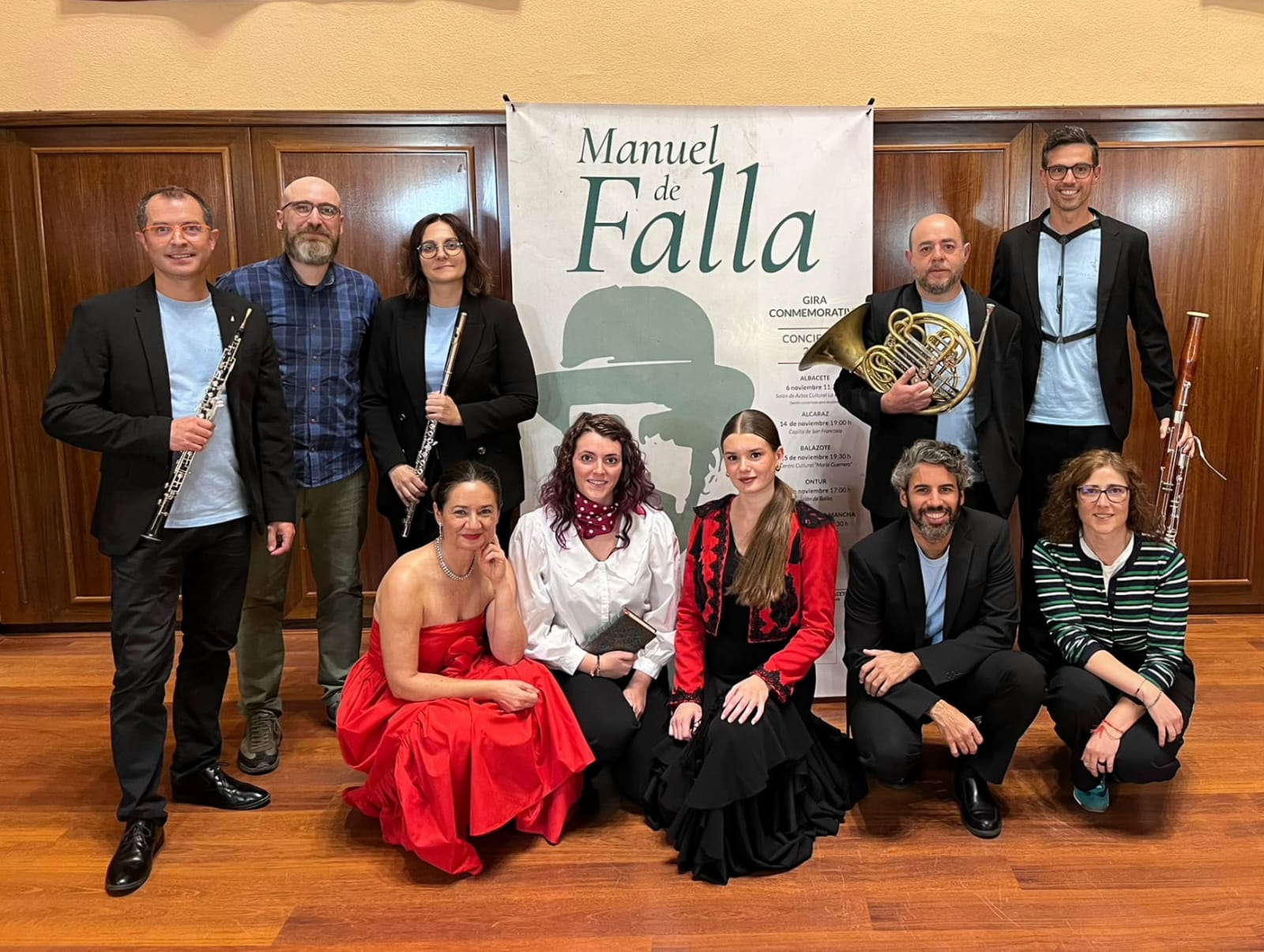
The music of Manuel de Falla is resonating throughout Albacete province as the Diputación de Albacete commemorates the 150th anniversary of the renowned Cádiz-born composer. Organised by the Service of Education and Culture, the celebratory tour spans five localities, aiming to introduce audiences to some of Falla's most significant musical works.
The inaugural event took place at the Salón de Actos of the Centro Cultural La Asunción, where over 200 secondary school students from IES Parque Lineal, Ramón y Cajal, and Tomás Navarro Tomás in Albacete participated in a concert specifically tailored for school audiences. This initiative transformed music from textbooks into a live experience, filled with the sounds, stories, and emotions that characterise Falla's compositions.
From classrooms to concert halls: an immersive learning experience
A distinctive aspect of this initiative is that the concert experience begins well before the musicians take the stage. Students had previously engaged with an educational guide created by the Diputación's Service of Education and Culture, which helps them discover who Manuel de Falla was, understand the fundamentals of Spanish musical nationalism, and familiarise themselves with the pieces they would later hear performed live. The illustrated material encourages interactive activities to recognise rhythms, identify emotions, explore the connection between music and movement, and learn about the instruments that make up a wind quintet.
The guide includes a journey through the Siete canciones populares españolas, listening exercises for the Danza del molinero and El amor brujo, as well as activities focusing on the expressive nature of music and a final quiz to assess the knowledge gained. Consequently, the concert serves as a culmination of classroom learning, fostering a more conscious and intimate listening experience.
Collis Musicae: local talent interprets Falla
The musical interpretation is provided by Collis Musicae, a wind quintet formed in Albacete, comprising professionals with extensive experience in performance, teaching, and music research. The ensemble includes María Elena Calonge Casero (flute), José Miguel Soria Fernández (oboe), Francisco José Casado Gómez (clarinet), Emilio Carrilero Molina (bassoon), and Juan Luis Real Pardo (horn). They are joined by soprano Paloma Gallego Romero, narrator Fátima Martín Ruiz, and dancer Andrea Álvarez Picazo, incorporating voice, narrative, and movement into a multifaceted presentation that allows audiences to engage with Falla's work through various artistic expressions.
The programme, titled Raíces, el nacionalismo musical español, features well-known compositions such as the Farruca and Danza del molinero from El sombrero de tres picos, the Siete canciones populares españolas, selections from El amor brujo including the famous Danza ritual del fuego, and the Danza española nº 1 from the opera La vida breve. This repertoire showcases how Falla transformed traditional rhythms and melodies into a unique musical language, blending the strength of folklore with classical creation.
Five towns celebrate a universal musical legacy
Following the concert in Albacete, the tour will continue throughout November and December with four additional performances open to the public in various locations across the province. The next concert is scheduled for Saturday, 14 November, at 19:00 in the Capilla de San Francisco in Alcaraz. This will be followed by a performance on Sunday, 15 November, at 19:30 in the Centro Cultural María Guerrero in Balazote. The tour will proceed on Sunday, 22 November, at 17:00 in the Salón de Bailes in Ontur, and conclude on Friday, 4 December, at 20:30 in the Teatro Cine Sanchiz in Tarazona de la Mancha. These events provide further opportunities to enjoy some of Manuel de Falla's most iconic compositions, performed by a musical group closely linked to the province.
150 years of enduring music
Born in Cádiz in 1876 and passing away in Alta Gracia, Argentina, in 1946, Manuel de Falla is a pivotal figure in 20th-century Spanish music. His works encapsulate the richness of popular tradition, particularly that of Andalusia, and transform it into creations of remarkable individuality, recognised worldwide. Through this commemorative tour, Albacete province joins in the celebration of a century and a half since his birth, offering a programme that combines musical performance and education, inviting audiences of all ages to connect with a composer whose music continues to resonate 150 years later.