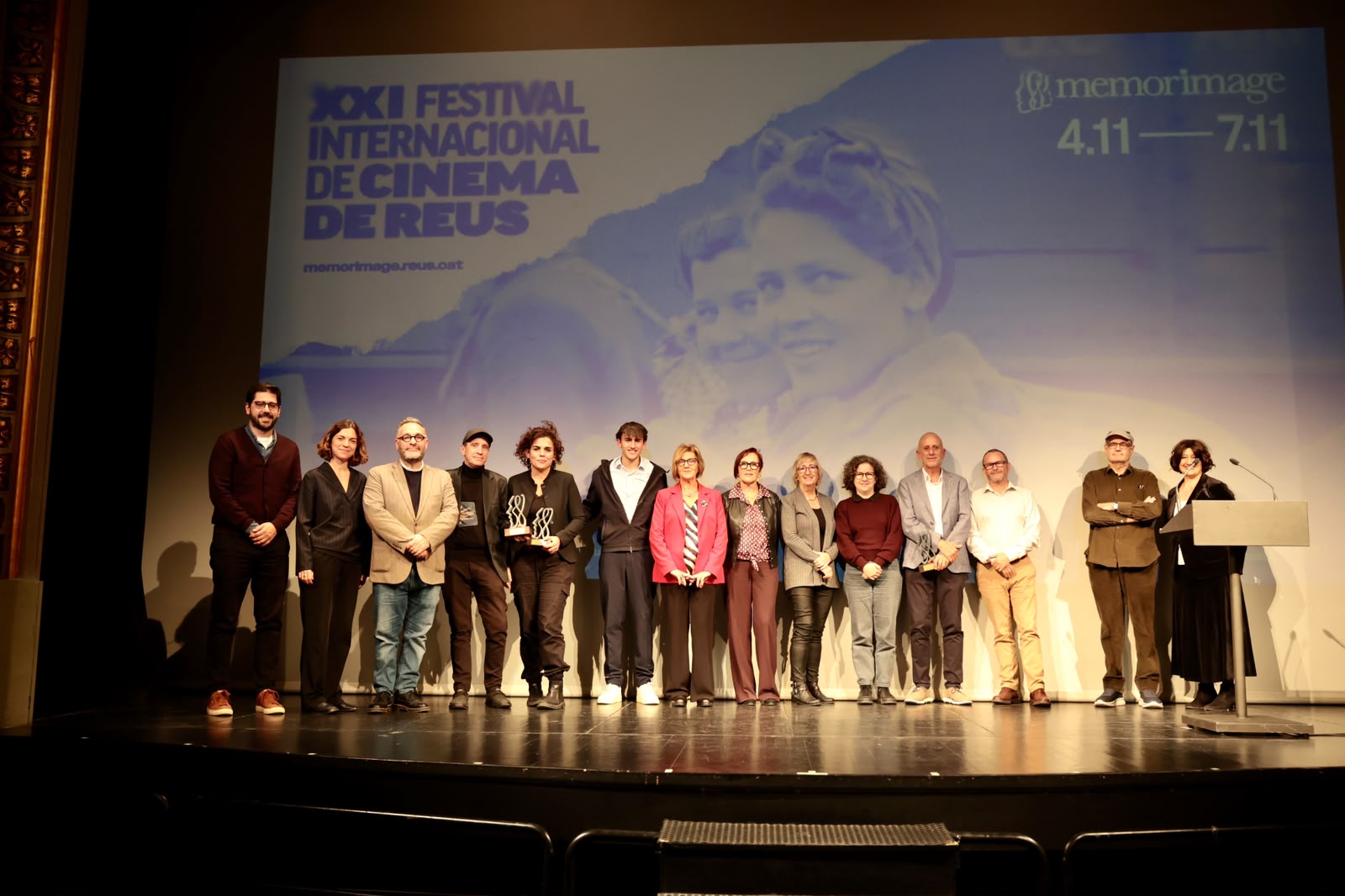
The memorimage – International Film Festival of Reus has honoured the film Khartoum, a collective creation, with the City of Reus Prize, which recognises the best film in the Official Section. The festival, dedicated to archival cinema, announced the winners of its 21st edition during the closing gala at the Teatre Bartrina on Saturday night, where over 1,100 spectators attended. This year’s edition focused on revisiting and questioning inherited narratives of the past.
Khartoum, co-directed by five filmmakers—Sudanese directors Anas Saeed, Rawia Alhag, Ibrahim Snoopy Ahmad, Timeea Mohamed Ahmed, and British director Phil Cox—depicts the reality of Sudan before and after the civil war. Through archival footage, recreations, and animations, it presents the experiences of five individuals reflecting the struggle for freedom and survival in a country marked by dictatorship, conflict, and colonial history. The film advocates for the resilience and dignity of the Sudanese people and had its Spanish premiere at the DocsBarcelona Festival, following screenings at prestigious international festivals such as the Berlinale and the Sundance Film Festival.
The jury for the Official Section, comprising art historian and curator Ona Balló, producer Alba Bosch, and artist Jordi Abelló, praised its experimental and original narrative. They highlighted the film's innovative use of chroma key technology, which allows the protagonists to transition from dreamlike sequences to their reality before exile, as well as the film's ability to address trauma through play, its fresh staging, and the personal involvement of the team. They also commended the film's risk-taking, rebellious spirit, and the urgency of discussing conflicts that often remain outside the media spotlight.
Another significant winner, Trains, directed by Maciej Drygas, received two awards and a special mention from the Official Jury. It garnered the most accolades this year, including a Special Mention from the Official Jury and two awards from expert associations in archival work: the Cinema·Rescat Prize for the best documentation and research work, and the ADAE Prize for the best creative use of archives. The film offers a journey through 20th-century history using archival images of trains and passengers, juxtaposing progress and hope with migration and human tragedies.
Audiences in Reus voted to award the Audience Prize to Why don't I write anything? by Isabel Fernández, which champions the figure of writer Carmen Laforet, who faced ostracism for her fight for independence and freedom. The MemoriReus Prize went to Another father by Mariona Guiu, where the filmmaker returns home to revisit tapes recorded by her father, exploring grief, depression, and the invisible wounds of family ties.
Students attending the MemoriJove screenings, aimed at fostering critical thinking, awarded the MemoriJove Prize to The Guilty by Marta Duran Lozano, a film that seeks to break the silence and taboo surrounding adolescent abortion through numerous testimonies.
Historian and documentary filmmaker Josep Maria Castellví received the 2026 Honour Award in recognition of his career. The jury, consisting of Montse Bailac, Joaquim Nolla, and Coia Escoda, awarded him for his exemplary contribution to rescuing, preserving, and disseminating testimonies and stories, ensuring they endure as a shared legacy.
The festival concluded with a grand night dedicated to amateur cinema from Reus, featuring the world premiere of 1966. From disaster to reconstruction by Josep Batista and Josep Romeu, two pivotal figures in Reus's amateur film scene, alongside a tribute to Reus filmmaker Jordi Vall Ciré (1929-2026). This year’s festival opened with Operation Iperita: The civil plot of chemical warfare by Toni Orensanz and Joana Zapata, which investigates the first systematic chemical bombings against the civilian population perpetrated by Spain during the Rif War. The festival showcased 22 films, nine of which were Catalan premieres, with all screenings offered free of charge to ensure access to culture and the collective audiovisual heritage.