The Municipal Archaeological Museum of Jerez will once again be featured in a major national exhibition. Two of its most notable pieces, the Greek helmet from the Guadalete River and the sculpture of Juno Pronuba, are set to travel to Mérida for the temporary exhibition A la sombra de Vulcano. Bronce romano en Hispania, organised by the National Museum of Roman Art (MNAR) in Mérida. This exhibition, marking the 40th anniversary of the museum's expansion, will be open to the public from 20 November until 31 March 2027.
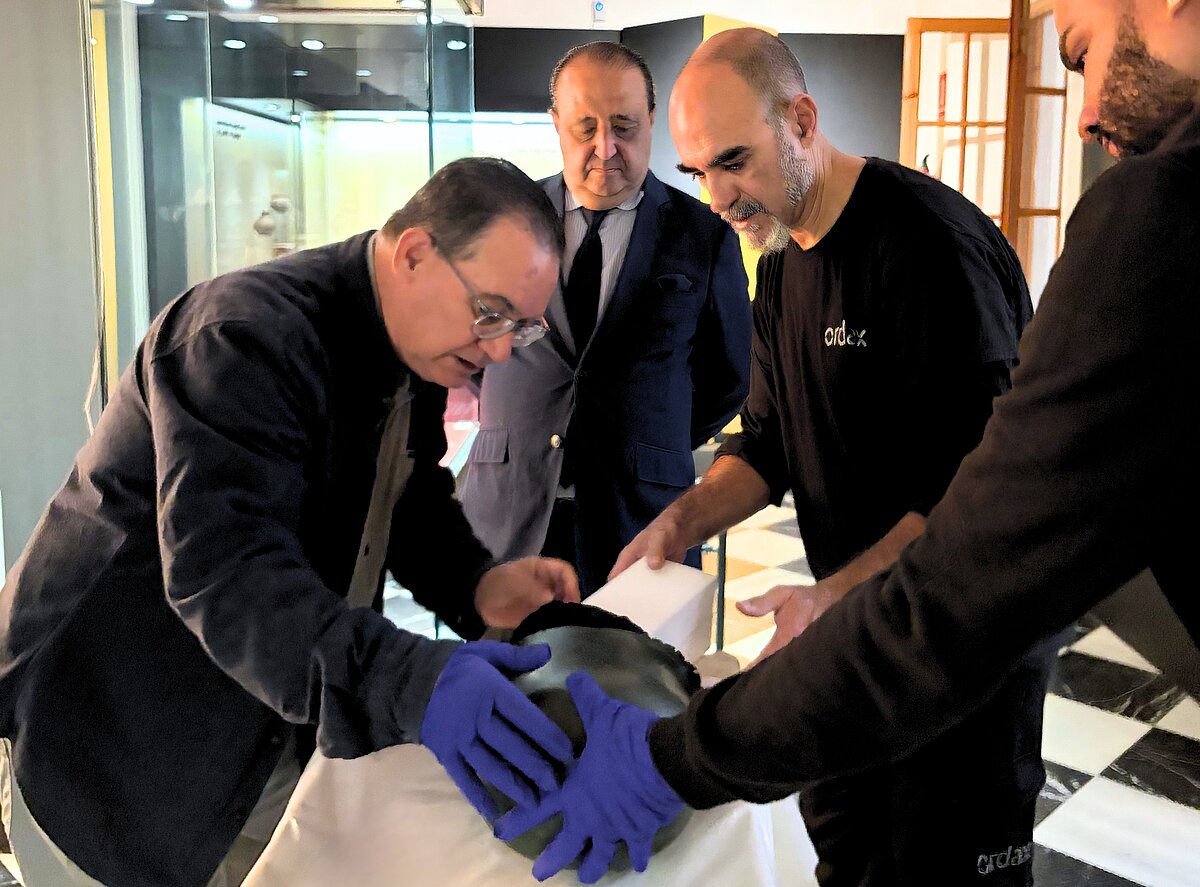
Francisco Zurita, the delegate for Culture, Major Events, Historical Heritage, and Jerez City Culture, was present during the careful packing and preparation of both works, ensuring their safe transport and subsequent display. Zurita highlighted the value of this participation as an extraordinary opportunity to promote Jerez's historical heritage and to raise the profile of the city and its Archaeological Museum within a leading scientific and cultural context.
He also underscored the importance of collaboration between museum institutions and cultural administrations to facilitate knowledge exchange, promote joint projects, and allow significant pieces to reach new audiences.
The exhibition aims to update the knowledge and perspectives presented in the 1990 exhibition Los Bronces Romanos en España, showcasing the significance of bronze in Roman society, both for its artistic value and practical applications. The displayed materials will span from pre-Roman times to the late antiquity, offering an exceptional overview of bronze production in ancient Hispania.
The inclusion of the two Jerez works in Mérida presents an opportunity to highlight the quality and uniqueness of the collections at the Municipal Archaeological Museum.
The Greek helmet from the Guadalete River
Dating back to the early 7th century BC and crafted from bronze, the Greek helmet from the Guadalete is one of the most emblematic pieces in the Municipal Archaeological Museum and is the oldest preserved Greek helmet in the western Mediterranean. Its discovery is an exceptional testament to the region's integration into Mediterranean trade routes and the adoption of new materials and techniques in object production.
This piece is particularly unique as it has lost its nasal guard and has been intentionally perforated, leading to interpretations of it being part of a possible ritual offering to the river's waters, perhaps in gratitude for a successful journey. Due to its fragility, the plume or mane that once adorned the helmet and its leather interior lining have not survived. Its departure from Jerez is especially notable, as it has only travelled to Madrid on two occasions: in 1984 for restoration and in 2017 for a commemorative exhibition marking the 150th anniversary of the National Archaeological Museum.
The sculpture of Juno Pronuba
The statuette of Juno Pronuba, dating from the 1st century AD and originating from Mesas de Asta, is another prominent piece in the bronze collection of the Municipal Archaeological Museum. Its heritage significance is reflected in the conservation efforts it has undergone over the years, including restoration work in 1949 and between 1983 and 1984. Its participation in the Mérida exhibition will allow this work to join the exceptional collection of Hispano-Roman bronzes and provide a new opportunity to deepen knowledge and promote the dissemination of religious-themed sculpture from the Roman era.