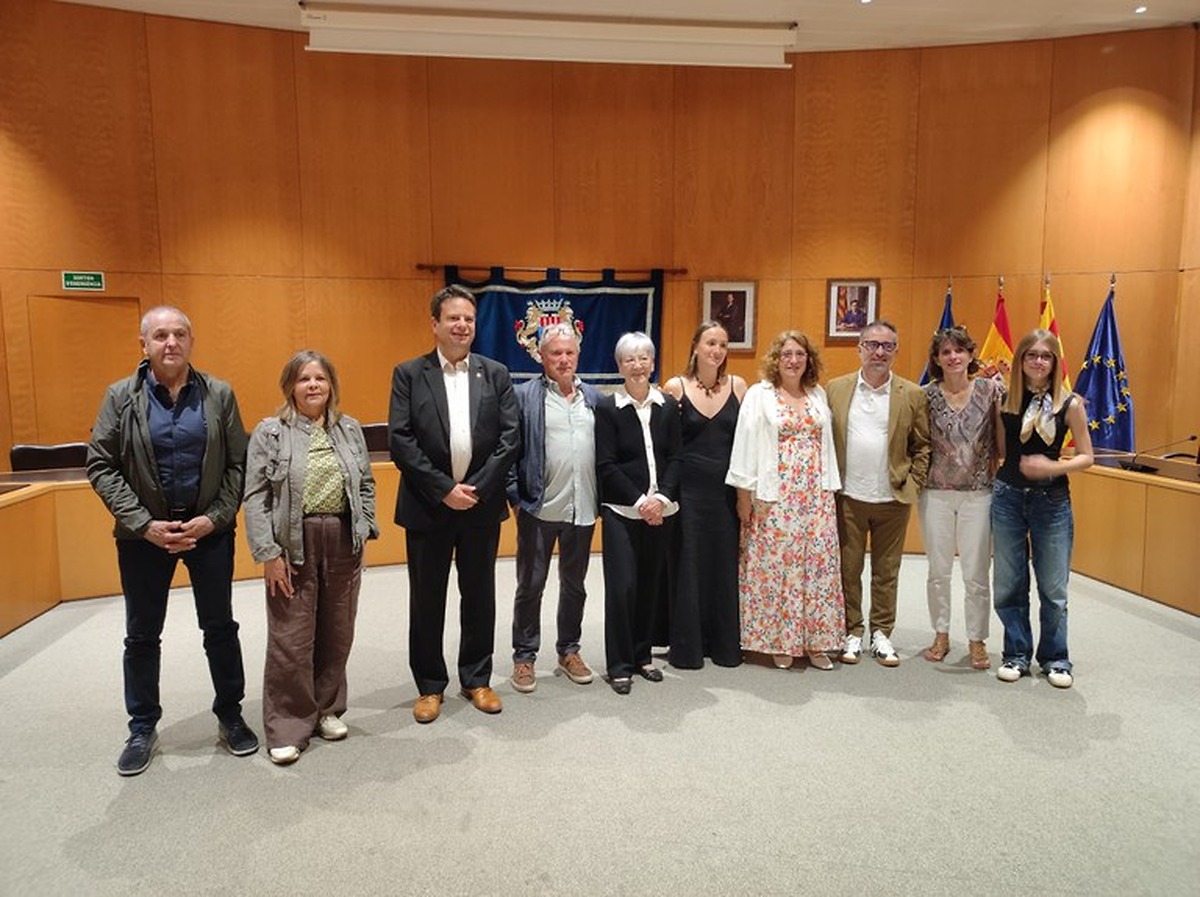
Cambrils has paid tribute to two local victims of Nazi extermination camps, Antonio Virgili Solé and Xavier Figuerola Gorga, in a ceremony held on 17 October. This significant act of recognition took place in the Town Hall's Plenary Hall and is part of the 20th edition of the Autumn Memory Cycle, titled “From Cambrils to the Nazi Camps: 85 Years of Forgetting”, organised by the Municipal Archive of Cambrils and the Cambrils History Museum.
The event, presided over by Cambrils Mayor Oliver Klein, was attended by several family members of the two deportees, who travelled from various locations in France and Oliana, Lleida. Besides serving as a poignant moment of recognition and restoration of memory for these two individuals, who were born in Cambrils and largely forgotten, the ceremony also included the official handover of original documents to the Municipal Archive of Cambrils by representatives of the families.
Claude Virgili signed the agreement for the cultural use of various photographs and a transcription of a personal diary from the Mauthausen camp belonging to his father, Antonio Virgili Solé, who survived internment. This documentation, which the family only discovered after the deportee's death in 1995, includes references up to the moment of the camp's liberation and was preserved in exile in France, where the deportee rebuilt his life.
After a brief speech expressing gratitude and the importance of never forgetting these events, Claude mentioned that more original documents from the camp would be analysed for potential handover in the coming months. Meanwhile, Mercè Mantilla Figuerola, niece of Xavier Figuerola Gorga, who was killed in the camp in 1942, also donated photographs and documents preserved by her family to the Municipal Archive. Her emotional speech paid tribute to her mother, María Figuerola Gorga, the only sister of the deportee.
Both family representatives received a commemorative plaque from the mayor, along with public thanks from Montserrat Flores, the Councillor for Good Governance, Transparency, and Participation of the Reus City Council, who was present at the event for the subsequent exhibition inauguration.
Following the tribute, municipal representatives and family members moved to the Molí de les Tres Eres Museum to inaugurate the exhibition “Fascism Never Again: From Baix Camp to Nazi Extermination Camps”, produced by the Reus Archive. The exhibition, which will be open to the public in Cambrils until 8 November, showcases research being conducted from the city of Reus on a total of 35 individuals who suffered the horrors of the Nazi camps.
The aim is to recover the memory of all these individuals and their lives through documentation preserved in archives from Catalonia, Spain, France, and Germany, as well as family-held records. This initiative was explained during the opening event by Axel Baiget, a historian and documentalist of the exhibition, which seeks to honour all deportees identified so far from various towns in Baix Camp.
This research from the capital of Baix Camp is complemented by ongoing investigations throughout the region. In Cambrils, the Municipal Archive and History Museum have also uncovered previously unseen images and information about the two documented local deportees. Some of this family-donated documentation has been included in the travelling exhibition now on display at the Molí de les Tres Eres.
All of this will be presented on Tuesday at 19:30 in the Cultural Centre during a talk titled “Memory Against Forgetting: Cambrils Deportees in Concentration Camps”, organised by the URV Extended Campus, the Municipal Archive of Cambrils, and the Cambrils History Museum, featuring historian Joan Navais Icart and Axel Baiget Morreres, a historian and secondary school teacher involved in the exhibition.