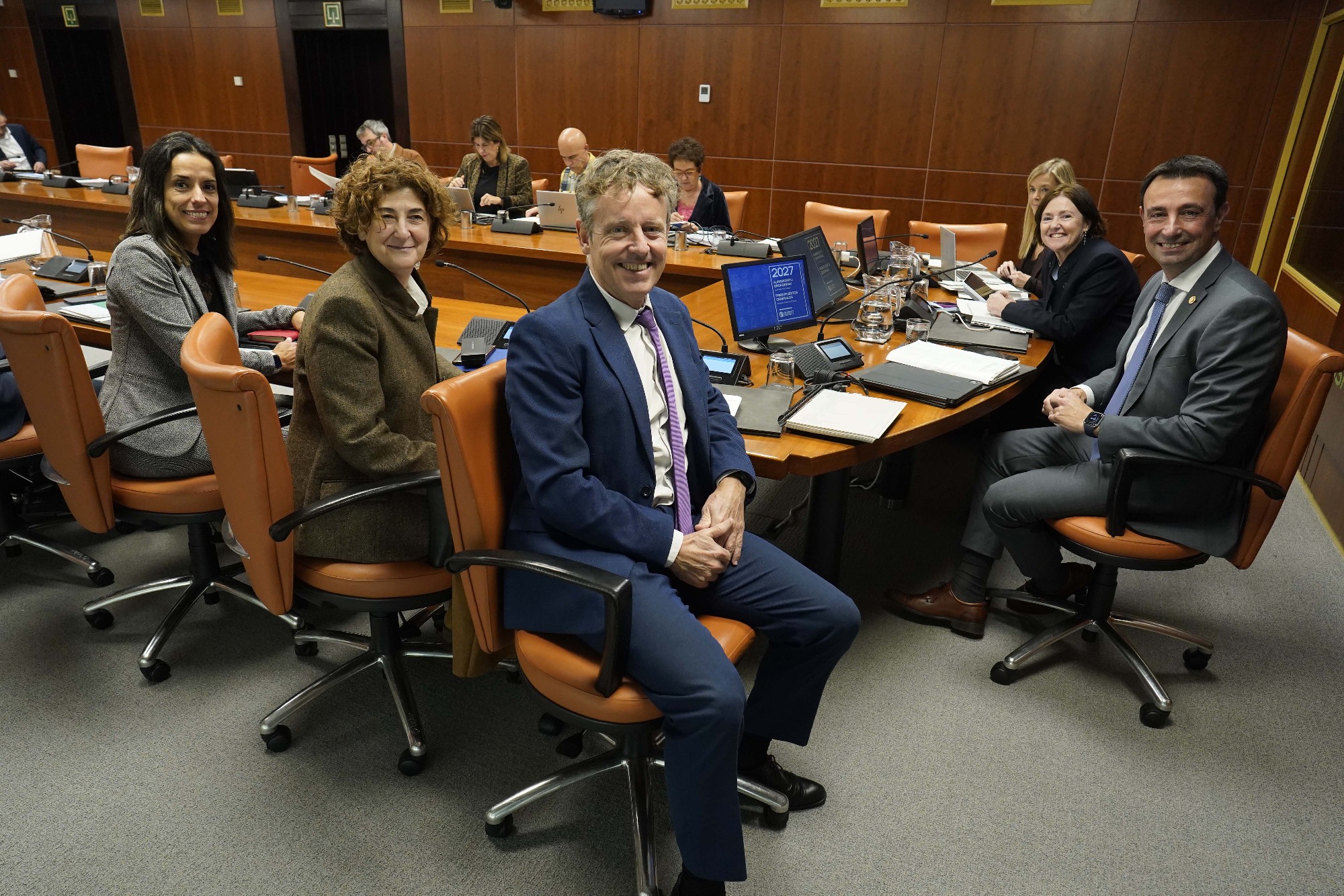
The Basque government's Department of Economy, Labour and Employment will have a budget of €1,338,141,000 for 2027, representing a 5.68% increase from the €1,266,223,000 allocated in 2026. This budget consolidates an economic policy focused on serving the people and strengthens actions aimed at creating quality employment, reducing inequalities, and ensuring adequate protection against poverty and exclusion.
Mikel Torres, the Vice President and Minister of Economy, Labour and Employment, emphasised that "the 2027 budget reflects the progressive imprint of this government and its commitment to social justice. We do not settle for creating jobs: we want employment to be stable, secure, healthy, and with rights; allowing individuals to develop a life project and reaching those who face the greatest obstacles. Our priority is to protect people, reduce inequalities, and expand opportunities so that the progress of Euskadi is shared."
The department's budget addresses three main priorities: sustaining and promoting economic growth, meeting the basic needs of citizens, and fostering the creation of dignified jobs and working conditions. It demonstrates a strong commitment to social justice, allocating €700 million to the Basque Income Guarantee System, while the employment and inclusion sector receives €514 million. These allocations will enhance basic protection against poverty, develop socio-labour pathways, and offer new opportunities to those facing significant barriers to entering the job market.
Lanbide, the main framework for employment and inclusion policies, will operate with a budget of €1,191.8 million. Key initiatives for 2027 include incorporating unemployment benefits and subsidies into its regular management, implementing the Hobetzen model throughout the organisation, launching Employment and Local Development Plans, and developing tools derived from the Basque Employment Law.
Active employment policies will particularly target young people, women, individuals over 50, people with disabilities, those at risk of exclusion, and migrant populations. The project sets targets for 2027 to continue reducing registered unemployment, increasing the number of Social Security contributors in Euskadi, and enhancing Lanbide's labour intermediation.
The budget will promote a new model for work training, focusing on young and senior talent, the Berritzelan Sarea flagship projects, and new job opportunities linked to the circular economy and industrialised construction. Additionally, the deployment of the Basque Employment Network will be completed, and the Basque Employment Forum will be consolidated as a space for participation among administrations and economic and social agents.
Social and labour inclusion will receive a specific allocation of €3.68 million to advance the structuring of the Basque Inclusion System, extend mixed support pathways, and consolidate innovative projects aimed at vulnerable groups. Planned actions include expanding Zainsare spaces, facilitating labour mobility through safe migration channels, and establishing local coordination tables among different inclusion systems.
The area of Labour and Social Security will have €131.2 million to promote social dialogue and collective bargaining, protect the most vulnerable workers, and advance effective equality between men and women. Occupational safety and health will remain essential components of job quality, with Osalan receiving €20.29 million to develop the Basque Occupational Safety and Health Strategy 2027-2032.
This budget proposal from the Department of Economy, Labour and Employment reinforces a strategy that combines economic growth, social cohesion, and equal opportunities. The 2027 accounts aim to ensure that a robust economy translates into more and better jobs, that social protection facilitates effective paths to inclusion, and that future transformations are approached without leaving anyone behind.