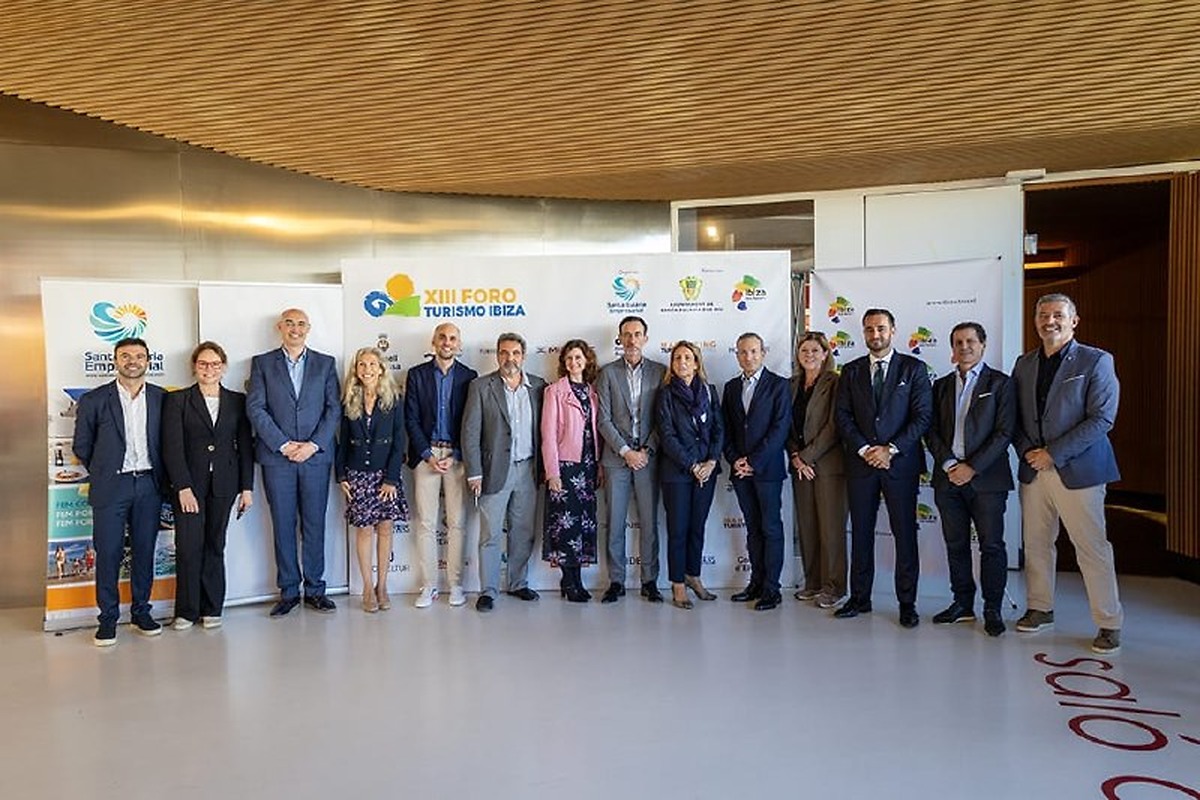
The XIII Foro Turismo Ibiza has called for greater data sharing between public administrations and private companies to improve tourism destinations. Experts and representatives from the sector agree that public-private collaboration and shared information are crucial for enhancing management and competitiveness.
The event took place at the Centro Cultural de Jesús, bringing together representatives from various administrations, destinations, and businesses under the theme 'Decisions for the future'. Organised by Santa Eulària Empresarial with support from the Ayuntamiento de Santa Eulària des Riu and the Consell d'Eivissa, through Ibiza Travel, the forum aimed to discuss strategies to enhance the competitiveness of businesses and the benefits that tourism brings to the island.
One of the standout interventions came from businessman José Elías, who stressed the importance of repositioning the tourism sector as a key driver of the national economy. He remarked, 'We are experiencing a very woke trend that undermines tourism, when we are a global powerhouse doing very well and should not be criminalised, but rather adapted and improved.'
The mayor of Santa Eulària des Riu, Carmen Ferrer, inaugurated the meeting, reflecting on the future challenges facing the tourism sector. Ferrer noted that 'tourism excellence is no longer measured solely by volume, but by the ability to generate value', and posed the question, 'How do we lead tomorrow based on the decisions we make today?'. She also advocated for public-private alliances as a key asset in moving towards a 'more resident-focused, competitive, and humane' tourism model.
Vicente Guasch de la Encina, president of Santa Eulària Empresarial, highlighted that 'tourism is, first and foremost, a driver of economic and social prosperity', and emphasised the need for a more competitive, prosperous Ibiza with greater opportunities for all. He reiterated the necessity of anticipating changes, stating that the goal should be 'to generate more value, improve company profitability, and ensure that the wealth generated by tourism benefits society as a whole.'
Vicent Marí, president of the Consell Insular d'Eivissa, praised the Foro Turismo Ibiza as a platform for discussion and reflection on the island's primary economic driver. He remarked that 'tourism has helped establish Ibiza as one of the world's most valued destinations' and stressed the importance of ongoing efforts to ensure its evolution. Marí asserted, 'Tourism is not questioned; it is managed, and we begin building the future today with our ability to manage and anticipate the challenges ahead.'
Innovation and talent were identified as key factors for the future of tourism. Natalia Bayona, executive director of UN Tourism, opened the meeting with a virtual presentation on the role of innovation, artificial intelligence, and talent in the sector's future. She highlighted the significance of education as a major challenge for the tourism industry, noting that 'tourism is one of the largest employers of young people, and education must be at the heart of its transformation.'
Bayona also discussed the impact of artificial intelligence on traveller habits and destination evolution, emphasising the need to leverage new technologies to enhance the tourist experience. '89% of international travellers use AI, while 80% plan to use it at their destination, and 75% seek new destinations to save money and find new experiences,' she detailed during her presentation.
The first panel of the XIII Foro Turismo Ibiza examined how information on bookings, mobility, and spending translates into concrete decisions. The discussion addressed what data can help identify areas and times of high tourist pressure, guide promotion towards less active months, and verify whether adopted measures have had the desired effect. Participants agreed that the sector must tackle two major challenges: fostering data exchange among various stakeholders and promoting tools to utilise this data more effectively. They advocated for building trust and ensuring that shared information benefits the entire sector rather than being perceived as an exclusive advantage over competitors.