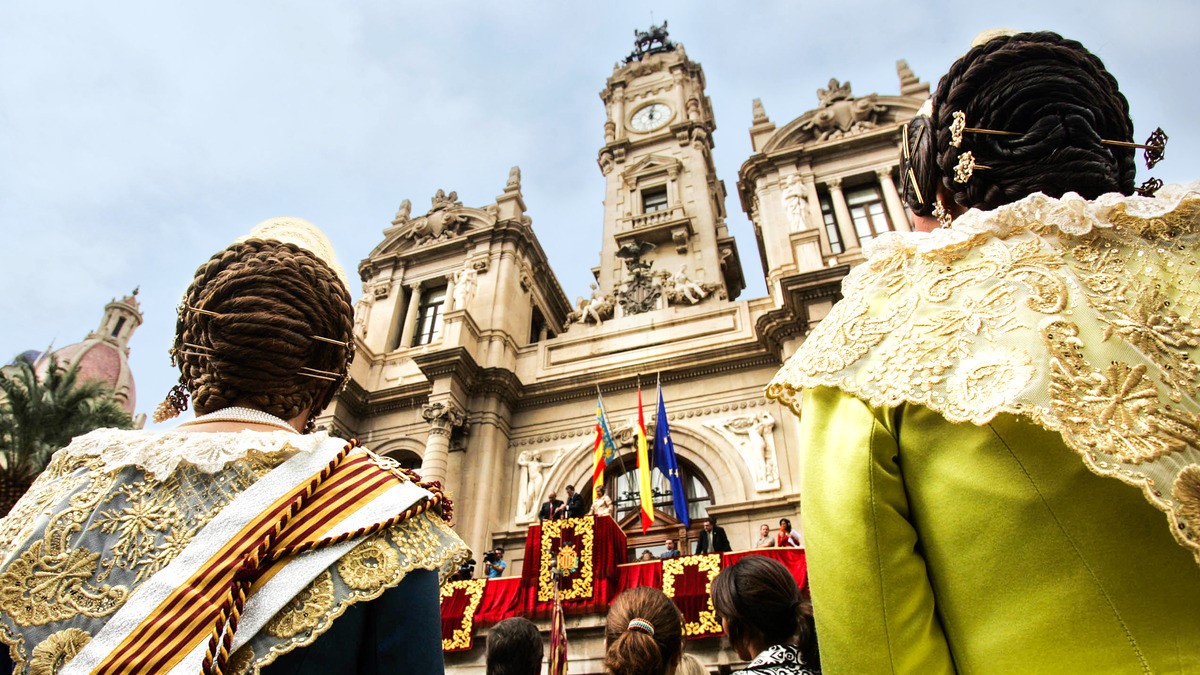
The mayor of València, María José Catalá, has issued the traditional proclamation for 9 d'Octubre, inviting citizens to take part in the celebration that marks the triumphant entry of King Jaume I into the city in 1238 and the establishment of the Kingdom of València, complete with its own legal framework and institutions.
In her official statement, Catalá emphasised, "València became the capital of a kingdom with its own identity, whose legacy of prosperity and cultural splendour endures in our heritage, traditions, and language." She highlighted the importance of understanding the past to better comprehend the present and face the future with confidence.
"9 d'Octubre is an opportunity for us to recognise what we share and to remember that no generation starts from scratch," Catalá stated. "We are the result of those who came before us, and we have the responsibility to pass on the historical, cultural, and symbolic heritage we received to future generations."
The proclamation also notes that the Real Senyera, a flag symbolising continuity in València's history, will descend from the town hall each year without bowing and will traverse the streets accompanied by thousands of Valencians. Catalá added that this year, in honour of the 750th anniversary of Jaume I's death, the sword attributed to the monarch, which has been safeguarded by the city for centuries, will once again parade alongside the Real Senyera.
This sword first participated in the civic procession in 1666 and was last seen in 1976 during the 700th anniversary of Jaume I's death. Fifty years later, it will accompany the Real Senyera in its solemn procession, as highlighted by the mayor in her proclamation, which asserts the municipal commitment to "know, preserve, and transmit our past."
Catalá focused her message on the responsibility to preserve heritage and traditions for future generations, which has inspired a comprehensive commemorative programme this year, initiated by the València City Council. This includes exhibitions, publications, conferences, historical reenactments, performances related to the city's heritage, and various institutional events aimed at exploring not only the figure of Jaume I but also his era and the historical consequences of his reign.
"València is a city that preserves its symbols and recognises them as an essential part of itself," Catalá reiterated, stating that "the Senyera and the sword of Jaume I are two emblems united by a city that knows its history, protects its symbols, and looks to the future without renouncing what makes it unique."