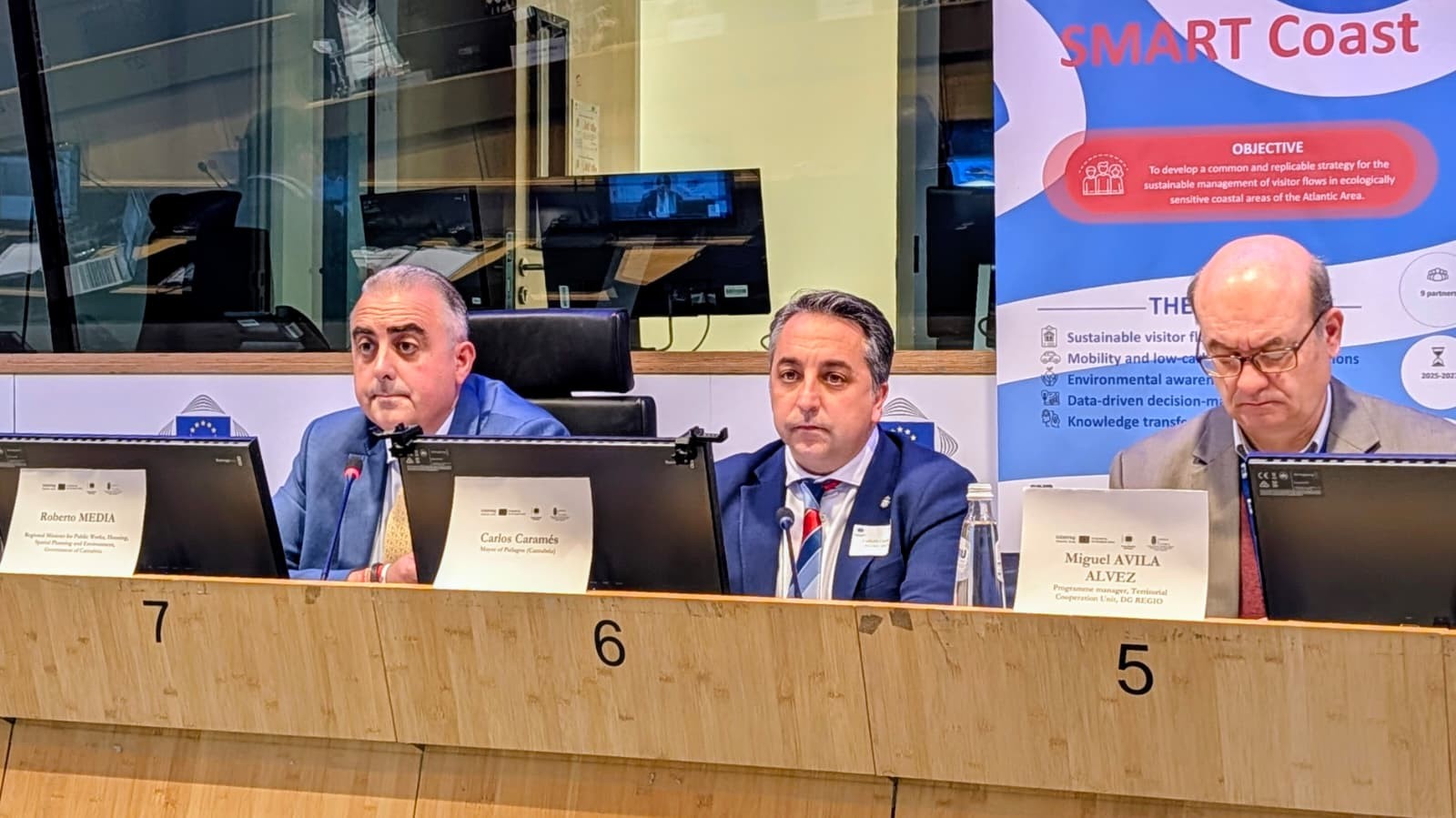
Carlos Caramés, the mayor of Piélagos, has defended the social utility of the SMART Coast project during a conference in Brussels focused on sustainable tourism in Atlantic coastal areas. The event took place at the headquarters of the Committee of the Regions, where Caramés, alongside Roberto Media, the regional minister for Development, Territorial Planning, and Environment of Cantabria, presented findings from a recent pilot study conducted in local car parks.
“SMART Coast is helping us complement our daily knowledge with real data,” Caramés stated. He emphasised the importance of a small-scale trial conducted from late May to 8 September, which provided insights into parking usage ahead of a full pilot deployment. During this period, over 237,000 entries were recorded across three car parks, corresponding to approximately 85,400 different vehicles, with an average stay of 2 hours and 13 minutes. Notably, on 28 July, there were more than 4,000 entries at the Liencres beaches car park.
Caramés clarified that these figures represent daily entries rather than a count of parked vehicles or tourists. He also pointed out the report's ability to compare weekend and weekday traffic, revealing that average daily entries increased by around 39% at the pine forest, 35% at La Arnía, and 18% at the Valdearenas and Canallave beaches.
He stressed the significance of real data, stating, “Understanding these differences helps us determine where and when to enhance information, organise available resources, or consider alternative mobility options.” Caramés commended the coordination among support staff from the Cantabria government, local police, and the Civil Guard in managing visitor influx, asserting that the data should aid in improving planning.
While acknowledging some issues with data reading and communication during the trial, Caramés expressed confidence that this learning is integral to the project: “We need to verify the quality of the information before using it for decision-making.” He announced plans to provide real-time occupancy information through digital panels, allowing families to check parking availability before arriving.
The mayor reiterated the necessity for ongoing coordination between local councils like Piélagos and the Cantabria government regarding mobility, access, and natural space management. He urged European authorities to continue supporting projects like SMART Coast, advocating for technical assistance and funding to implement and sustain effective solutions based on study results. “Systems, data quality, and public access require attention even after a project concludes,” he added.
Caramés concluded by stating, “From Piélagos, we aim to foster closeness to the territory, transparency, and an honest evaluation of results. We want European cooperation to leave behind lasting tools and knowledge that our residents can recognise in improved municipal management and quality of life.”