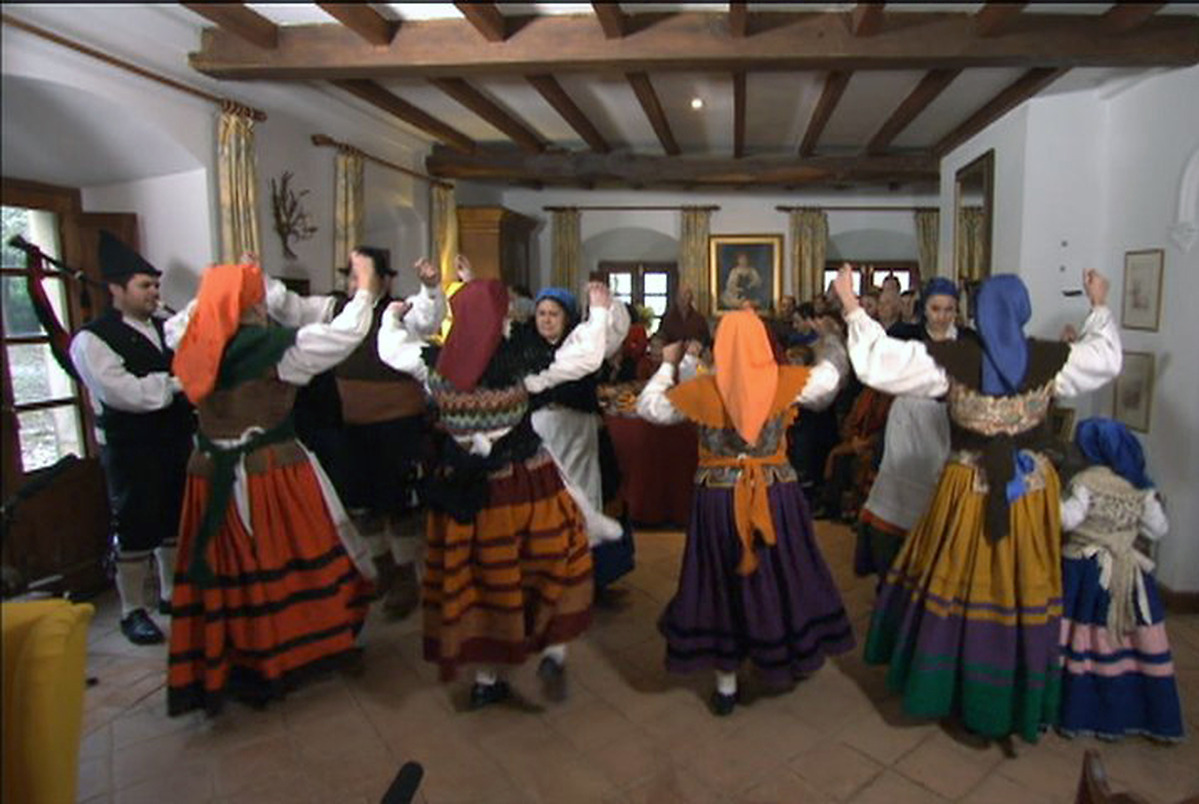
The Asturias regional government has begun the formal process to declare the jota, a traditional dance, as a Bien de Interés Cultural (BIC) of intangible heritage. This resolution, published in the Official Bulletin of the Principality of Asturias (BOPA), aims to acknowledge and protect this vibrant expression of local culture, which encompasses music, dance, native languages, and generational memory.
The jota remains an integral part of life in many Asturian communities, featuring prominently in festivals, pilgrimages, and public gatherings. Its preservation is particularly significant as Spain has submitted a candidacy for the jota to be included in the UNESCO Representative List of the Intangible Cultural Heritage of Humanity, with the evaluation set for December 2026.
cultural and linguistic significance
The technical memorandum accompanying the resolution highlights the linguistic richness of the jota in Asturias. Its lyrics incorporate expressions in Asturian, Eonaviego, and Spanish, reflecting the cultural diversity of the regions where this tradition has taken root. Protecting the jota also aids in recognising the linguistic heritage intertwined with this cultural practice. The songs, dance steps, and melodies represent a shared heritage passed down through generations, remaining alive in contemporary society.
regional variations and community efforts
The jota is performed throughout Asturias, albeit with regional variations. The dossier identifies at least six major geographical variants, each with distinct steps, melodies, and accompaniments, with documented references to its presence in Llanes dating back to the early 19th century. The preservation of the jota is supported by dance groups, traditional music schools, and individuals dedicated to maintaining its repertoire. Initiatives like 'Noches en Danza' have revitalised community gatherings, allowing people to dance and share this tradition beyond formal stages.
In 2023, the jota was recognised as a Representative Manifestation of Intangible Cultural Heritage by the Ministry of Culture and was added to the Census of Intangible Cultural Heritage of Asturias in January 2024. In May of that year, the Council of Cultural Heritage of Asturias positively reviewed the initiation of the process for its declaration as a BIC.
commitment to cultural preservation
This formal initiation by the regional government marks a significant step in safeguarding a tradition that is not only part of Asturias's history but also its present. The jota is more than just a preserved dance; it is a cultural expression that continues to bring together people from various generations, sustaining knowledge, music, and a linguistic heritage that forms a core part of Asturian identity. The defence of local languages is inseparable from this commitment. Protecting cultural heritage also involves recognising and respecting the value of Asturian and Eonaviego as native languages of Asturias, and their presence in traditional expressions.
The Principality of Asturias is thus committed to a culture that acknowledges its roots, values its diversity, and strives to ensure that younger generations can continue to enjoy a heritage that belongs to the entire community.