A conference cycle titled '1976-2026. Political change and democratic recovery in Girona' will take place throughout November, marking the 50th anniversary of the beginning of the dismantling of the Francoist dictatorship and the recovery of democratic freedoms.
Organised by the Casa de Cultura of the Diputació de Girona, the series will feature four historians who will delve into significant episodes and figures of the Transition in Catalonia and the Girona region. The conferences are scheduled for Tuesdays at 19:00, starting on November 3 and concluding on November 24, with free registration required.
The cycle, coordinated by historian Lluís Serrano, aims to provide a historical perspective on the Transition, analysing both the advancements in the recovery of freedoms and self-government, as well as the contradictions, conflicts, and limitations of the process.
Key topics and speakers
The first conference, 'Between freedom and the Statute of autonomy: the 1977 amnesty', will be held on November 3 by Nicolás Sesma, a historian and professor at the University of Grenoble-Alps. This session will explore the political and social significance of the 1977 Amnesty Law and its connection to democratic demands and the recovery of Catalan self-government.
On November 10, historian and political scientist Paola Lo Cascio from the University of Barcelona will present 'A look at pujolism', analysing the political and ideological construction of the movement led by Jordi Pujol and its impact on the establishment of Catalan self-government during his presidency from 1980 to 2003.
Giaime Pala, a historian at the University of Girona, will lead the third conference on November 17, titled 'Rise and crisis of the PSUC (1956-1982)', focusing on the trajectory of the Unified Socialist Party of Catalonia (PSUC) from its role in the anti-Franco opposition to its decline in the early years of democracy.
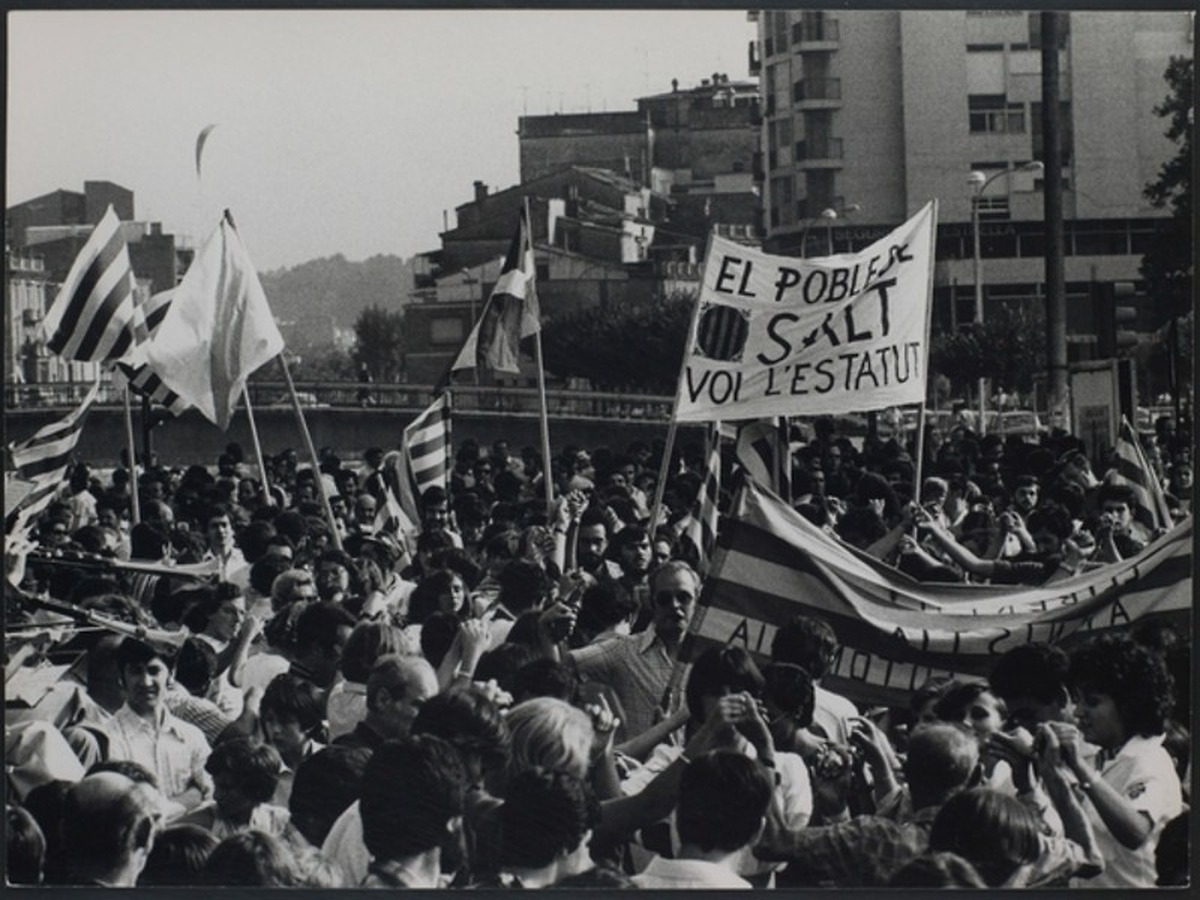
The series will conclude on November 24 with a conference by Lluís Serrano, 'Girona 1976', which will examine local experiences in Girona during the first year following Franco's death, highlighting citizen mobilisations and the political reorganisation that laid the groundwork for future democratic institutions.
The role of civil society
This conference cycle adopts a perspective that extends beyond institutional agreements and the actions of key political leaders, recognising that democratic recovery was also the result of popular mobilisations, labour movements, neighbourhood associations, civic and cultural entities, and numerous grassroots initiatives that demanded freedoms and rights after nearly four decades of dictatorship.
By combining analyses of major political processes in Catalonia and Spain with a specific focus on Girona, the conferences will underscore the crucial role that cities, municipalities, and civil society played in the construction of the new democratic system.
Lluís Serrano Jiménez, the cycle's coordinator, is a doctor in History and a professor at the University of Girona, and has co-authored works such as 'Francoism in Girona: 1940-1979' and 'Salvador Sunyer: Political Times (1977-1991)'.
Practical information
- Conference cycle: '1976-2026. Political change and democratic recovery in Girona'
- Dates: November 3, 10, 17, and 24, 2026
- Time: Tuesdays at 19:00
- Location: Casa de Cultura of the Diputació de Girona
- Coordinator: Lluís Serrano Jiménez
- Registration: Free and mandatory
Programme:
- November 3: 'Between freedom and the Statute of autonomy: the 1977 amnesty' - Nicolás Sesma (University of Grenoble-Alps).
- November 10: 'A look at pujolism' - Paola Lo Cascio (University of Barcelona).
- November 17: 'Rise and crisis of the PSUC (1956-1982)' - Giaime Pala (University of Girona).
- November 24: 'Girona 1976' - Lluís Serrano (University of Girona).