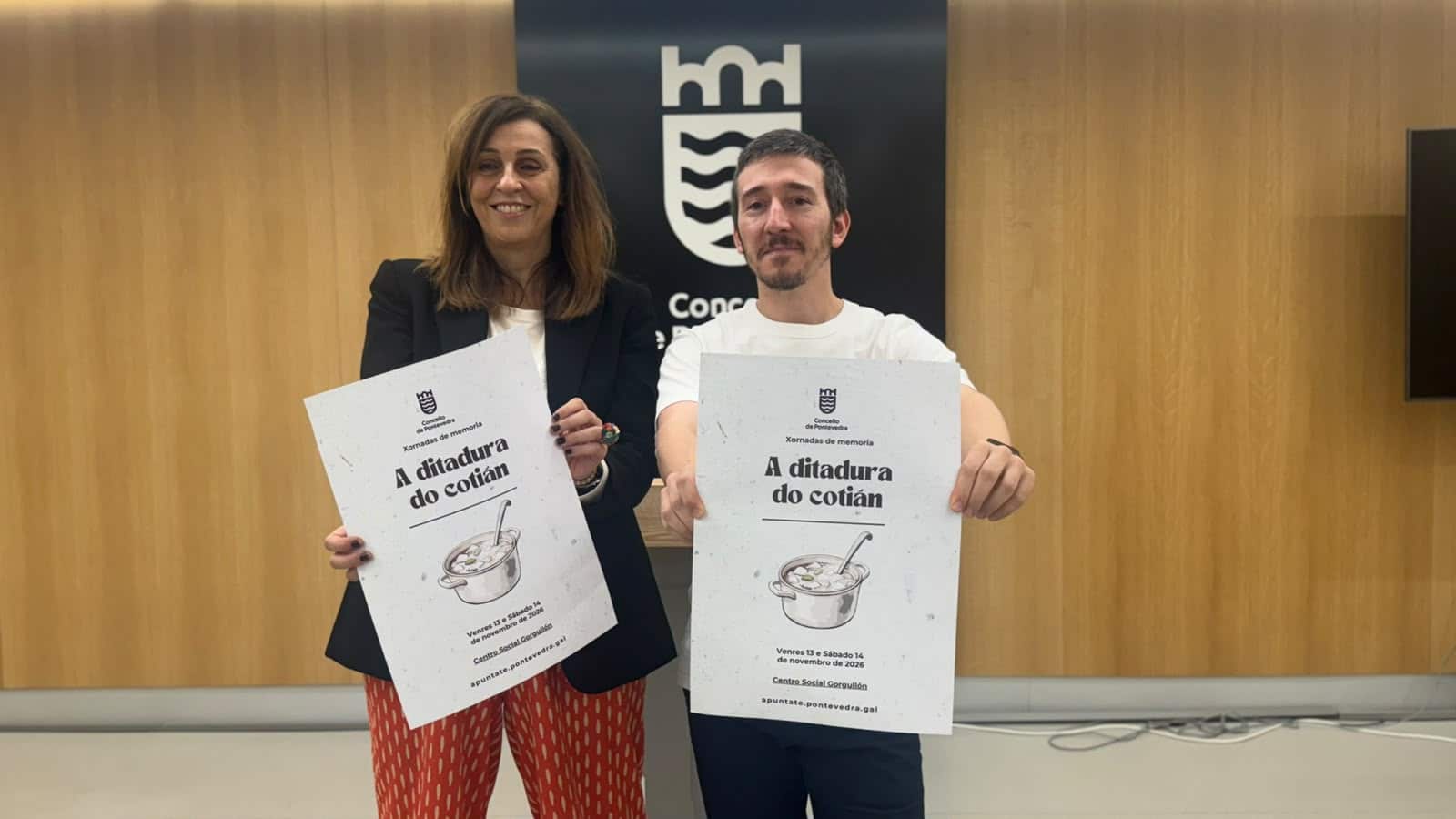
The Gorgullón Social Centre in Pontevedra is set to host a historical memory event on 13 and 14 November, titled ‘The dictatorship of the everyday’. This edition will focus on the lesser-known aspects of life under Franco's regime, moving away from major political or military events to examine how the dictatorship influenced daily life, personal relationships, sexuality, and culture.
Montse Fajardo, the event's coordinator, explained that the main aim is to discuss the everyday lives of families during this period, highlighting issues such as hunger, which served as a significant tool of control. She noted that the event will also address the role of Christian charity and the social dynamics that required individuals to navigate the regime's demands to receive assistance, illustrating how the dictatorship intruded into personal spaces.
The programme will kick off on Friday, 13 November, at 16:45 with an inauguration led by Demetrio González, the councillor for Historical Memory. Following this, historian Lucio Martínez Pereda will deliver the opening talk on hunger as a mechanism of social, political, and economic control during the post-war period. The afternoon will also feature contributions from Xosé Álvarez Castro, who will discuss local resistance and survival strategies, and Natalia Jorge Pereira, who will analyse the role of women in smuggling and contraband at the border.
On Saturday, 14 November, the event will adopt a debate format aimed at sharing and exchanging ideas, focusing on the institutional mechanisms established to monitor intimacy, bodies, and cultural creation. Discussions will include the impact of these controls on spontaneous celebrations and popular demonstrations, such as the traditional carnival known as 'entroido', as well as theatre. A round table at 10:00 will address the control of sexuality and sexual dissent, featuring speakers Tamara López, Daniela Ferrández, and Cándido Pazó. At 11:15, a debate on cultural and theatrical censorship will include Cándido Pazó, Beatriz Busto, Xosé M. Dasilva, and Pepe Álvarez.
The event will conclude with an artistic segment featuring the poetic proposal ‘The resilient ones of the bitter shell’, presented by poet Olga Novo (winner of the National Poetry Prize 2020) and archaeologist Xurxo Ayán. Although entry is free, the organisers remind attendees that the venue has a limited capacity of around 75-80 places, so prior registration is required through the municipal website.