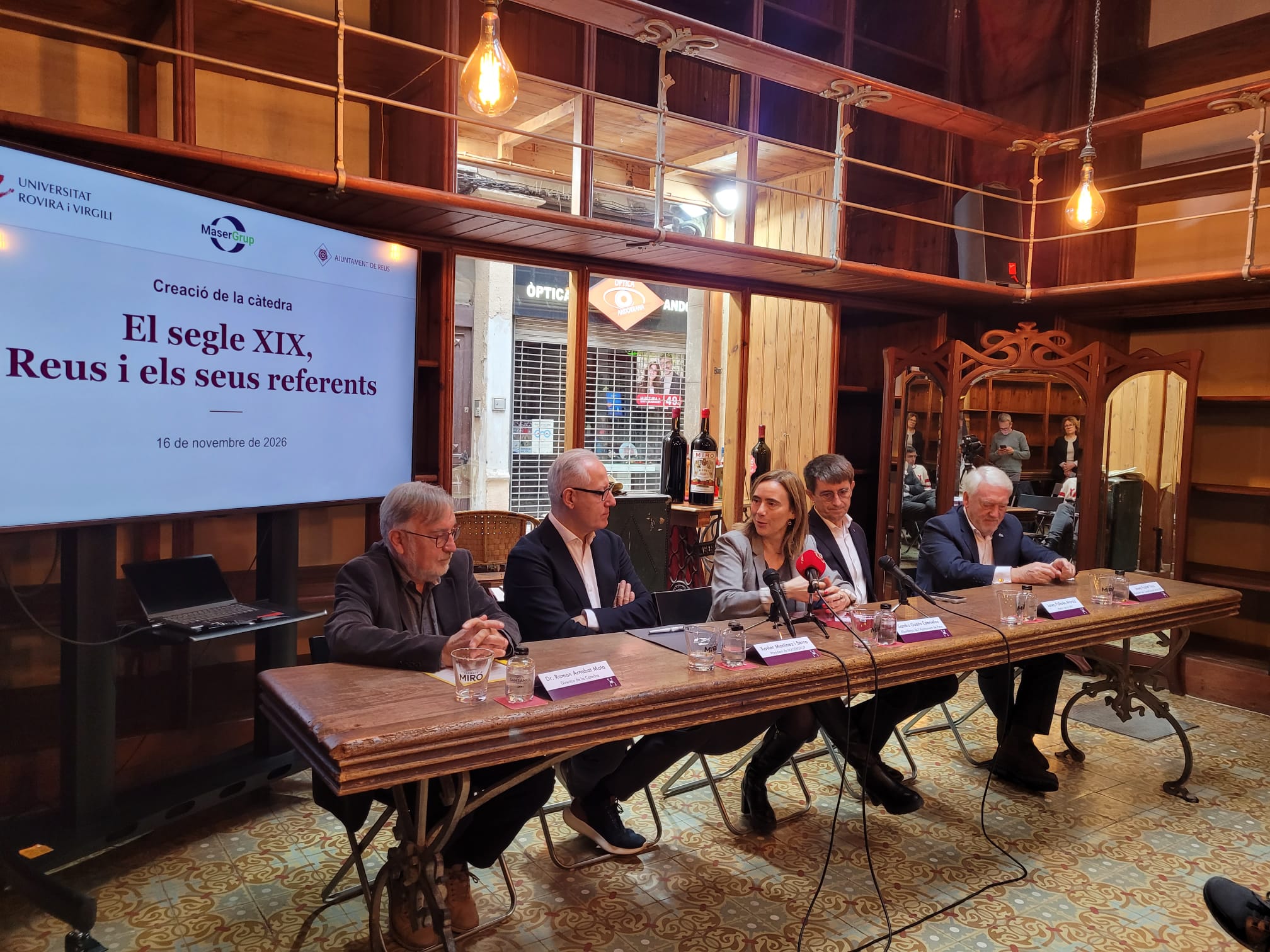
The establishment of the El Siglo XIX Chair, focusing on Reus and its key figures, marks a collaborative initiative between Rovira i Virgili University (URV), MaserGrup, and the Reus City Council. This project aims to enhance research and public understanding of the 19th century in Catalonia and Spain, particularly highlighting the significant role of Reus in shaping contemporary Catalonia and Spain.
The Casa Navàs, a notable building in Reus, hosted the chair's presentation, which will be led by Ramon Arnabat, a professor in the Department of History and Art History at URV. The initiative is supported by a monitoring committee comprising the funding institutions, with MaserGrup contributing €15,000 annually and the Reus City Council providing €5,000 per year for three years.
Chairs like this one represent a form of collaboration between the university and public and private entities across various fields of knowledge where URV excels. This particular chair, promoted by the Social Council, seeks to recover the collective history of the 19th century in Spain, focusing on the struggles for freedom, democracy, and justice, as well as Reus's involvement in significant events and figures of that era.
“The 19th century lays the foundations of contemporary Reus and Catalonia, politically, culturally, economically, and socially,” explained Arnabat, emphasising the city's historical significance during this period. “Reus was the second city in Catalonia for much of the 19th century, contributing vital knowledge and individuals for national consolidation.”
The chair will explore various aspects of the era, including social and political conflicts, cultural and artistic activities, demographics, economics, and urban development. It will employ innovative and rigorous research methodologies, incorporating diverse voices from both social and gender perspectives.
To disseminate the knowledge generated, the El Siglo XIX Chair will organise courses and conferences, provide a pre-doctoral research scholarship, and award prizes for high school, undergraduate, and master's projects. It will also present research findings at conferences, publish books and articles, and promote a collection under the university's editorial seal, alongside an itinerant exhibition.
Xavier Martínez y Serra, president and general director of MaserGrup, highlighted the responsibility of businesses towards the communities in which they operate, stating, “This new chair is an expression of this commitment and an example of what can be achieved when the university, public administration, and private enterprise join forces and share objectives.”
Sandra Guaita, the mayor of Reus, underscored the city's impact on social and cultural transformation, recognising the contributions of notable figures while also stressing the importance of highlighting the collective role of women in the 19th century. “To understand where we are and where we are going, it is essential to know where we come from. Therefore, studying the 19th century is fundamental for understanding the present and facing the future of the city and the country,” concluded Arnabat.
Josep Poblet added that the creation of the chair is not intended for nostalgic reflection but to deepen the lessons learned from that century for the collective experience.