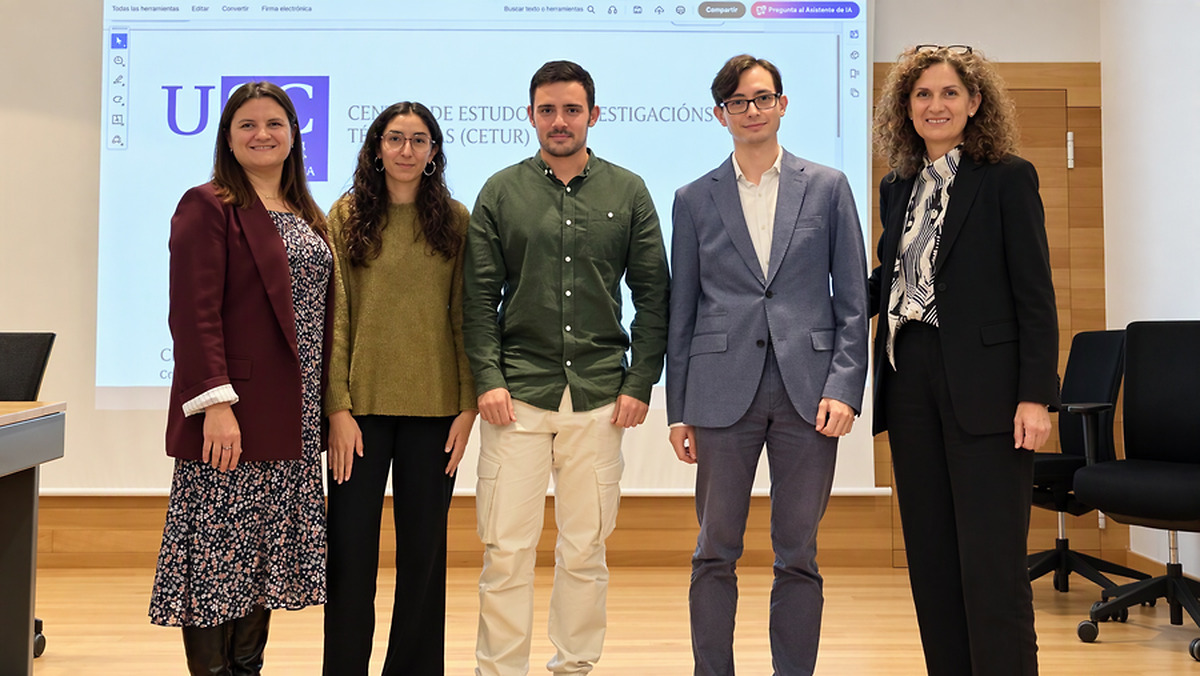
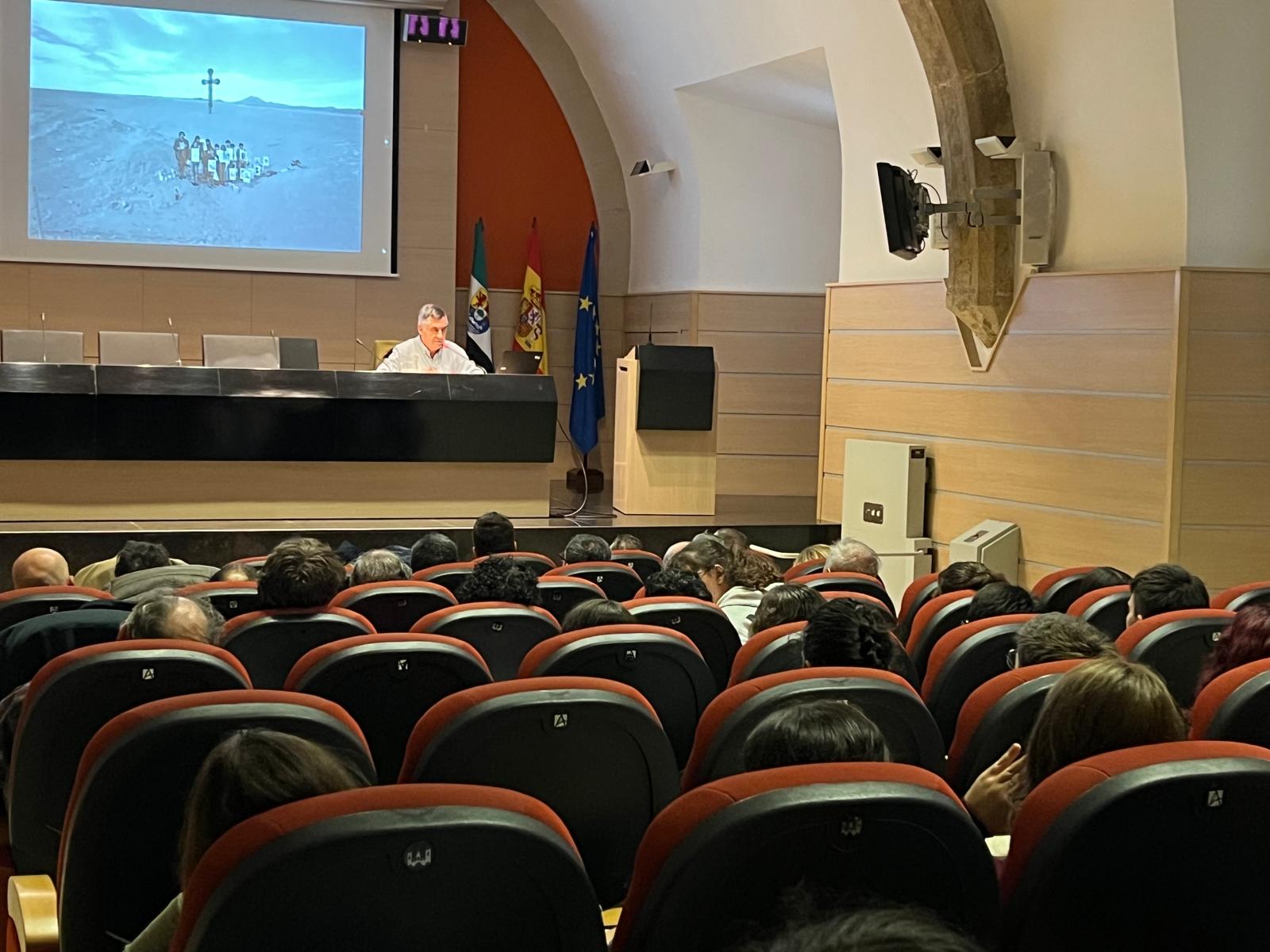
As Spain approaches its general elections in 20 days, five faculty members from the Faculty of Law and Labour Sciences participated in a roundtable discussion focused on two key issues that have garnered significant attention in electoral legislation: the net law and the voting rights of people with disabilities.
Maria Hylma Alcaraz, a lecturer in Constitutional Law; Juan Antonio Hernández Corchete, a lecturer in Administrative Law; and Xosé Manuel Pacho Blanco, a lecturer and researcher in the Philosophy of Law, explored various aspects of the net law. Meanwhile, Jacinto Lareo Jiménez, a professor of Administrative Law and President of the Sálvora Foundation, discussed adaptations to the Organic Law of the General Electoral Regime (LOREG) for people with disabilities to exercise their right to vote. Paula Martínez Molares, a lecturer and researcher in Procedural Law, addressed the judicial protection of voting rights following the enactment of Law 8/2021.
Pablo Grande Seara, Dean of the Faculty, opened the session by commending the Student Delegation for organising the event, stating that the students are in touch with reality and aware of the legal issues that arise daily. He also expressed gratitude to the faculty members for their voluntary contributions in preparing presentations that encourage reflection on these important themes, which need to be examined from a legal perspective beyond just journalistic viewpoints.
Alejandro Alonso Lago, President of the Student Delegation, emphasised the importance of being informed citizens in a democratic state, particularly in a critical context where the future of the country is at stake. He remarked, “We believe that knowledge is invaluable, and the best we can do is to verify information.”
Although the initial focus of the session was on the political rights of people with disabilities, the upcoming elections prompted the inclusion of discussions on the net law. The Democratic Memory Law, which has been in effect since 2022, has recently re-emerged in public debate as the net law, specifically regarding the new criteria for acquiring nationality. Alonso highlighted that there are more questions than answers, particularly concerning how Spanish nationals can lack equal voting rights under the law, as recognised by the Constitution.
Maria Hylma Alcaraz, who wrote her thesis on the rights of foreign nationals in Spain, was the first to speak, focusing on the constitutional implications of suspending the vote for ‘descendants of exiles’ and its impact on the electoral process. Juan Antonio Hernández Corchete delved into the legal analysis of the voting suspension and the rulings from the Superior and Constitutional Courts. Xosé Manuel Pacho Blanco addressed the state of law in relation to lawfare and the Democratic Memory Law.
Regarding the voting rights of people with disabilities, Alonso noted that Spain has fulfilled this obligation late, stating that it “settles a debt with individuals who, following recent reforms in civil and procedural legislation, now possess full legal capacity.” He recalled that while this right was introduced into Spanish law through an international treaty, the 2006 New York Convention on the Rights of Persons with Disabilities, it was not until 2021 that incapacities were definitively abolished, and a system of support measures was recognised, always considering the will, desires, and preferences of individuals.
Jacinto Lareo Jiménez focused on the adaptations of LOREG for people with disabilities to exercise their voting rights, while Paula Martínez Molares examined the judicial protection of voting rights following Law 8/2021 and the effectiveness of procedural channels.