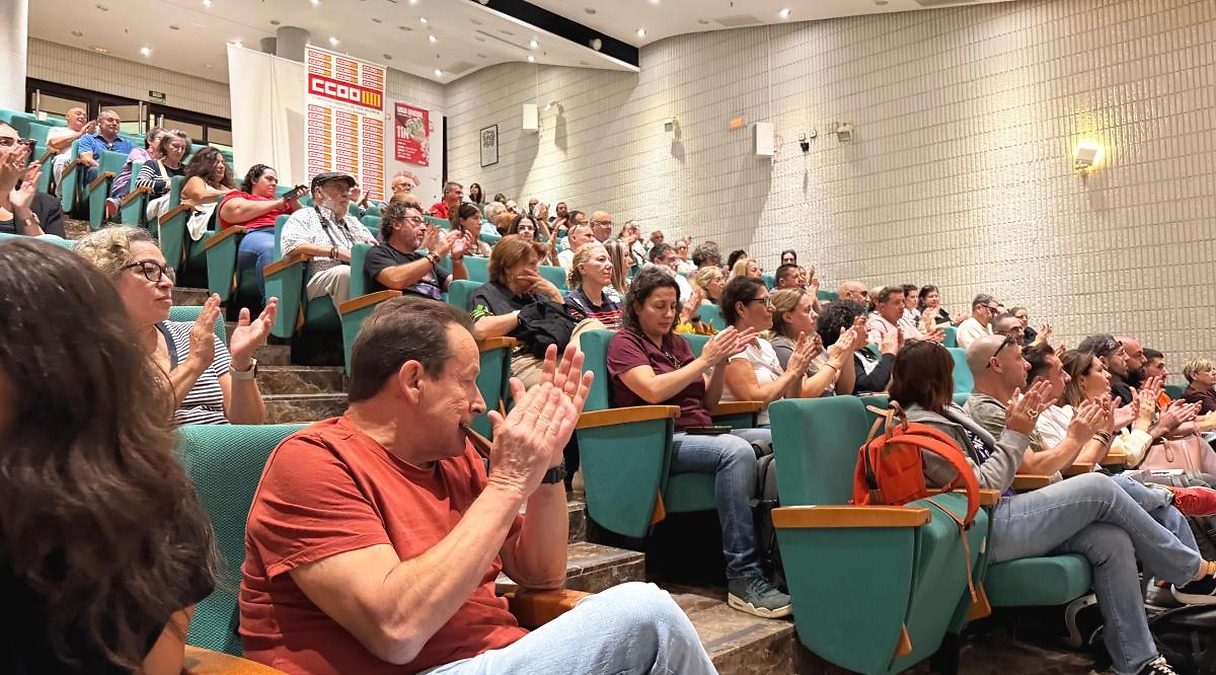
The headquarters of CCOO in Alicante hosted a meeting today with union delegates to discuss the upcoming general strike scheduled for 11 November. Ana García Alcolea, the General Secretary of CCOO PV, addressed the assembly, highlighting the primary demands of the strike, which include decent wages, access to adequate housing, and a reduction in living costs.
García stated that the strike represents a working-class conflict, emphasising the need for future generations to have opportunities and not be forced to live in substandard conditions. She remarked, “Despite claims of economic growth, it is not reflected in people's pockets. Working individuals are struggling to make ends meet.”
Additionally, García underscored the importance of advocating for quality public services, adequately resourced and staffed. She expressed concern over the actions of the Popular Party and Vox, which she believes undermine the health of workers and gender equality.
María Cueva Garcés, the head of Trade Union Action for CCOO l'Alacantí-les Marines, referenced Article 47 of the Spanish Constitution, which recognises the right to adequate housing, calling it an unprotected right that remains unfulfilled. “We will stop everything because we do not want crumbs,” she asserted.
Eva Calleja Risueño, the General Secretary of CCOO l'Alacantí-les Marines, advocated for fair wages to eliminate gender pay gaps and called for a genuine redistribution of wealth. She insisted that a national collective bargaining agreement must be negotiated to guide wage increases and labour agreements.
Calleja provided a detailed overview of the living and working conditions for the working class in the region, noting that the average salary is nearly €9,000 lower than the national average, with four out of ten salaries in the province falling below €1,000 per month. “We are the fifth province in the country by GDP but rank 42nd out of 50 in GDP per capita; it is not the wealth that is lacking, but its distribution,” she stated.
She called for more jobs, but particularly for better working conditions with a gender perspective. Calleja urged all public administrations—local, regional, and national—to ensure that access to housing is recognised as a “real right that should not cost us our lives.”
Furthermore, she highlighted the necessity for effective occupational health measures in all workplaces, asserting, “We work to live, not to die.” Calleja encouraged participation in the general strike on 11 November, describing it as a grassroots movement that extends beyond the union. “We will not stand idly by; we strike for our rights. Rights are not begged for; they are fought for in the streets.”