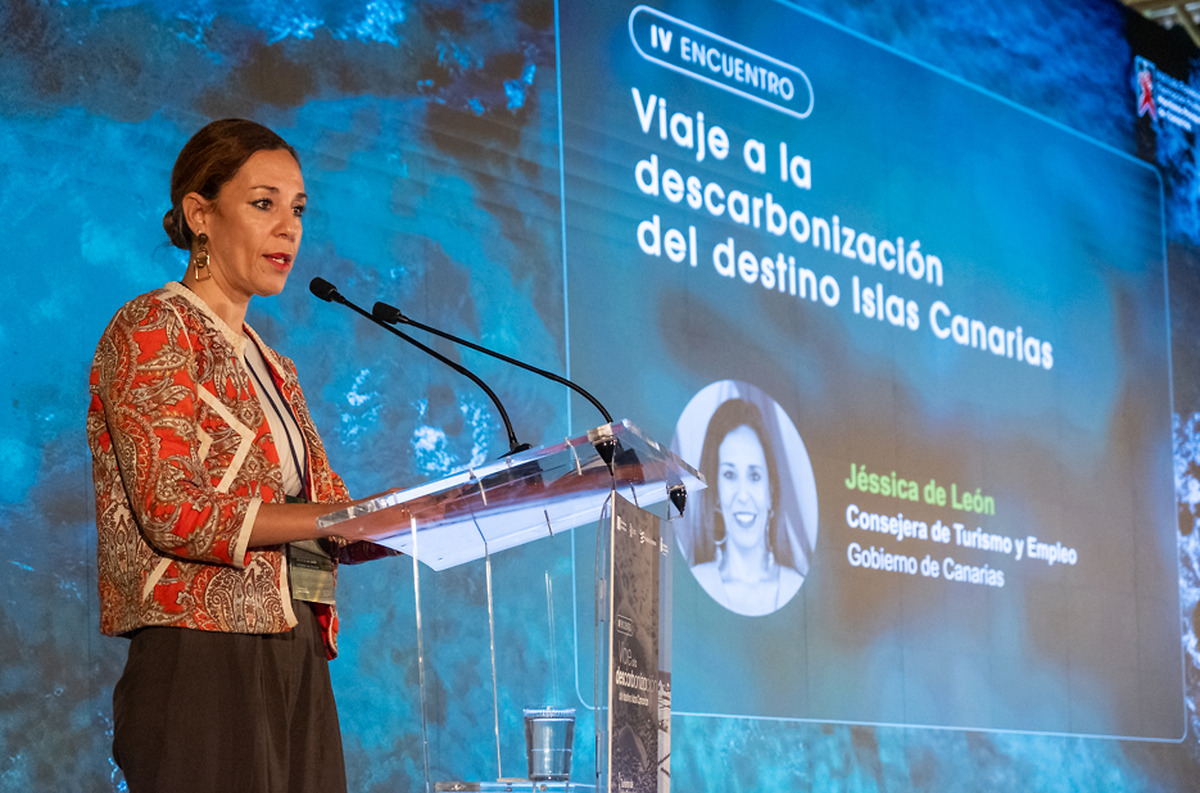
The Canary Islands government is taking significant steps to address climate change within its tourism sector. During the fourth meeting on 'Journey to the Decarbonisation of the Canary Islands', held in Lanzarote, Jéssica de León, the Minister of Tourism and Employment, outlined the initiative aimed at providing tools and knowledge to local businesses.
“We are working to ensure that the tourism model anticipates the effects of climate change and minimises its environmental impact,” De León stated. A free digital tool developed by Turismo de Canarias to measure and reduce emissions has already registered 292 companies, with 131 having completed their carbon footprint calculations.
Expanding support for businesses
The Ministry's ongoing strategy focuses on environmental regeneration, climate adaptation, and decarbonisation, collaborating with all stakeholders in the tourism sector. As part of this effort, the ministry will enhance its free training and advisory services to help businesses advance in measuring, planning, and reducing their emissions.
De León highlighted the importance of adhering to the Glasgow Declaration, which calls on signatories to reduce the carbon footprint of tourism businesses in the Canary Islands. Additionally, she noted that the Climate Change Law requires companies to measure their carbon footprint starting in 2027.
“Sustainability is a strategic axis that must be integrated into the tourism planning of the Canary Islands,” she added. “We are committed to ensuring that tourism anticipates the effects of climate change and reduces its environmental footprint.”
Tools for decarbonisation
One key initiative is 'Journey to Decarbonisation', a free digital platform launched by Turismo de Islas Canarias to assist tourism businesses in measuring their carbon footprint, setting goals, and planning reduction measures. Currently, 292 companies are registered, and they can request private consultations with sustainability specialists to better understand the tool and address their specific needs.
This training complements six in-person workshops and 33 online sessions held this year, which attracted a total of 614 participants. “We have supported the sector in measuring its emissions because only by doing so can we reduce and scrutinise the impact of the tourism industry in our ecosystem,” concluded De León.
Upcoming training platform
The advisory services and workshops will be supplemented by the upcoming launch of a training platform featuring on-demand consultation materials. José Juan Lorenzo, the managing director of Turismo de Islas Canarias, explained that the aim is to further personalise the training and assist more businesses in completing their calculations and translating results into real measures.
The platform will debut with a section titled 'How to decarbonise your tourism business', providing a practical guide on measuring, planning, and reducing emissions. The content will be tailored to relate these calculations to common management decisions, such as energy use, facility maintenance, mobility, waste management, and contracted services.
Collaboration for climate action
The fourth meeting featured environmentalist and sustainability consultant José Luis Gallego, who delivered a presentation on 'Nature as an Alliance and Responsibility'. He moderated a discussion with Lorenzo on the need for collaboration between administrations, businesses, knowledge centres, social organisations, and citizens to address climate action structurally.
This context aligns with the Blue Tourism agreement signed by Turismo de Canarias with the Spanish National Research Council (CSIC) and the universities of La Laguna and Las Palmas de Gran Canaria, aimed at enhancing understanding of tourism's environmental impacts and translating research into the sector.
With a total funding of €4.2 million, six projects have been developed, including the definition of 50 geotourism micro-destinations and the installation of nine underwater listening stations.
Addressing carbon emissions
Lorenzo also provided insights into the latest carbon footprint measurements from the tourism sector. In 2025, estimated emissions from tourism activities in the region reached 1,055,001 tonnes of CO₂ equivalent, a 3% increase from 2024. Emissions per tourist arrival were estimated at 57.38 kg of CO₂e, a decrease of 0.4%.
Activities accounted for 40% of emissions, followed by accommodation at 31% and mobility during stays at 29%. Aviation emissions associated with flights linked to the Canary Islands were estimated at 6,572,149 tonnes of CO₂e, a 4.6% increase from 2024 and 24% higher than in 2019.
In this context, a meeting was held with stakeholders in sustainable aviation fuels (SAF) to identify opportunities for developing a value chain in the islands and address challenges such as raw material availability and logistics.
The event also included the presentation of the Climate Action Plan for tourism activities in Lanzarote and La Graciosa, highlighting ongoing efforts towards a more sustainable and resilient tourism model.
In summary, the Canary Islands government is actively promoting sustainability within its tourism sector, providing essential tools and support to help businesses reduce their carbon footprint and adapt to climate change.