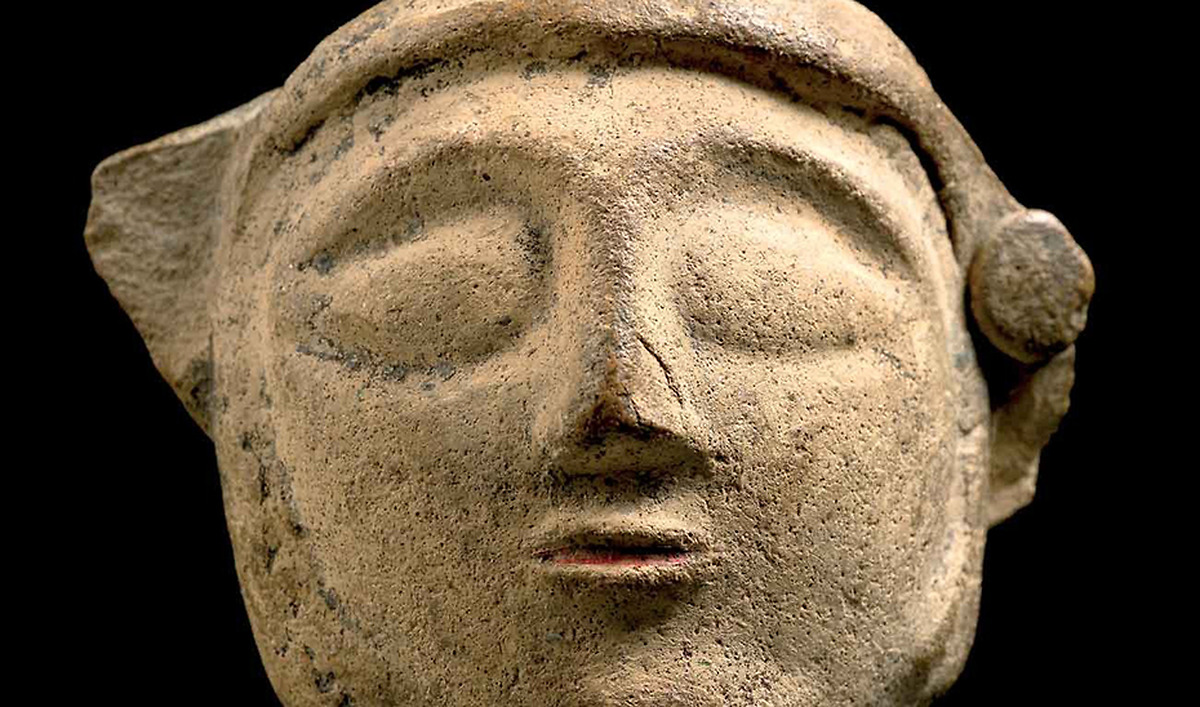
Two Greek artefacts from the Museum of Huelva and an Iberian sculpture from the Archaeological and Ethnological Museum of Córdoba are set to travel to New York for the exhibition 'The wine-coloured seas: Art and identity beyond ancient Greece'. This exhibition will explore the expansion of classical Greek culture and its hybridisation with other Mediterranean peoples and cultures.
The exhibition will run from 14 December 2026 to 11 April 2027 in the temporary exhibition space 199 at the Metropolitan Museum, located on Fifth Avenue. Patricia del Pozo, the Andalusian Minister of Culture, Historical Heritage and Sport, emphasised that collaboration with internationally recognised museum institutions is vital for enhancing the understanding of Spain's history and the cultural and economic exchanges that shaped its heritage.
Del Pozo stated, "These initiatives are an excellent way to broaden the audiences of our museums," highlighting the international interest in Andalusian museum collections as a measure of the quality and impact of the work carried out by conservators and technicians.
The Museum of Huelva will lend a fragment of a Greek vase from its storage, along with a terracotta head of Heracles, dating back to the 6th century BC. This anthropomorphic piece, measuring 7.2 cm in height, 7.5 cm in width, and 4.4 cm in thickness, exhibits archaic characteristics suggesting a colonial origin. It was discovered on the surface of Saltés Island in the 1930s and is linked to classical accounts of a sanctuary dedicated to Heraklés on an island near Onuba.
Meanwhile, the Archaeological and Ethnological Museum of Córdoba will temporarily lend the Iberian sculpture known as the 'Lion of Bujalance', dating to the 5th century BC. This limestone sculpture, measuring 80 cm in height, 23 cm in width, and 62 cm in length, depicts a lion in an alert posture with a threatening expression. It was fortuitously found in the Los Aguilones estate, near the Manga Granada area, at the border of Córdoba and Bujalance. Due to the lack of associated stratigraphy, its original function remains uncertain, although similar predatory representations are known to be linked to funerary structures.
The exhibition 'The wine-coloured seas: Art and identity beyond ancient Greece' will delve into the period from 800 to 500 BC, a time of significant innovations and transformations in ancient Greece, accompanied by extensive cultural and commercial expansion throughout the Mediterranean. It will present a panorama of artworks, both Greek and those resulting from cultural hybridisation, alongside images and pieces from other cultures, examining how the Greeks perceived and represented the various civilisations, myths, and peoples they encountered during their travels and settlements.
Additionally, the exhibition will feature artefacts from key archaeological sites that reflect the nature of Greek contact with local cultures, showcasing reciprocal influences in artistic style, technique, and tradition, with contributions from Egypt, Crete, Cyprus, Tunisia, Sicily, France, and Spain, including items from Iberian culture.