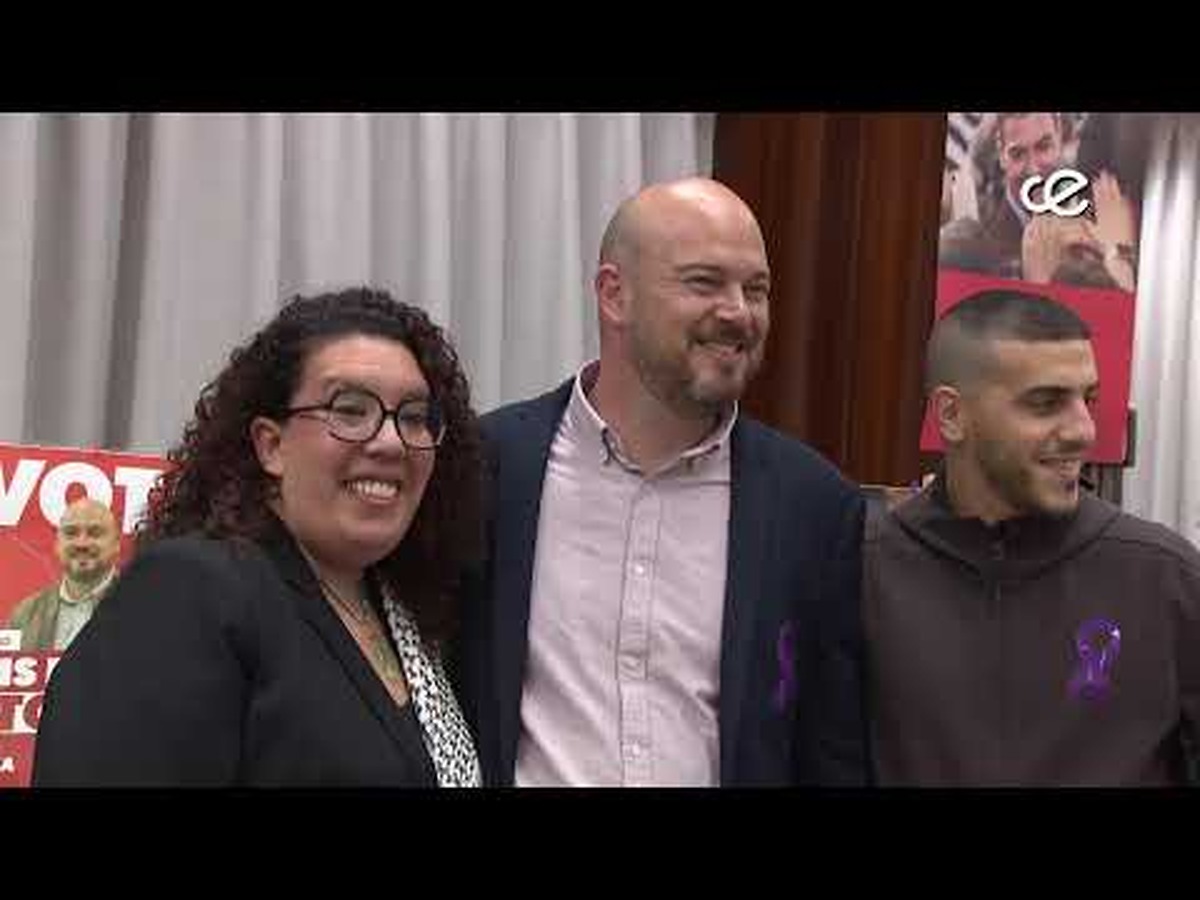
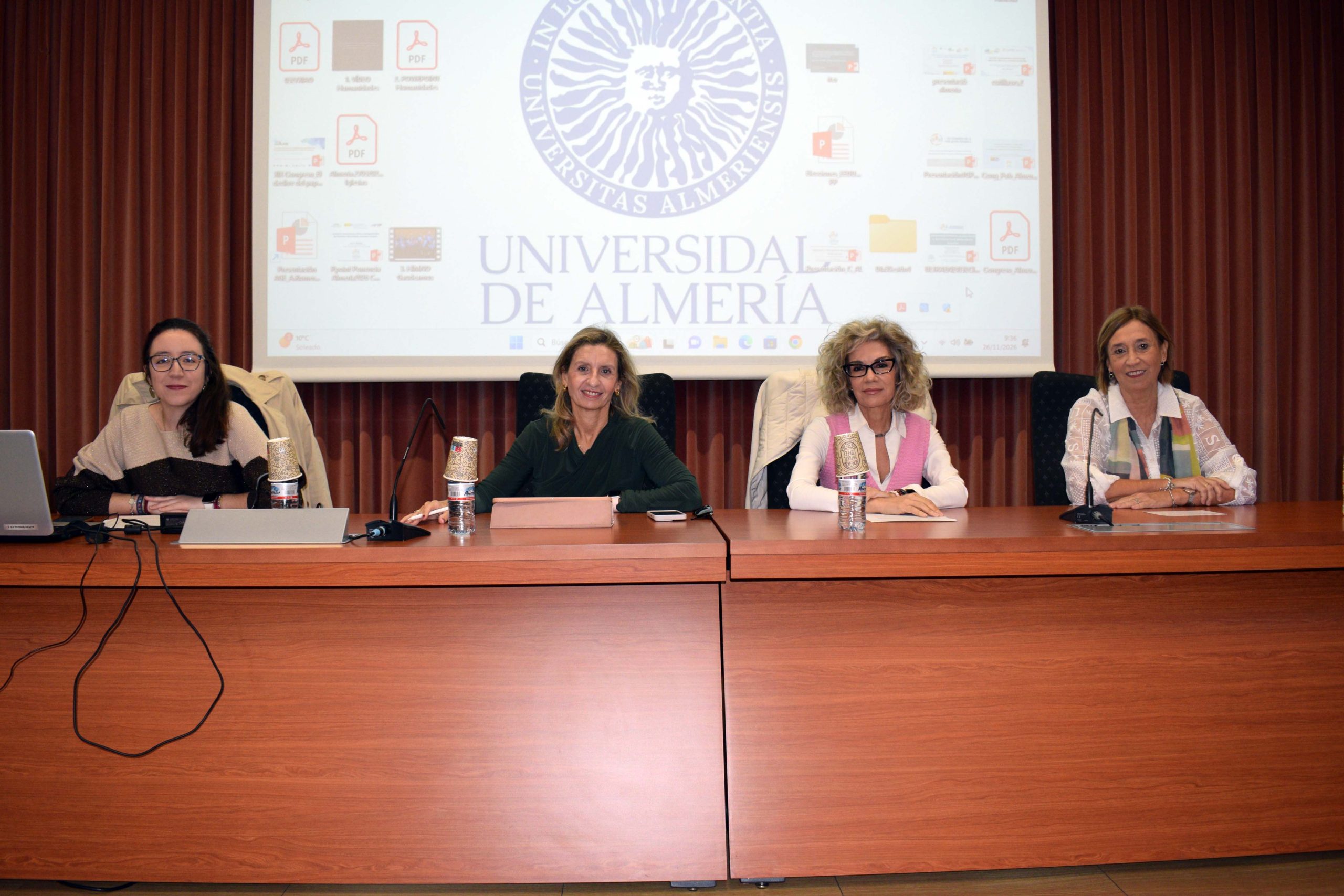
On 26 November, the University of Almería inaugurated the event 'Literary Voices (France/Spain) Against Violence Towards Women' in the Aula Magna of the Faculty of Humanities. This educational and cultural initiative, organised by professors María Loreto Cantón Rodríguez and Antonia Sánchez Villanueva, in collaboration with the Department of Philology and the Faculty of Humanities, coincided with the commemoration of the International Day for the Elimination of Violence Against Women, observed on 25 November.
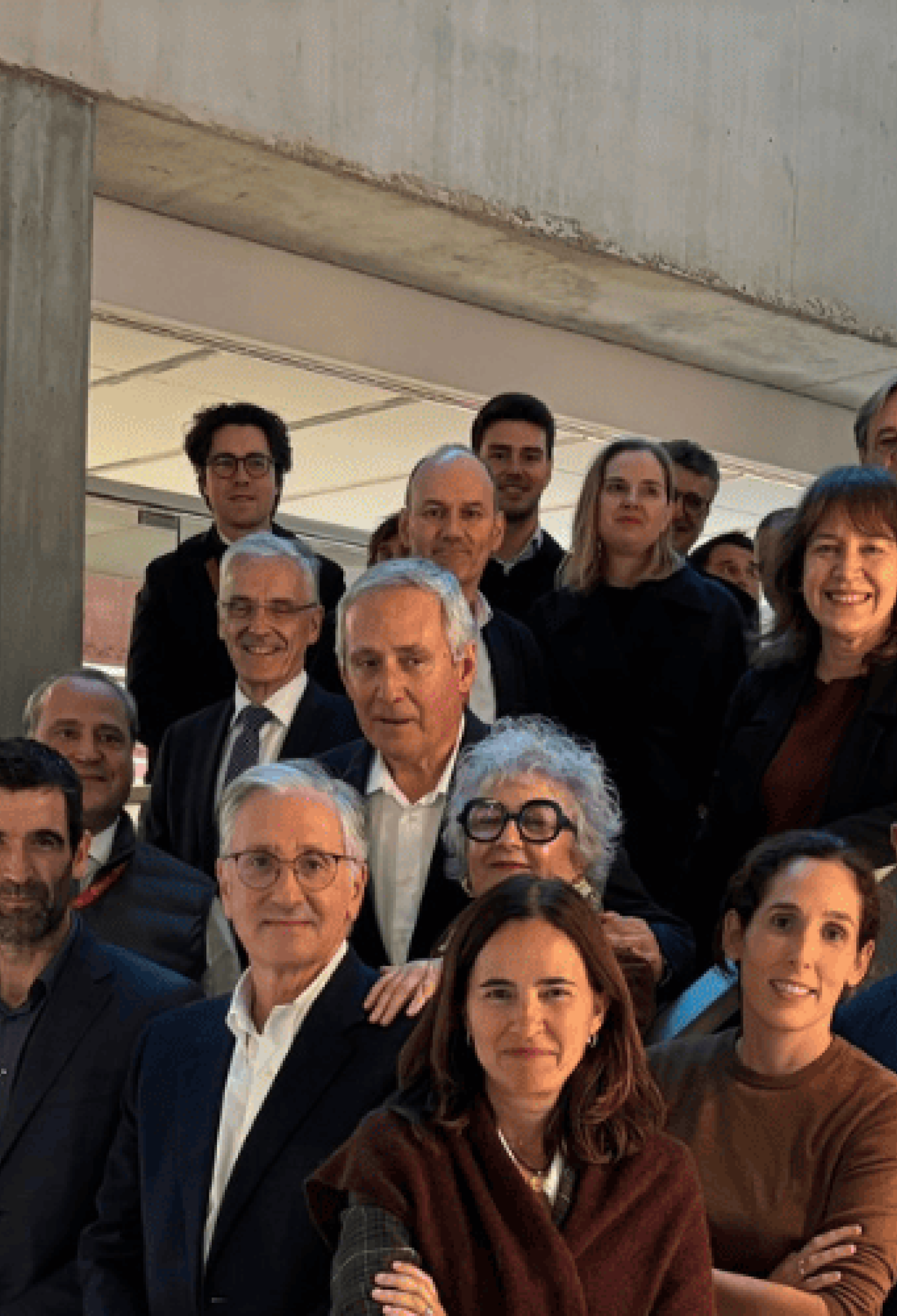
The opening ceremony featured Maribel Ramírez Álvarez, Vice-Rector for Equality, Inclusion, and Social Commitment, who presided over the event alongside María Loreto Cantón Rodríguez, Marisol Cruz, head of the Department of Philology, and María Alejo, representing the Faculty of Humanities.
The first session included a series of lectures focusing on the treatment of gender-based violence and inequality in works by francophone female authors. Additionally, a documentary screening and a comparative dialogue between France and Spain were presented, encompassing both comics and novels.
This initiative builds on a previous seminar of the same name, where students from the degrees in Hispanic Philology and English Studies, along with seminar participants, collaborated in small teams to create podcasts, traditional exhibitions, and dramatic readings on themes such as sexual consent, sexual assault, power dynamics, and inequality. During her inaugural address, Vice-Rector Ramírez Álvarez emphasised the importance of literature in highlighting gender-based violence and maintaining the university's commitment following the 25 November observance. She stated, “It is a pleasure for me to inaugurate these days, which continue our university's commitment to 25 November. Yesterday, we presented the awards for the French language short story competition. Today, we take another step in this dialogue between our two languages and cultures, as the fight against violence cannot be limited to a date on the calendar.”
Ramírez Álvarez also highlighted the significance of naming these realities and the active role of students in the programming over the two days. “Naming violence is the first step towards combating it. What is not named does not exist socially, is not analysed, and is not repaired. This is precisely one of the great contributions of literary creation and its academic study: providing us with language, categories, and narratives that allow us to understand gender-based violence not as a collection of isolated cases, but as a structural phenomenon with cultural and historical roots.”
During the session, Antonia Sánchez Villanueva, an associate professor of French at UAL, explained the development of the academic project leading up to the event. “The event concludes the seminar of the same name. In this seminar, academic work has been conducted in the classroom with students of French.” She elaborated on how student work was structured and the formats planned to showcase the results of their readings: “Each participant selected a book, read it, and then collaborated in small teams to create a final product that reflects those readings, contrasting how each author addresses these themes.”
Following the inauguration, María Rodríguez Álvarez from the University of Oviedo delivered a lecture titled 'Between Shame and Taboo: Representations of Violence in the Work of Annie Ernaux', followed by a screening and discussion of the documentary 'Annie Ernaux in the School'. José Luis Arráez Llobregat from the University of Alicante presented 'Punishing Their Bodies, Erasing Their Humanity: Gender Violence Against Women Accused of 'Horizontal Collaboration' (femmes tondues) in French Liberation Narrative', along with student presentations in the afternoon.
On 27 November, the second day will feature lectures by Julia Ori from the Complutense University of Madrid, titled 'Making the Unnameable Visible: On Hishouma by Zainab Fasiki', and Isabelle Marc, also from Complutense, discussing 'Virginie Despentes, Before and After MeToo', alongside further student presentations. Through this inaugural day, the University of Almería has reaffirmed its commitment to culture, reading, and comparative analysis as tools for reflection and prevention, with the anticipation of concluding the programme on 27 November.