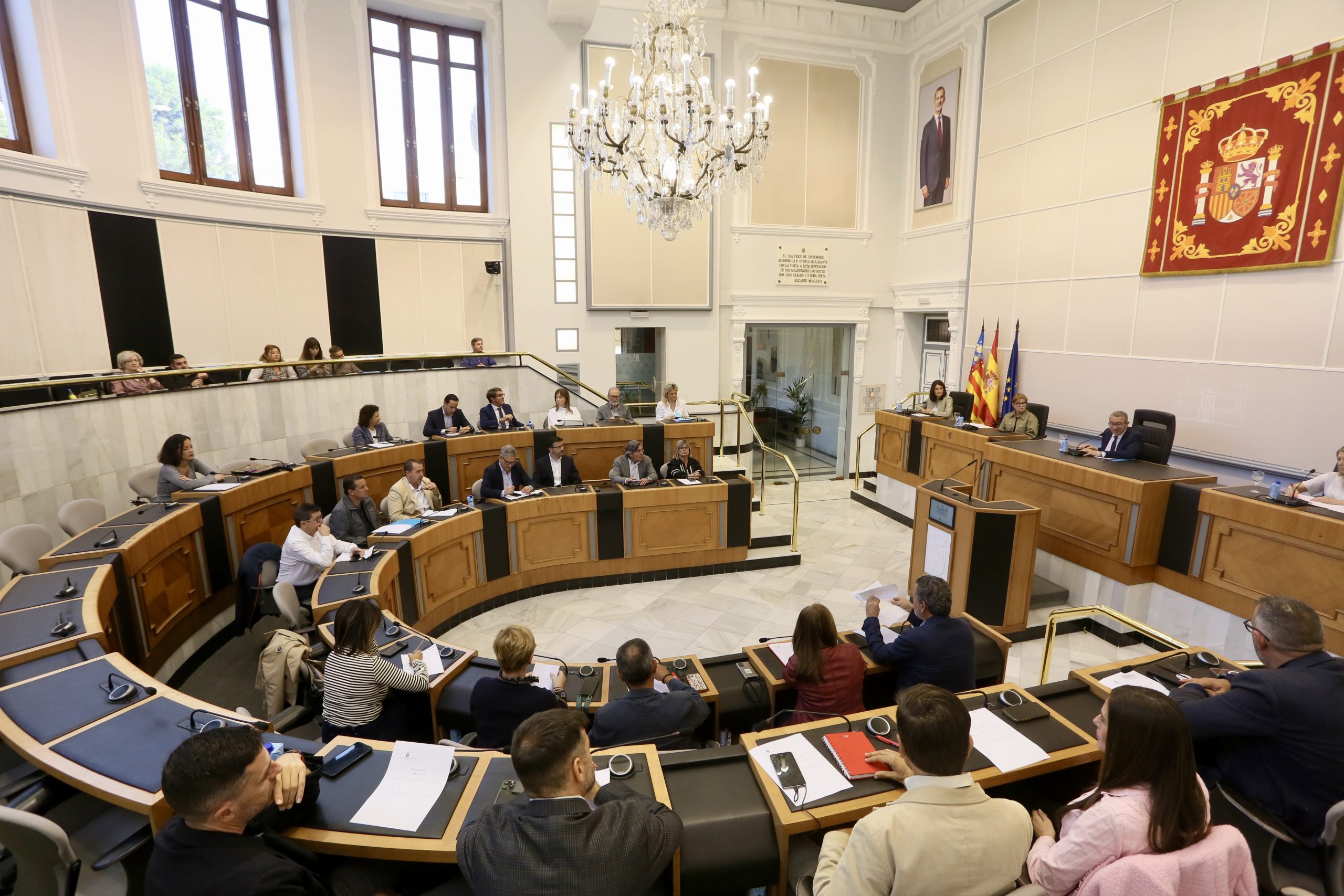
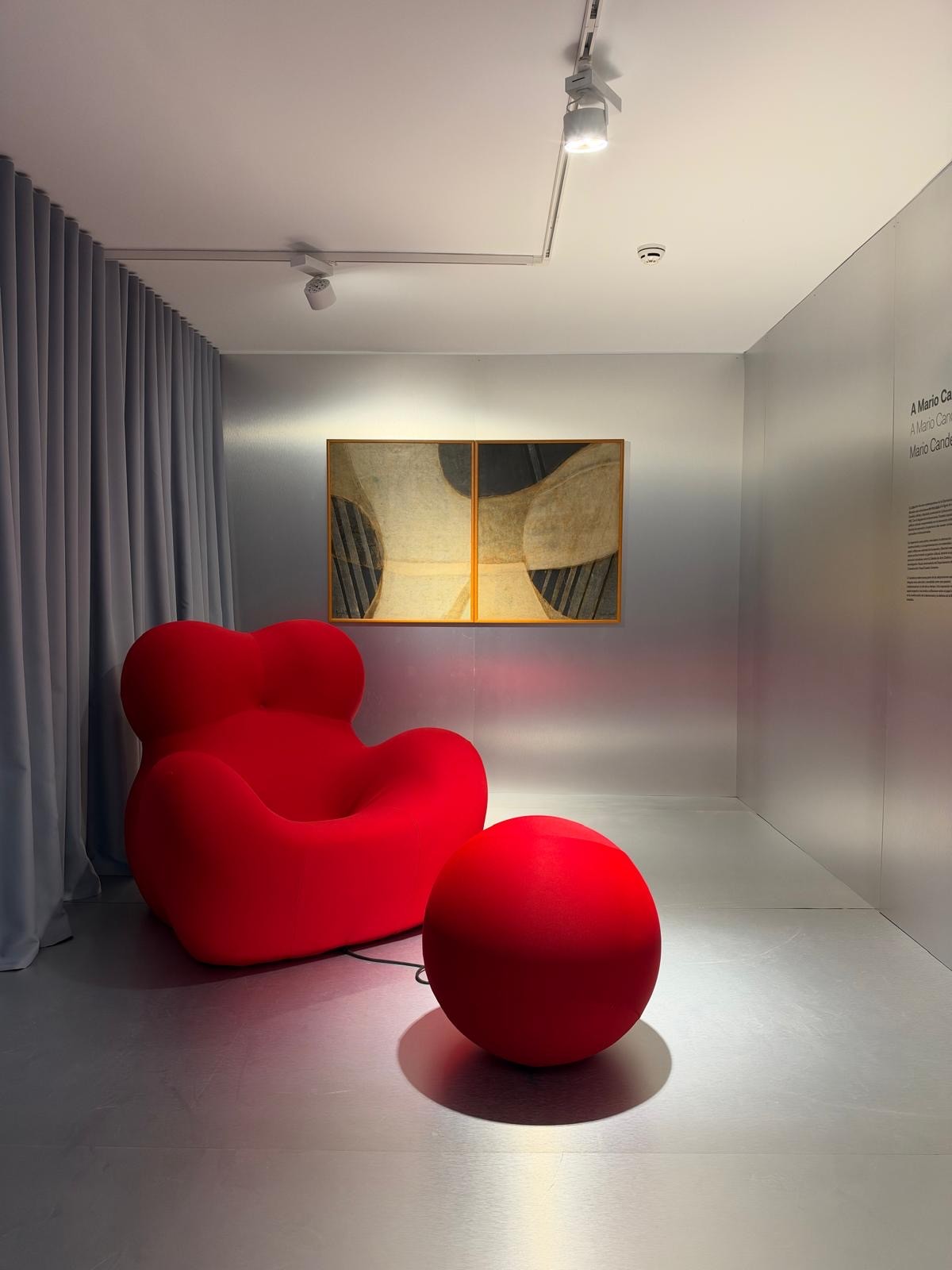
The Museo de Bellas Artes in Alicante has unveiled a new exhibition titled 'Design is freedom', showcasing a selection of 77 pieces that highlight the creative freedom and explore the connections between contemporary art and Italian design. The exhibition will be open to the public until 23 May 2027.
This showcase includes works from the 19th and 20th-century collections of the Museo de Bellas Artes de Alicante (MUBAG) alongside Italian design pieces from the ADI Design Museum in Milan. Jorge A. Soler, the director of MUBAG, who was joined by his Milanese counterpart Andrea Cancellato, explained that the collections create a dialogue between paintings and sculptures and projects by prominent Italian designers, including those awarded the Compasso d’Oro, one of the most prestigious international design awards.
The exhibition is curated by Italian philosopher and historian Aldo Colonetti, alongside MUBAG’s María José Gadea. It holds particular significance in 2026, marking the 80th anniversary of the proclamation of the Italian Republic and the achievement of women's suffrage in Italy, as well as the 50th anniversary of women's first vote in Spain. These commemorations provide historical context to the exhibition and reinforce its reflection on rights, freedom, and the role of individuals in building a more open and equal society.
The contemporary art collection of the Diputación de Alicante showcased at MUBAG is closely linked to Mario Candela, an artist and provincial deputy for Culture from 1979 to 1987. Following the establishment of democracy, Candela promoted a cultural policy committed to artistic renewal, freedom of expression, and openness to new creative currents. During his political career, he acquired much of the artwork that now comprises these collections and initiated projects such as the Chair of Kinetic Art and Visual Research, a precursor to the current Department of Art and Visual Communication Eusebio Sempere.
The exhibition’s curators noted that the initial manifestations of renewal are associated with Informalism, supported by artists such as Antoni Tàpies, Juana Francés, Manuel Rivera, and Pablo Serrano. Subsequently, during the 1960s and 1970s, the landscape evolved towards social critique and humorous proposals, influenced by Pop Art and renewed attention to figuration, featuring artists like El Equipo Crónica, Juan Antonio Toledo, Toni Miró, and Artur Heras. Concurrently, kinetic art and Op Art developed, incorporating new technological and expressive possibilities with works by Vasarely, Le Parc, Cruz Díez, and contributions from Spanish artists like Yturralede and Alicante’s Sempere.
Additionally, the design products are categorised into four groups: 'The founding masters', 'The new masters', 'Art and design', and 'Technological design'. Notable design pieces include creations by figures such as Gaetano Pesce, Bruno Munari, Marc Sadler, Alberto Meda, Philippe Starck, Giovanni Bonotto, Benedetta Mori Ubaldini, Anna Castelli Ferrieri, and Paolo Ulian. This unique perspective on the collection encourages the represented objects to 'speak', allowing for a re-evaluation of the significance that decorative and industrial arts have had in people's everyday lives throughout different eras, according to Gadea. She further emphasised that it reinforces MUBAG's identity as a museum dedicated to fine arts, committed to showcasing how these are products of human creation and integral to our reality, both in artistic works and in daily life.
In conjunction with this exhibition, an installation titled Trincea Fragile by Marco Ferreri is now displayed outside the ADI Museum in Milan. Created specifically for 'Design is freedom', it consists of two earthen walls adorned with wild grasses, forming a symbolic passage where visitors can participate by watering the earth, helping the piece to grow and transform. This process will be monitored live throughout the exhibition period via a screen installed in the La Ventana del Arte space, which will also feature a model of the original installation.