The Government Delegation in the Principality of Asturias, along with the General Directorate of Traffic (DGT), has updated the Coordination Protocol for Snow and Other Adverse Weather Phenomena that may impact the state road network during the 2026-2027 winter season. Adverse weather conditions, particularly snow and ice, are common in winter and can significantly affect road safety.
The DGT plays a crucial role in managing traffic during these conditions, working alongside various state administration bodies, including the Civil Guard Traffic Group, to keep road users informed about incidents that may affect travel.
Objectives of the updated protocol
The revised protocol aims to strengthen coordination among different state administration bodies to ensure road safety and mobility during potential snowfall or extreme weather events. It outlines necessary actions to minimise accident risks and traffic disruptions, determine traffic restrictions until normal conditions are restored, and ensure adequate assistance for stranded motorists.
Permanent coordination measures
The Government Delegate leads the Executive Committee of the protocol, which includes representatives from key agencies such as the State Road Demarcation, Civil Guard, National Police, the Government of the Principality of Asturias, Civil Protection, and the State Meteorological Agency (AEMET). In the event of activation, a Coordinating Centre will be established to monitor road conditions and weather developments in real-time.
The protocol consists of three operational phases based on the situation's evolution: Alert, when AEMET issues red or orange snow warnings; Pre-emergency, when snowfall intensity suggests potential travel difficulties; and Emergency, when assistance is needed for individuals unable to continue their journey.
Available resources and operational areas
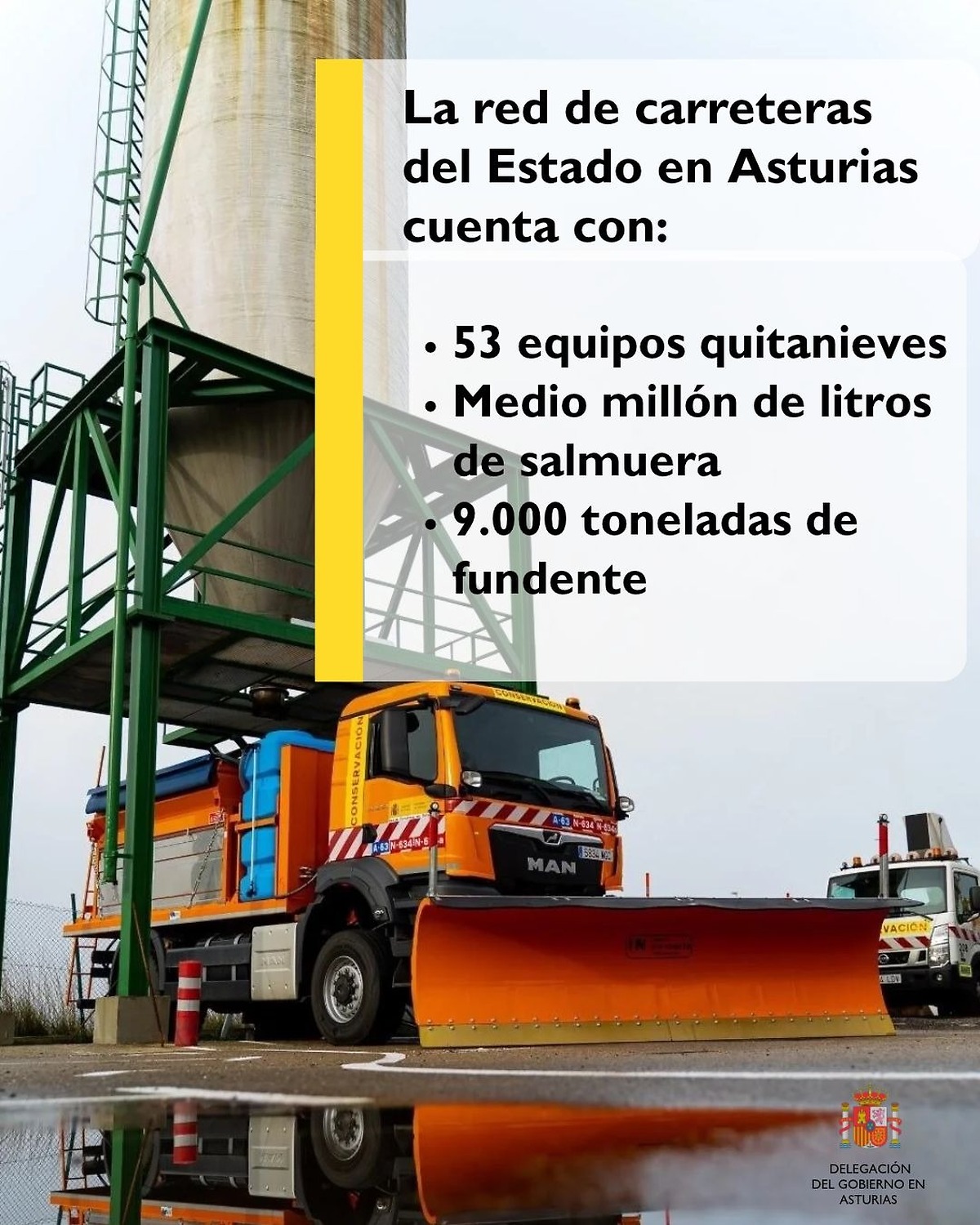
In Asturias, the state road network comprises approximately 400 km of motorways and 450 km of conventional roads. For winter operations, 53 snow-clearing units (including snowploughs, loaders, and turbo snow removers) will be deployed, along with 9,900 tonnes of de-icing agents and nearly half a million litres of brine stored at strategic locations.
The most vulnerable areas include the Pajares Pass (N-630) and the AP-66 motorway (Campomanes–León), where the majority of winter road maintenance resources are concentrated. Eight holding areas with capacity for 770 trucks and 885 cars are also located in these regions. Specific measures will be implemented on the AP-66 during this campaign due to ongoing tunnel upgrades, which will involve lane closures from Monday to Friday. These closures will be lifted when snowfall is anticipated, ensuring the road is clear two hours prior to any expected snow event to maintain traffic flow and safety.
Collaboration and communication
During snow or ice events, continuous updates will be provided through variable message signs on major roads, official DGT channels, and the press office of the Government Delegation, which will centralise information for the media. Coordination with emergency services and transport associations will also be maintained to inform about traffic restrictions and holding areas.
Travel precautions
For those needing to travel in areas under orange or red snowfall warnings, it is essential to exercise extreme caution. Drivers should ensure they have the appropriate equipment, such as chains or winter tyres, and pay attention to variable message signs and instructions from Civil Guard traffic officers. It is also mandatory to keep left lanes clear for emergency vehicles and snowploughs.