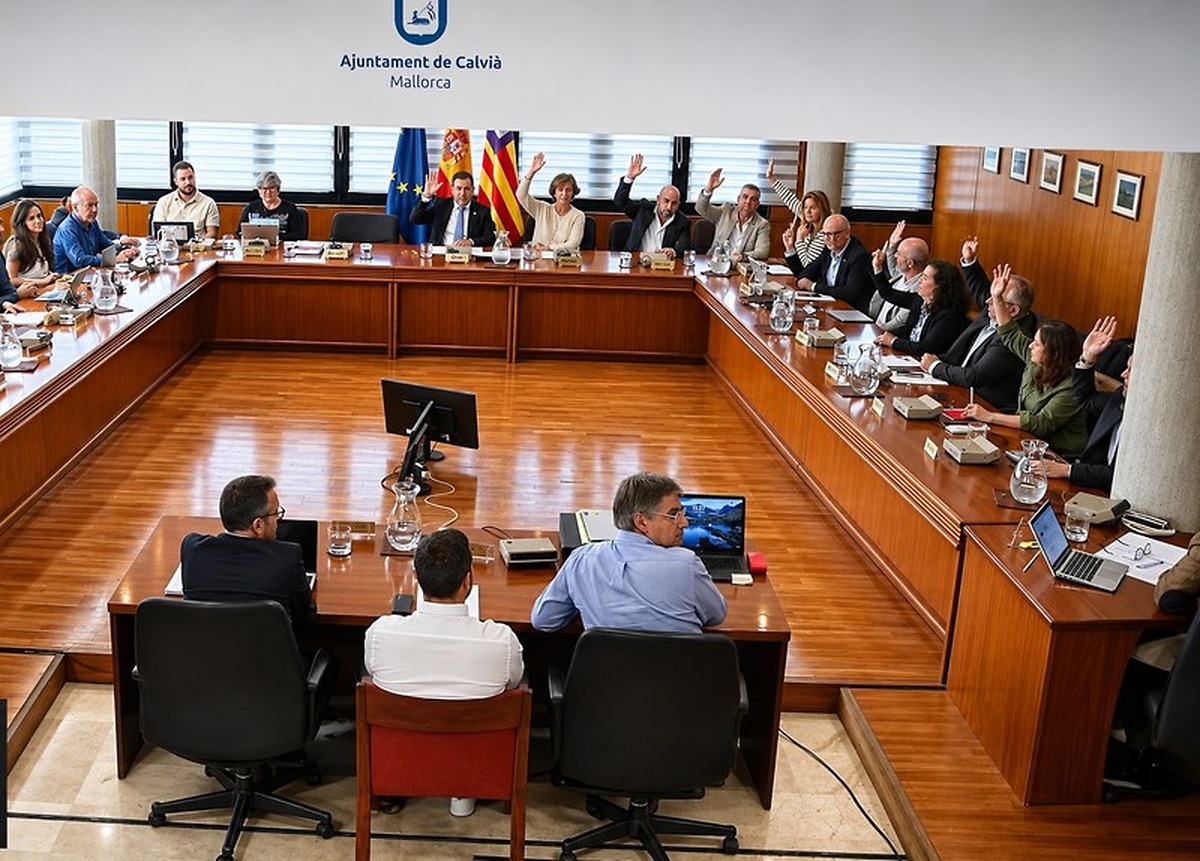
The Calvià Town Council has approved a municipal budget of 124,362,671.21 euros for 2027, reflecting a 2.3% increase compared to the previous year. The budget, which was passed during an extraordinary plenary session, is balanced and does not foresee any new debt operations.
This marks the fourth budget approved during the current legislative term. The consolidated budget, which includes the Town Council, the Municipal Institute of Education and Libraries (IMEB), the Municipal Tax Office, and municipal companies such as Calvià 2000, Llar de Calvià, and Limpiezas Costa de Calvià, totals 155,465,536.71 euros, a 2.22% increase from 2026 after accounting for internal transfers between entities.
Juan Antonio Amengual, the mayor of Calvià, emphasised the significance of passing all four budgets in the legislative term, stating, "Four budgets agreed upon between the Popular Party and Vox complete the entire budgetary cycle of this mandate, which is exactly what the residents asked us for in May 2023: to work together and govern with stability, predictability, and a focus on the real needs of the community."
Amengual highlighted the responsibility that comes with budget approval, noting, "The absence of a budget creates insecurity for councils, communities, and public employees. We have demonstrated that when there is a willingness to reach an agreement, a budget can be established."
The current expenditure has increased by 5.14%, with personnel costs rising by 7.92% and goods and services by 6.88%. Current transfers have grown by 1.28%, while financial expenses have decreased by 35.03%, now standing at 315,000 euros, down from 492,708.86 euros last year.
Javier Tascón, the deputy mayor responsible for the economy, described what he termed a "drastic reduction in debt": "Thanks to the early repayment of over 6.1 million euros, which we will carry out using the surplus from 2025, we have managed to reduce the outstanding debt to 9.83 million euros by the end of 2027, a historic low. By 31 December, we will have an outstanding debt of less than 8%, while the legal limit is 110%."
The 2027 budget includes increases in various municipal areas, including police and civil protection, human resources, IT and innovation, animal welfare, rural development, maintenance, urban planning, heritage, environment, coastline management, social services, family and equality, and sports. Overall, the budget aims to maintain the financial stability of the municipality, reduce financial burdens, and strengthen various areas of municipal management, with a particular focus on public services, maintenance of municipal spaces, sports facilities, social care, and investments in coastal areas.