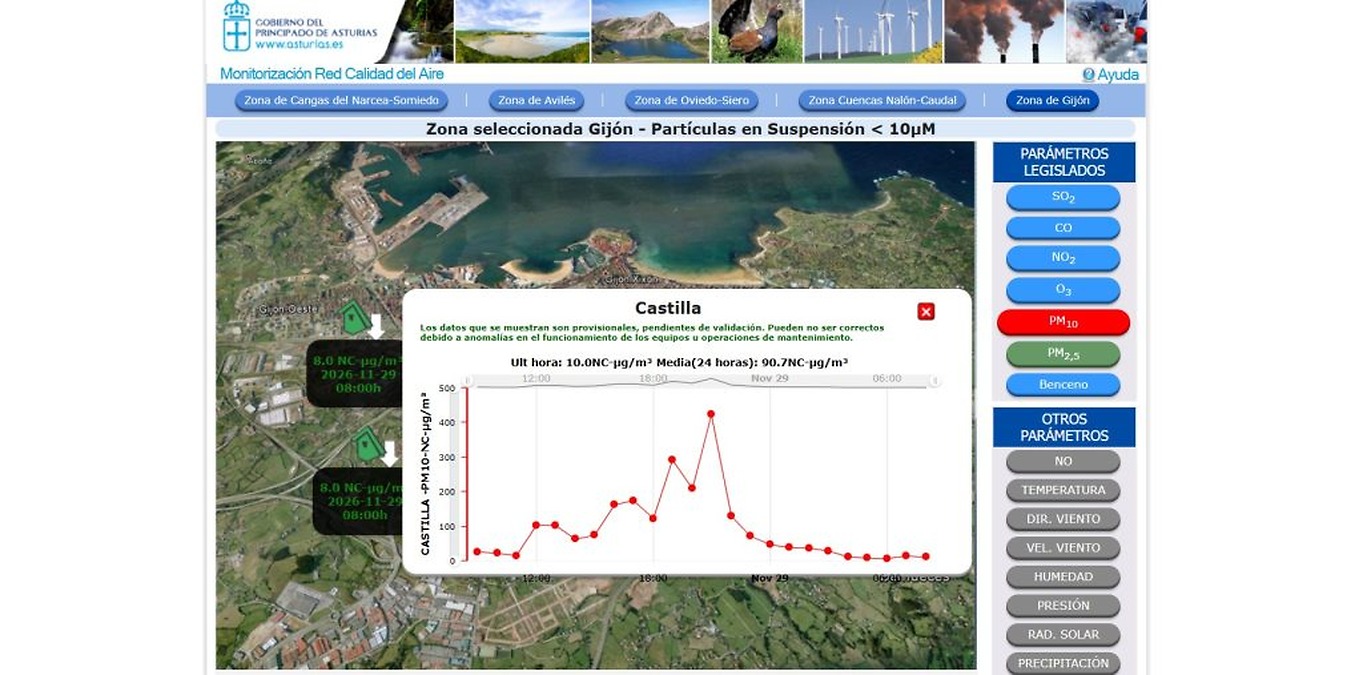
Air quality in gijón/xixón continues to be classified as poor, even with recent rainfall, according to official data from pollution monitoring stations. On the previous day, pm10 particle levels peaked at 422 µg/m³ at the Arena monitoring station, far above the world health organisation's recommended limit of 15 µg/m³ for annual averages and 45 µg/m³ for daily averages.
The European Directive 2024/2881 sets an annual average limit of 20 µg/m³. Notably, last year, gijón experienced pollution levels exceeding thresholds on 59 separate days.
Additionally, levels of the carcinogenic pollutant benzene remain concerning, with the Calzada air quality monitoring station recording 17.6 µg/m³. The world health organisation advises against any exposure to benzene due to its high cancer risk, stating that no safe concentration exists. The European Directive 2024/2881 establishes a limit of 3.4 µg/m³ for annual averages.
It is important to note that oviedo has consistently reported the highest benzene levels in asturias over the years. The Coordinadora Ecoloxista has been calling for a review of gijón/xixón's air quality plan, yet the regional government has yet to take action.
According to Royal Decree 34/2023, when pollution levels exceed or are expected to exceed information or alert thresholds, competent authorities are required to take urgent measures and inform the public. However, neither the regional government nor the city council has fulfilled this obligation.
The current body of research clearly demonstrates the detrimental effects of environmental pollution on personal health, brain development, and overall quality of life. This issue cannot be overlooked by leaders who fail to implement sufficient measures to protect the population.
Given the urgent climate situation, there is a better understanding of both the sources of air pollution emissions and their contribution to global morbidity. The failure of authorities to address this public health issue is an unjustifiable stance.